This one is annoying, but it’s meant to be.
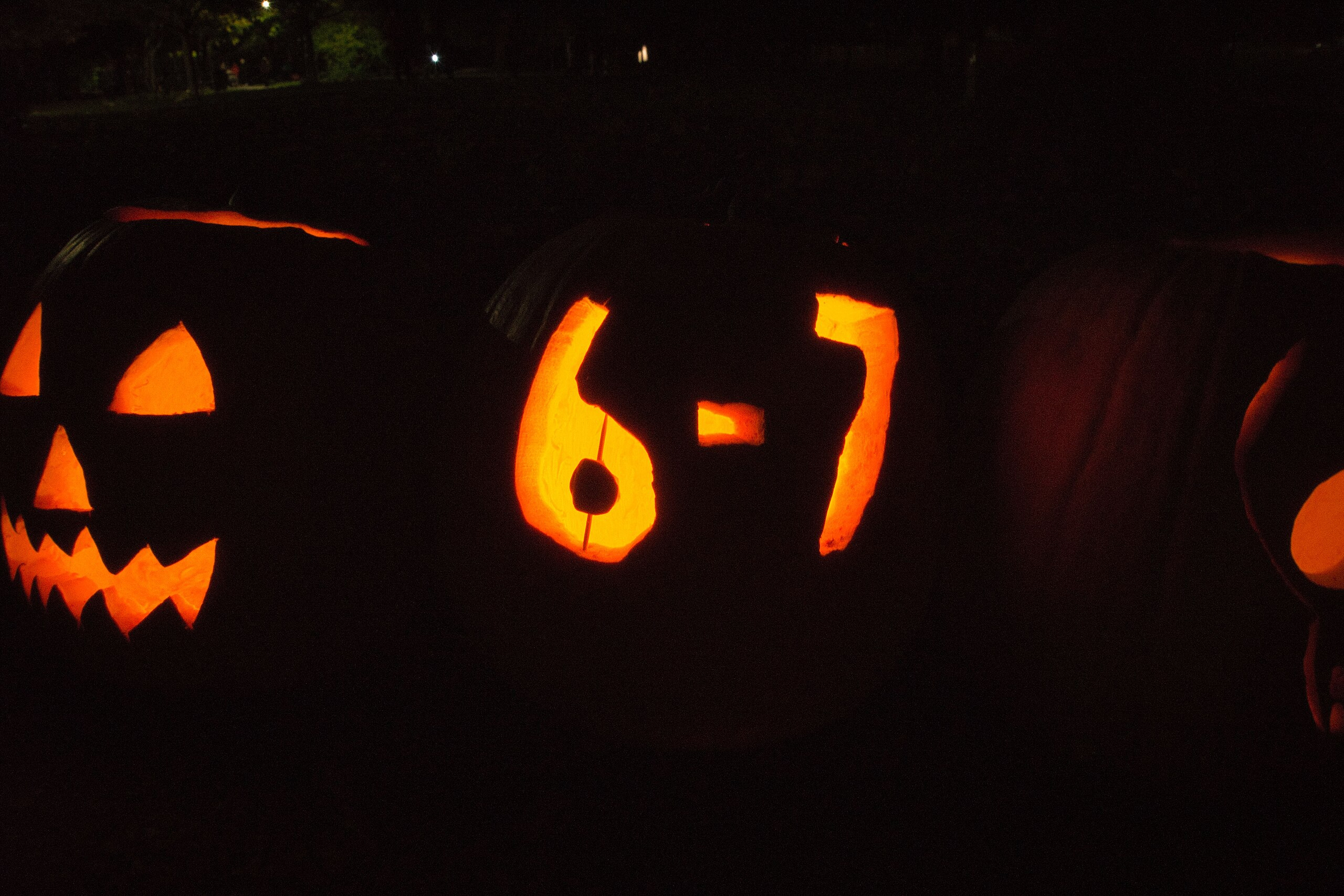
In early 2025, the internet was hit by one of those inexplicable cultural tsunamis that seems to come out of nowhere: the “6-7” (six-seven) meme. This two-digit phrase, accompanied by a goofy hand gesture miming two floating numbers, soon became a thing that was both profoundly meaningless and wildly ubiquitous.
Its origins trace back to a drill rap track called “Doot Doot” (6 7) by Philadelphia rapper Skrilla, released unofficially in December 2024 and formally in early 2025. A particular lyric in the song (“6-7”) was picked up by TikTok and Instagram users as a looping audio snippet in short videos, especially those featuring NBA highlight edits of basketball player LaMelo Ball, who is himself 6 ft 7 in tall. From there, the phrase took on a life of its own, divorced from any clear meaning or logical context. [Ed: As I say – annoying].


A viral clip of a young Maverick Trevillian [Ed: good name] yelling “6-7” at a youth basketball game – later dubbed by fans as the “67 Kid” – gave the meme a face and propelled it beyond the confines of algorithm-fuelled video loops. Players, influencers and school kids began to say it in unrelated contexts. By mid-2025, the meme was exploding everywhere: in sports broadcasts, classrooms, even political sessions where lawmakers joked about it.
Indeed, in October 2025, Dictionary.com named “67” as its 2025 Word of the Year, generously describing the interjection as “a burst of energy that spreads and connects people long before anyone agrees on what it actually means”.
Taylor Jones, a linguist and social scientist, quoted in a 31 October CNN piece by Scottie Andrew posits that its meaninglessness is partly due to what he calls “semantic bleaching”, where a phrase is divorced from its original context and comes to mean something entirely different (or, in this case, nothing). He goes on to suggest that 6-7 serves a critical social function as a shibboleth – a phrase that signifies that one belongs to an “in” group. People who don’t say it or get it are on the outer. And what kid doesn’t want to belong?


But, as the internet giveth, it can just as rapidly taketh away. In a 12 December piece in The Atlantic, culture writer Ian Bogost makes the case that “the grown-ups have killed it”. The article points out how the meme peaked around Halloween of 2025 [Ed: tough costume] and then quickly started to fade as adults began to use it. Parents, teachers, brands and media outlets – all too eager to latch on – diluted the meme’s child-centred authenticity, e.g. entering the numbers “67” into the Google web search triggered an easter egg whereby the browser displays a see-sawing animation similar to the meme’s hand motion. And from 6 to 7 November, Pizza Hut sold chicken wings for 67 cents each. [Ed: There are other examples, too cringey to mention.]
Once the adult world embraced it, kids began to find it uncool, and its momentum faltered.
Bogost frames 6-7 not simply as a meme but as a piece of “childlore” – a folk ritual of youth culture that spreads among kids first and only survives if it remains theirs, e.g. “pig latin”, remember that? As adults co-opted the phrase, 6-7 lost its tribal exclusivity and began its inevitable slide into obsolescence.
By late 2025, schoolyards had begun to shift to newer numeric jokes [Ed: 41 anyone?], engagement dropped, and the mantra that once echoed through classrooms bugging the shit out of teachers now feels like a passing squall rather than a full-on gale.
REMORANDOM 6 is coming in May 2026
REMORANDOM 7 is coming in October 2026
6-7!