


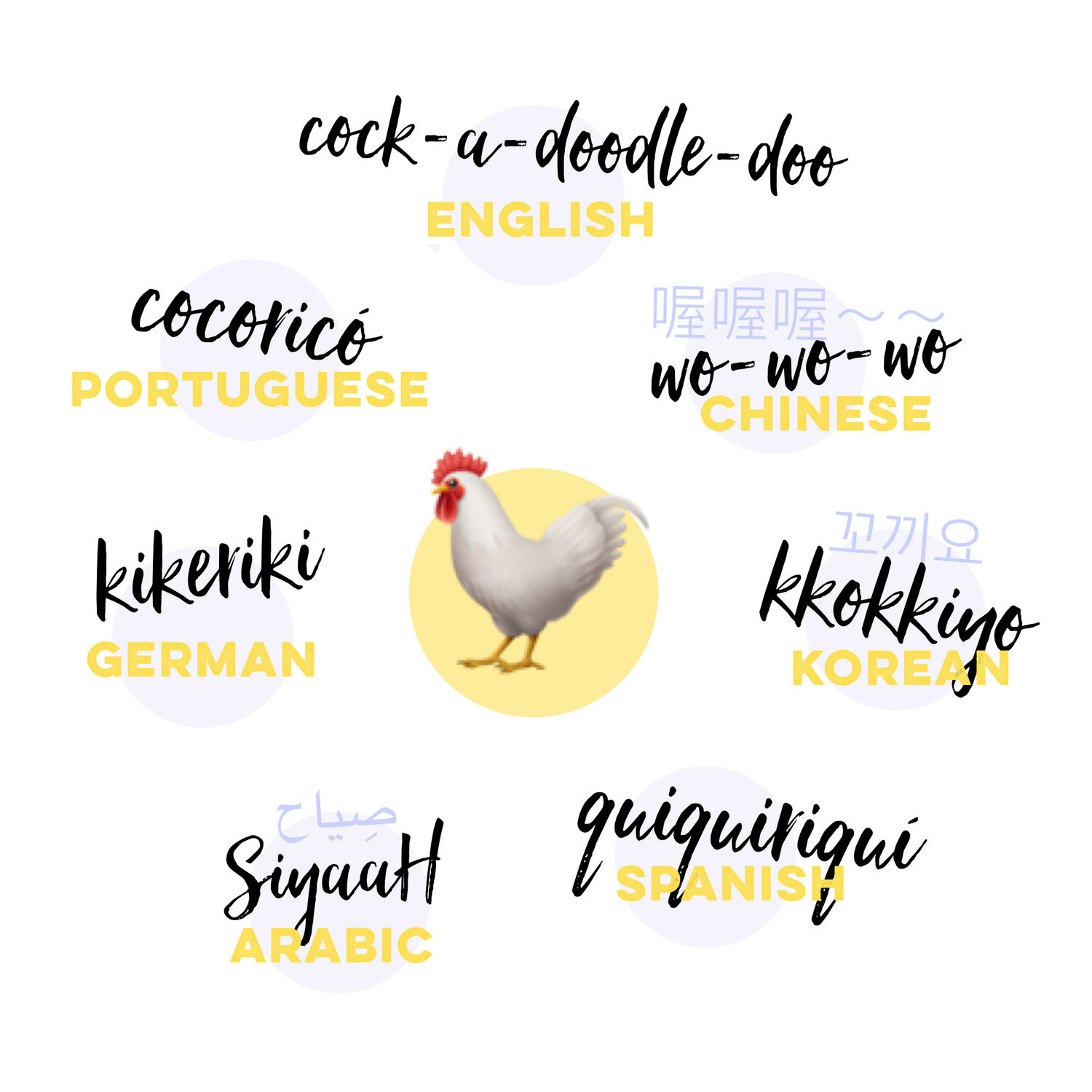
Presumably, the sound of a cat in Athens is basically the same as a cat in Sydney, or one on the streets of Rio. So why don’t all languages represent those meows in the same way?
We all hear the same animal sounds, but we imitate them differently in our native language. This is more surprising for native English speakers than it is for the rest of us, due to the pervasiveness of the English language in popular culture.
When we create words that imitate natural sounds, those words are onomatopoeic. For example, buzz, boom, crash and meow are all examples of onomatopoeia because they attempt to imitate a real sound from out in the world: the sound of a bee, a loud explosion, the sound of something breaking, or a cat begging for food.
The word onomatopoeia comes from the Greek ὀνοματοποιία—a compound of ὄνομα (ónoma, “name”) and ποιέω (poiéō, “I make”).
Every language uses its own set of (human) sounds in its words, and each language also has particular rules about how to combine sounds and where they can go in words. And these sound rules also shape the way languages represent animal sounds.
For example, in English, the noise a pig makes (oink!) contains the diphthong or sound combination [ɔɪ], reflecting that this is an acceptable combination of sounds in English, as in the word oil. But not all languages have that particular combination. In Polish, the noise a pig makes is chrum, where the first sound is sort of between a “k” and a “h” – a sound that doesn’t exist in English.
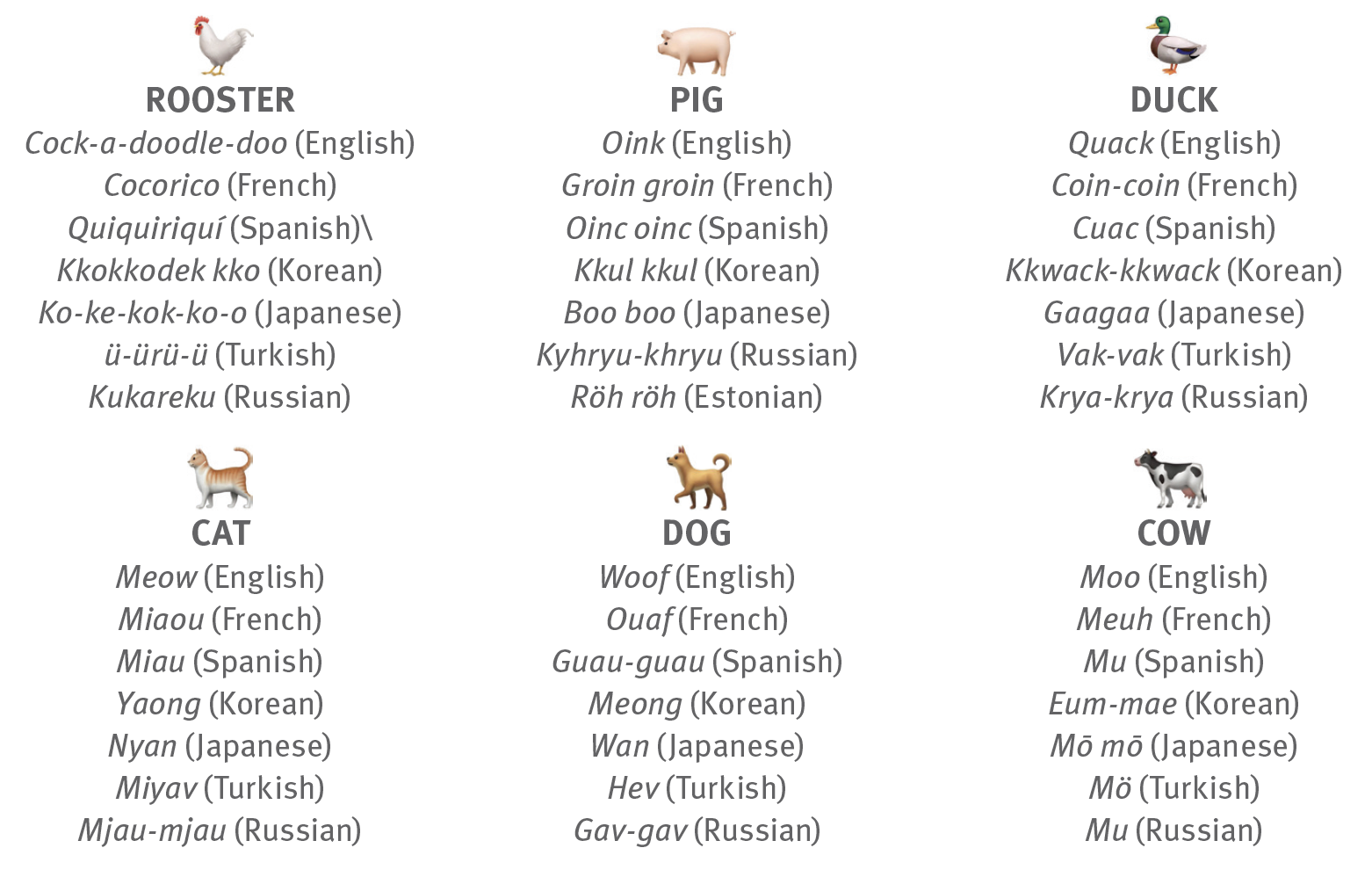
As different as animal sounds can be across languages, we can compare them to discover both similarities and surprising differences. Here are some examples:
Video
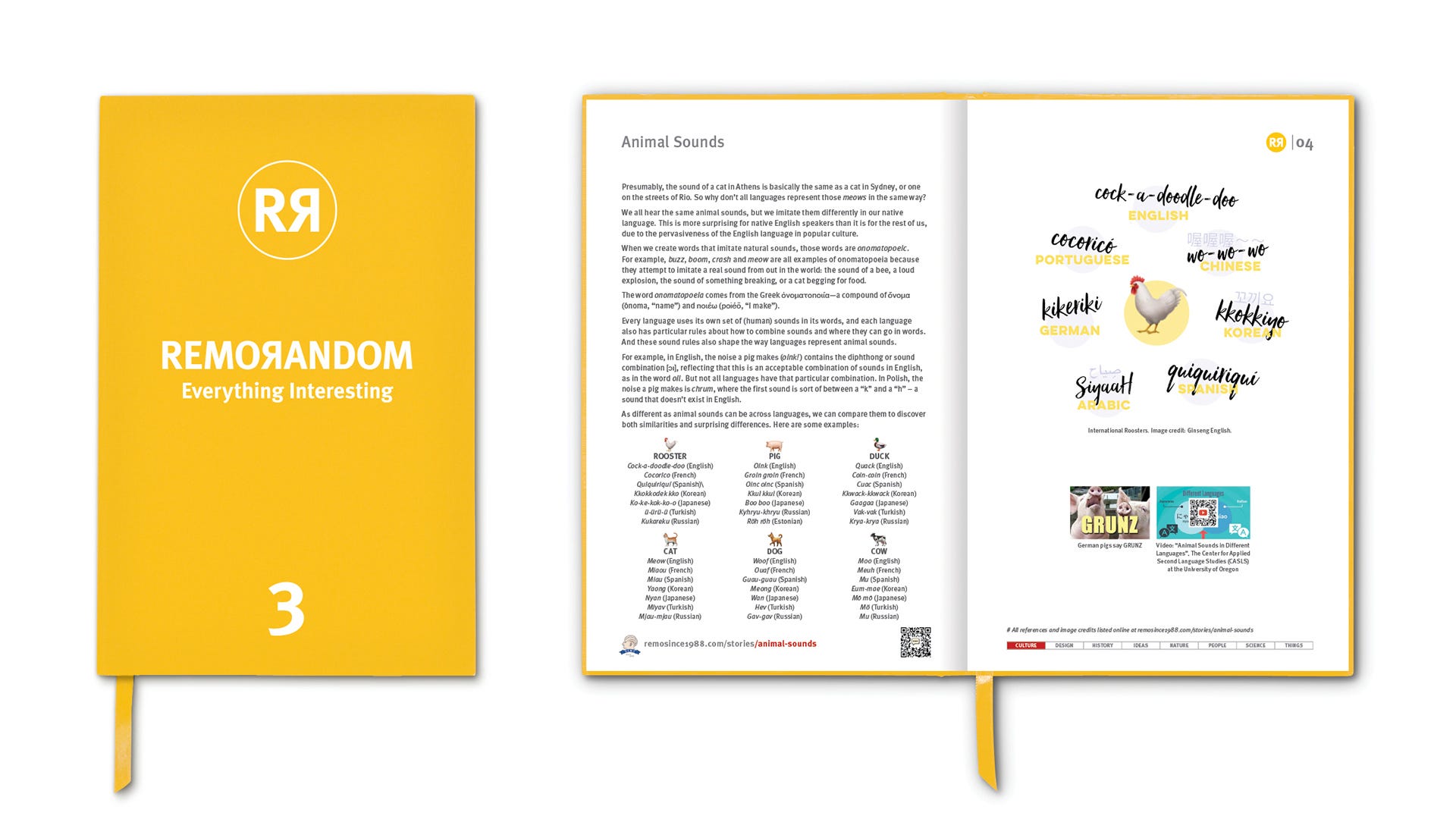
REMORANDOM Book Chapter
Great breakdown of onomatopoeia constraints. The Polish pig example realy shows how phonetic inventory shapes what sounds we can even represent. It's kinda fascinating that even though we're all hearing the same noise, we're essentially filtering it through our language's sound system. Makes you wonder how many other sensory experiences get molded bythe linguistic tools we have available.