


Today is White Cane Day, a day on which we celebrate the achievements of people who are blind or have low vision and recognising the white cane as a vital tool of independence and mobility. (As an aside, the white cane originated in 1921 when Bristol photographer James Biggs painted his walking stick white to make himself visible to traffic.)
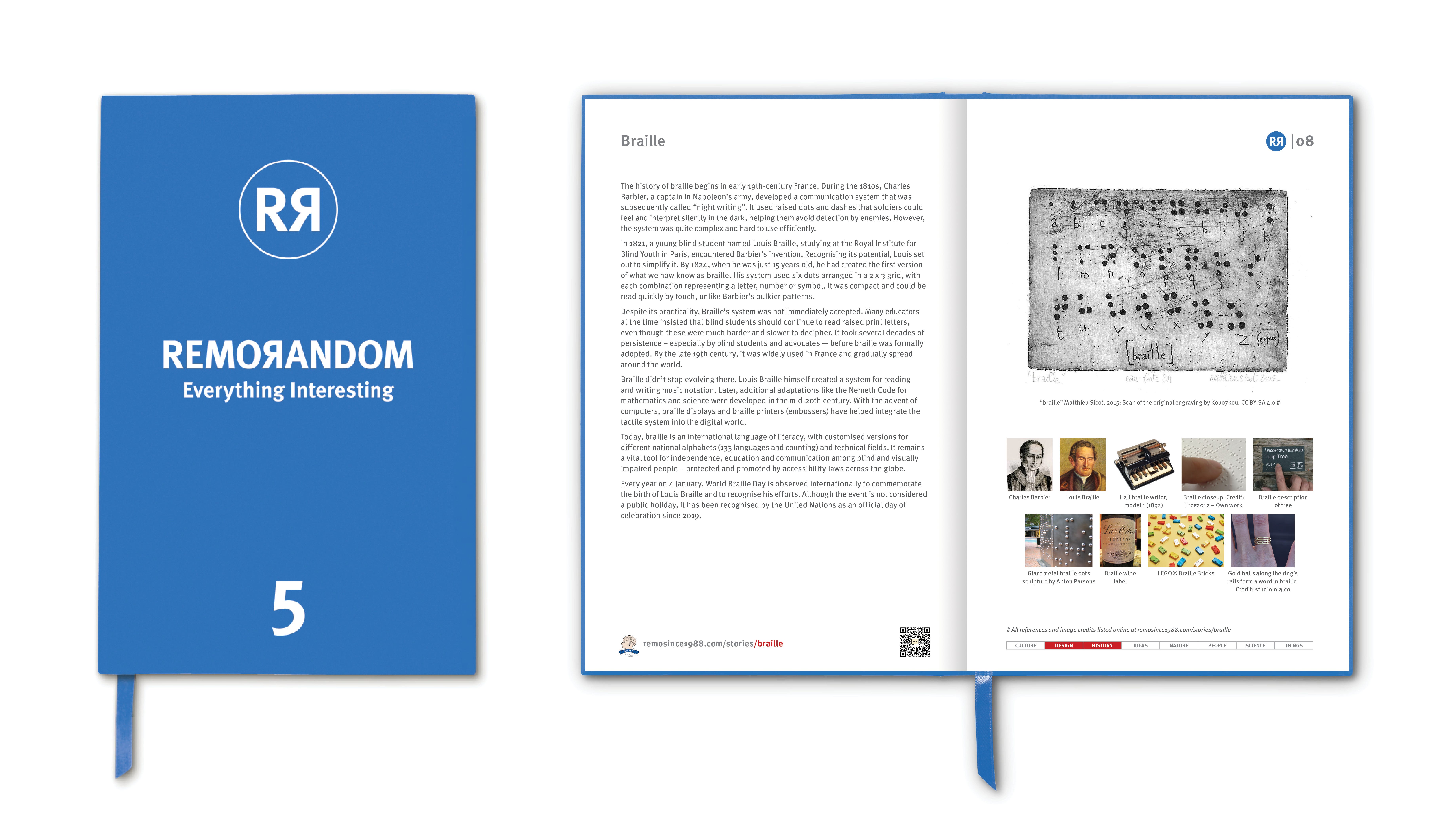
The other thing to celebrate today is Braille.
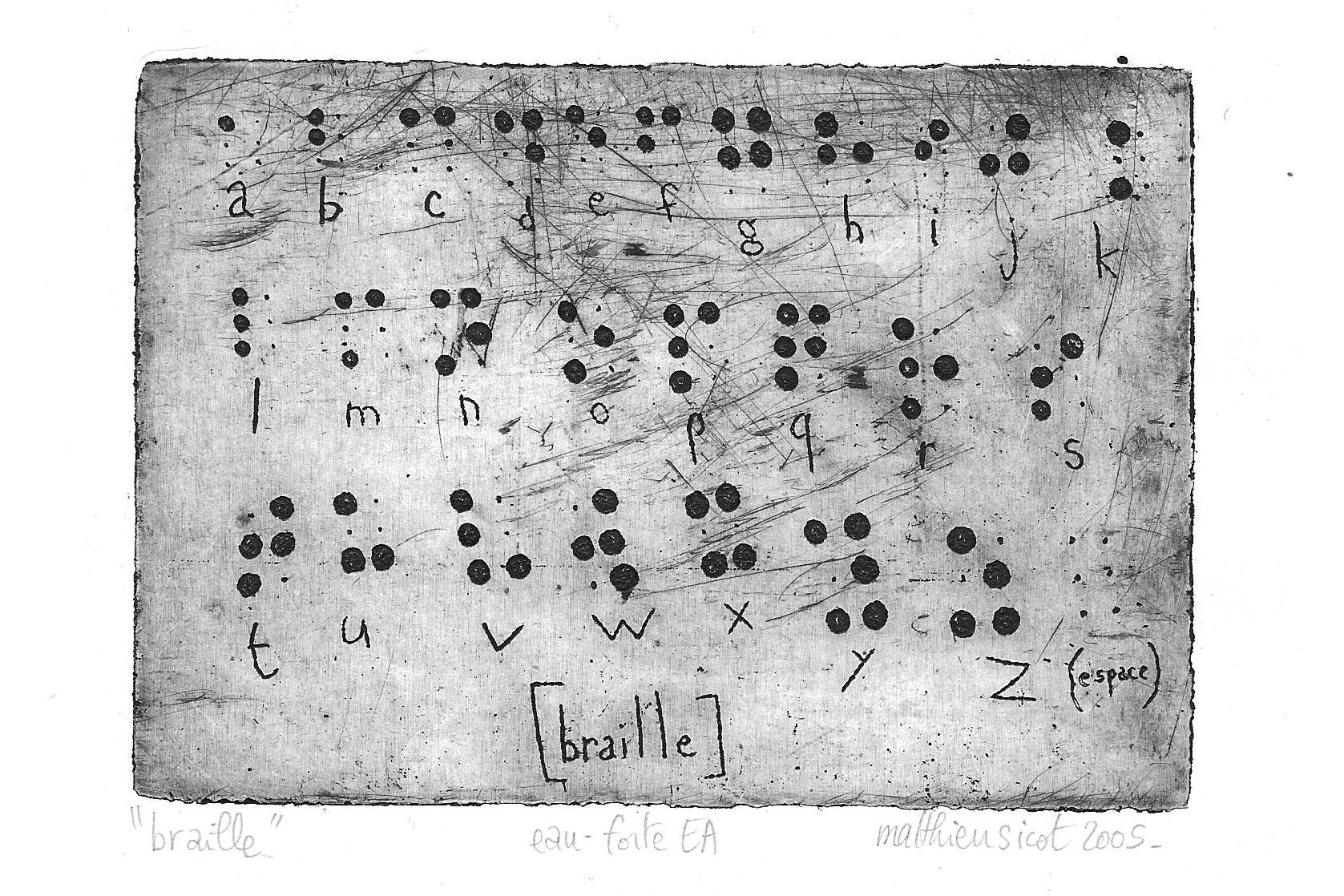
The history of braille begins in early 19th-century France. During the 1810s, Charles Barbier, a captain in Napoleon’s army, developed a communication system that was subsequently called “night writing”. It used raised dots and dashes that soldiers could feel and interpret silently in the dark, helping them avoid detection by enemies. However, the system was quite complex and hard to use efficiently.


In 1821, a young blind student named Louis Braille, studying at the Royal Institute for Blind Youth in Paris, encountered Barbier’s invention. Recognising its potential, Louis set out to simplify it. By 1824, when he was just 15 years old, he had created the first version of what we now know as braille. His system used six dots arranged in a 2 x 3 grid, with each combination representing a letter, number or symbol. It was compact and could be read quickly by touch, unlike Barbier’s bulkier patterns.
Despite its practicality, Braille’s system was not immediately accepted. Many educators at the time insisted that blind students should continue to read raised print letters, even though these were much harder and slower to decipher. It took several decades of persistence – especially by blind students and advocates — before braille was formally adopted. By the late 19th century, it was widely used in France and gradually spread around the world.
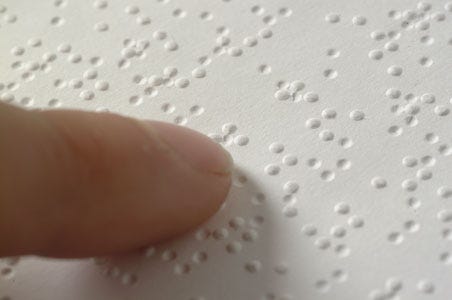
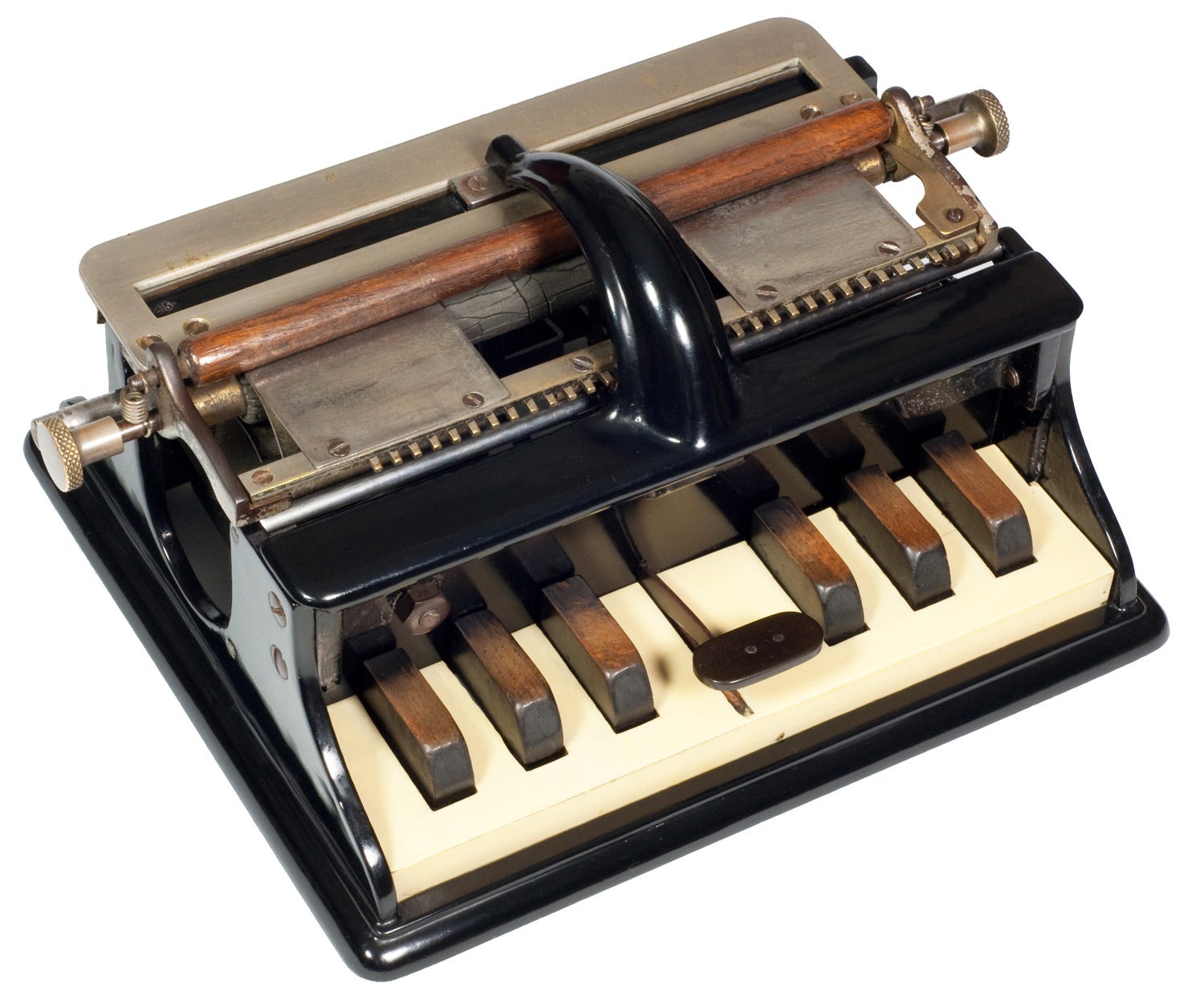
Braille didn’t stop evolving there. Louis Braille himself created a system for reading and writing music notation. Later, additional adaptations like the Nemeth Code for mathematics and science were developed in the mid-20th century. With the advent of computers, braille displays and braille printers (embossers) have helped integrate the tactile system into the digital world.
Today, braille is an international language of literacy, with customised versions for different national alphabets (133 languages and counting) and technical fields. It remains a vital tool for independence, education and communication among blind and visually impaired people – protected and promoted by accessibility laws across the globe.


Every year on 4 January, World Braille Day is observed internationally to commemorate the birth of Louis Braille and to recognise his efforts. Although the event is not considered a public holiday, it has been recognised by the United Nations as an official day of celebration since 2019.

References
REMORANDOM Books
Order our books on the REMO store website HERE. Subscribe to receive all future volumes and other printed goodies HERE.
