


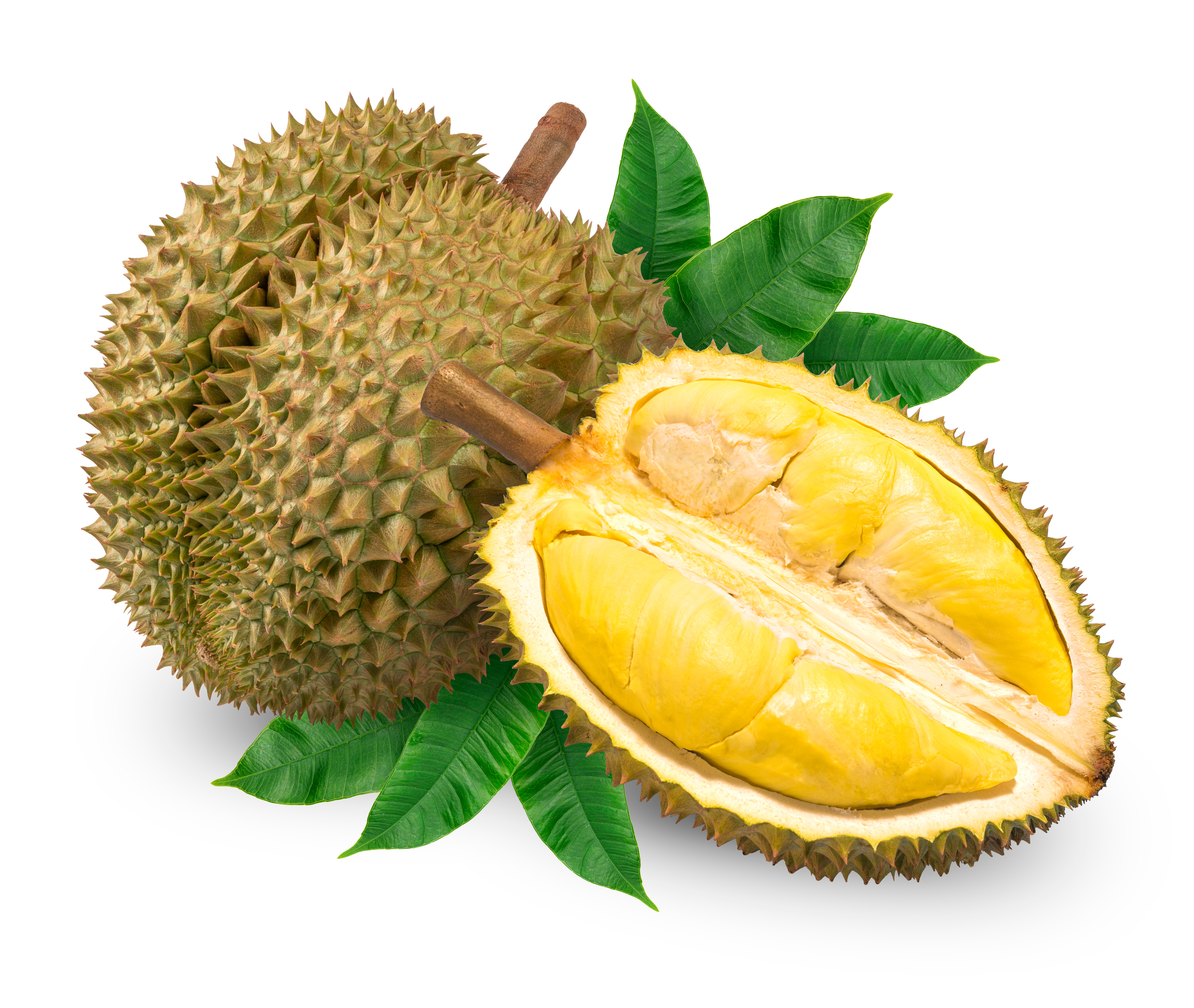
Durian is a tropical fruit known for its distinctive, strong odour and thorn-covered husk. It is native to Southeast Asia and is popular in many countries in the region, including Malaysia, Thailand, Indonesia and the Philippines. Durian is often referred to as the “king of fruits”.


Durian has been described as the most foul-smelling fruit in the world. Its smell is so pungent that the spiky-skinned, custard-like fruit is banned from public places in Singapore and Malaysia. More on that smell below.
Those who enjoy durian describe its flavour as a combination of sweet and savoury, with a creamy texture. The taste is subjective. Some find it delicious, while others find the smell and taste unpleasant, which explains why it was used to symbolise the subjective nature of ugliness and beauty in Hong Kong director Fruit Chan’s 2000 film Durian Durian (榴槤飄飄, lau lin piu piu).

In addition to being consumed fresh, durian is also used in various culinary applications, such as in ice cream, pastries and other desserts. It has a significant cultural and economic impact in the regions where it is grown, and there are even durian festivals celebrating this unique fruit. Durian is a big deal.


But, whatever you do, don’t linger under a durian tree. A durian falling on your head can cause serious injuries because the fruit is large (up to 30cm x 15cm), heavy, armed with sharp thorns, and can fall from a significant height. People have died.


But back to the smell. Some people regard the durian as having a pleasantly sweet fragrance, whereas others find the aroma overpowering and unpleasant. The late chef and author Anthony Bourdain, who actually enjoyed eating the stinky fruit, memorably said that durian tasted “like pungent, runny French cheese”, adding, “Your breath will smell as if you’d been French kissing your dead grandmother.”
And below are some other words we found online from people struggling to describe their olfactory experience with durian. Quite a fruity selection, we think you’ll agree.
Rotten onions – Vomit-flavoured custard – Turpentine – Raw sewage – Garlic and caramel – Overripe cheese – Rotting flesh – Mouldy fruit – Sewer gas – Stale water – Old shoe leather [Ed: Foot related]– Burnt rubber – Rancid butter – Sweaty gym socks [Ed: Feet again] – Decaying animal – Fishy undertones – Garbage dumpster – Stinky feet [Ed: OK, we get the picture] – Mango on steroids – Stale sulphur – Ripe banana with a hint of gasoline
What everyone can agree on is that the fruit’s odour, whether pleasant or dreadful, is uncommonly potent.
Regardless of the smell, durians are a scientific marvel. According to a 2009 Japanese study, durian extract strongly inhibits the enzyme aldehyde dehydrogenase (ALDH), used by the liver to break down alcohol. This might account for a piece of traditional Asian folklore: that getting intoxicated while eating durians can lead to death. [Ed: Great. Yet another way durian can kill you.]
Video
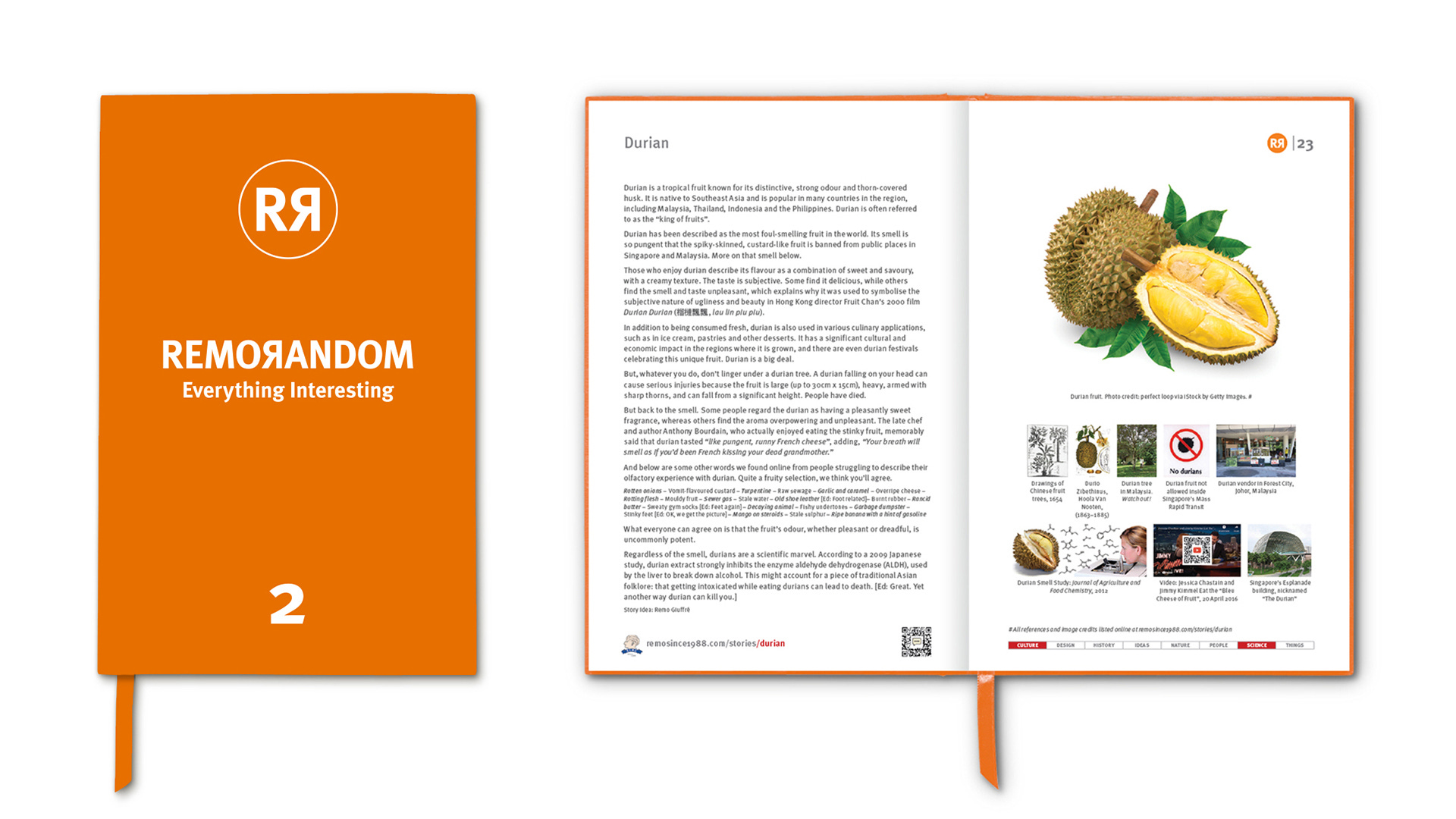
REMORANDOM Chapter
You inspired me to sniff out my Durian 101 video https://youtu.be/kSAU28x3OG8?si=Dx5IKwk3XvWGrJp5