


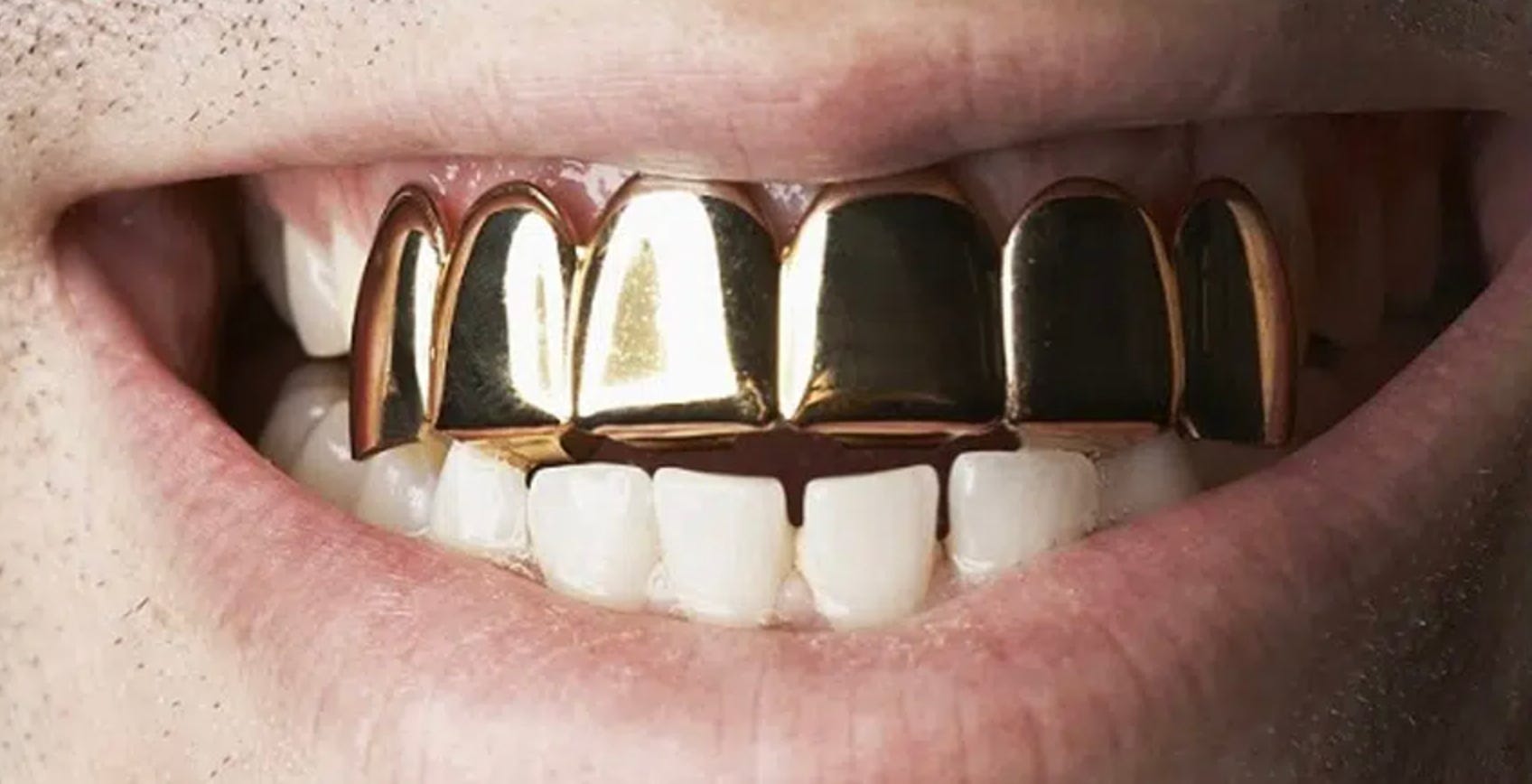
In ancient Egypt and Etruscan Italy around 700 BCE, wealthy individuals sometimes used gold for dental work. The Etruscans, in particular, were known for crafting early dental bridges with gold wire, blending function and status into one. Gold wasn’t just for show – it served a real purpose by stabilising teeth.
Meanwhile, across the world in the pre-Columbian Americas, cultures like the Mayans and people in the Philippines practiced tooth decoration with extraordinary flair. The Mayans often inlaid their teeth with jade, turquoise and gold, signalling both wealth and artistry. It was a serious flex of status and personal identity, and their dental craftsmanship still amazes archaeologists today.


During the Middle Ages and Renaissance in Europe, gold continued to play a functional role in dentistry. It was one of the few materials that could withstand the brutal wear and tear of daily use without corroding. While the average person might suffer with rotting teeth, those who could afford it invested in gold crowns and rudimentary dental appliances to replace missing teeth.


By the 19th and early 20th centuries, gold became the gold standard – quite literally – for fillings, crowns and bridges. Dentists loved working with it because it was soft enough to shape and hard enough to last. Having gold dental work was a sign you had access to good, professional care – and it carried a subtle air of prosperity. Gold teeth took on new meaning, particularly within Black communities in the American South.
It’s not all good news. Gold teeth also endured a dark chapter of 20th century history.


The collection of gold dental fillings, dental caps and dentures extracted from the mouths of the victims of Nazi concentration camps was a feature of the Holocaust. The collection was done with the active and voluntary cooperation of German dentists. Collected gold was then melted down into gold bars, which could then be sold with no trace of its origin.
As gold fillings became a practical solution for dental problems, they eventually evolved into a bold fashion statement. This evolution exploded into mainstream culture in the 1980s and ’90s, driven largely by hip-hop culture. Artists like Slick Rick, Flavor Flav and later Nelly (with his hit “Grillz”) helped make gold teeth and elaborate grills iconic symbols of style, rebellion and success. Grills are made of metal and are generally removable but can also be permanent.


Gold grills are still being sported by rappers today and even include diamonds of various colours. Grills have also been worn by the singers Miley Cyrus, Beyoncé and Madonna.
Gold teeth have evolved from ancient necessity to a modern art form.


Postscript
We were inspired to include gold teeth as a topic for REMORANDOM when we stumbled across an interesting conceptual art project from two Brooklyn-based designers, Che-Wei Wang and Taylor Levy (CW&T) – interviewed below by Remo for the REMORANDOM podcast in June 2025. Tooth Gallery is a travelling “gallery space” exhibiting small artworks installed within Che-Wei Wang’s mouth. Tooth sized artworks made by artists, designers, architects, engineers and dentists are screwed into his implants (#9, #31). Check out the “CW&T Tooth Gallery” HERE.
Videos
REMORANDOM Chapters


