


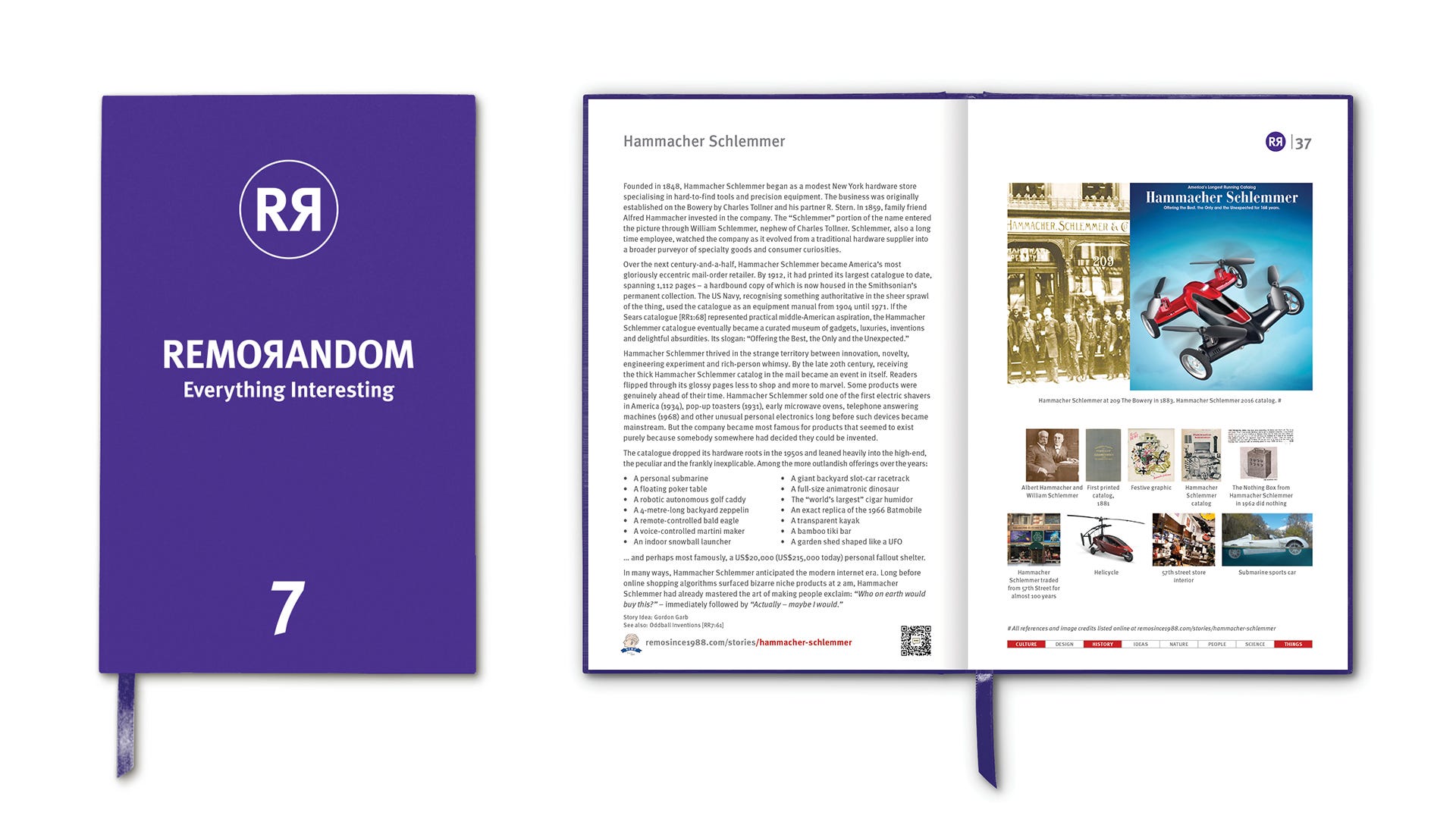
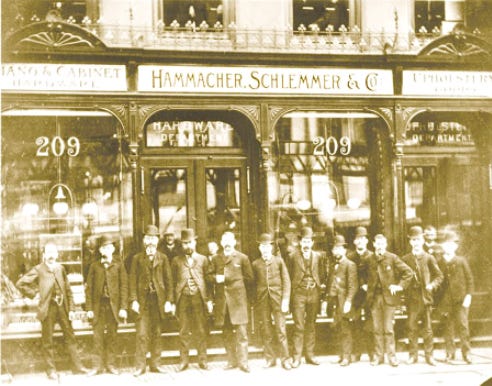
Founded in 1848, Hammacher Schlemmer began as a modest New York hardware store specialising in hard-to-find tools and precision equipment. The business was originally established on the Bowery by Charles Tollner and his partner R. Stern. In 1859, family friend Alfred Hammacher invested in the company. The “Schlemmer” portion of the name entered the picture through William Schlemmer, nephew of Charles Tollner. Schlemmer, also a long time employee, watched the company as it evolved from a traditional hardware supplier into a broader purveyor of specialty goods and consumer curiosities.
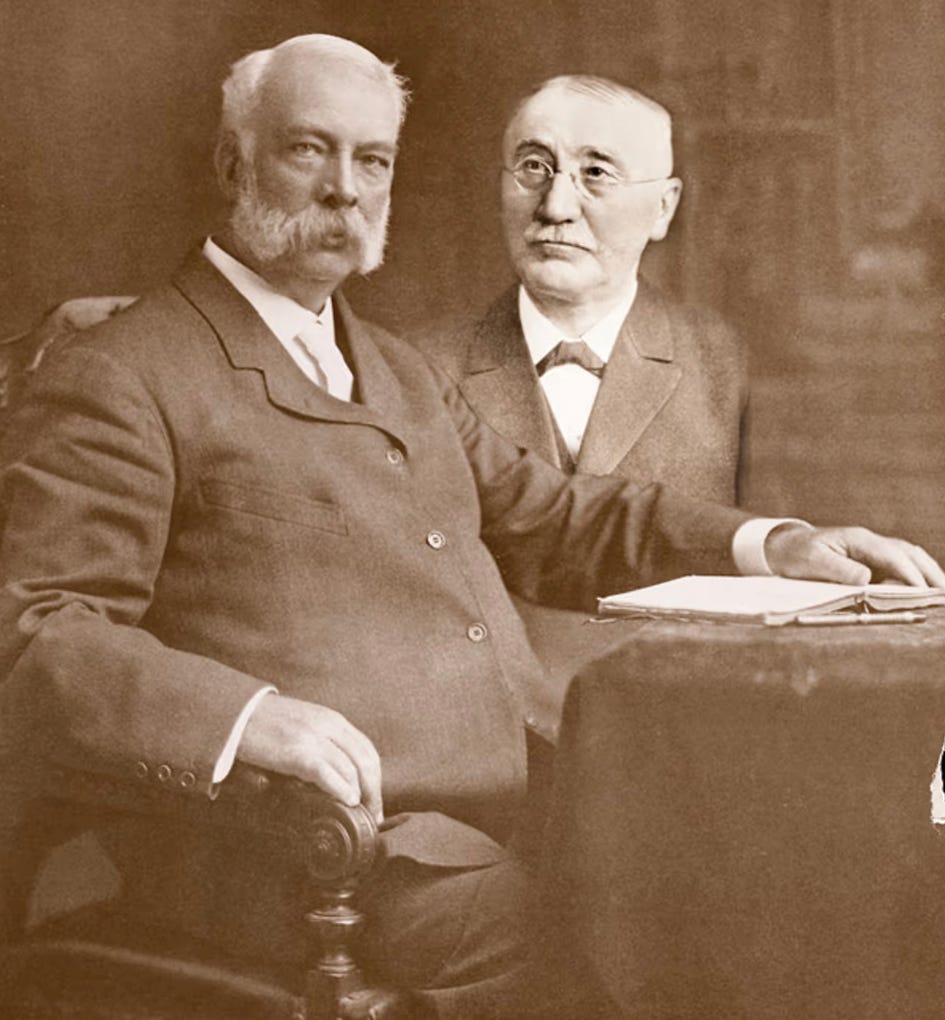
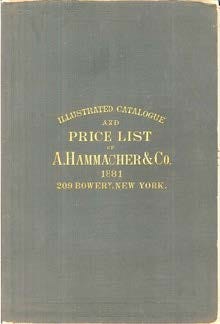
Over the next century-and-a-half, Hammacher Schlemmer became America’s most gloriously eccentric mail-order retailer. By 1912, it had printed its largest catalogue to date, spanning 1,112 pages – a hardbound copy of which is now housed in the Smithsonian’s permanent collection. The US Navy, recognising something authoritative in the sheer sprawl of the thing, used the catalogue as an equipment manual from 1904 until 1971. If the Sears catalogue [RR1:68] represented practical middle-American aspiration, the Hammacher Schlemmer catalogue eventually became a curated museum of gadgets, luxuries, inventions and delightful absurdities. Its slogan: “Offering the Best, the Only and the Unexpected.”


Hammacher Schlemmer thrived in the strange territory between innovation, novelty, engineering experiment and rich-person whimsy. By the late 20th century, receiving the thick Hammacher Schlemmer catalog in the mail became an event in itself. Readers flipped through its glossy pages less to shop and more to marvel.
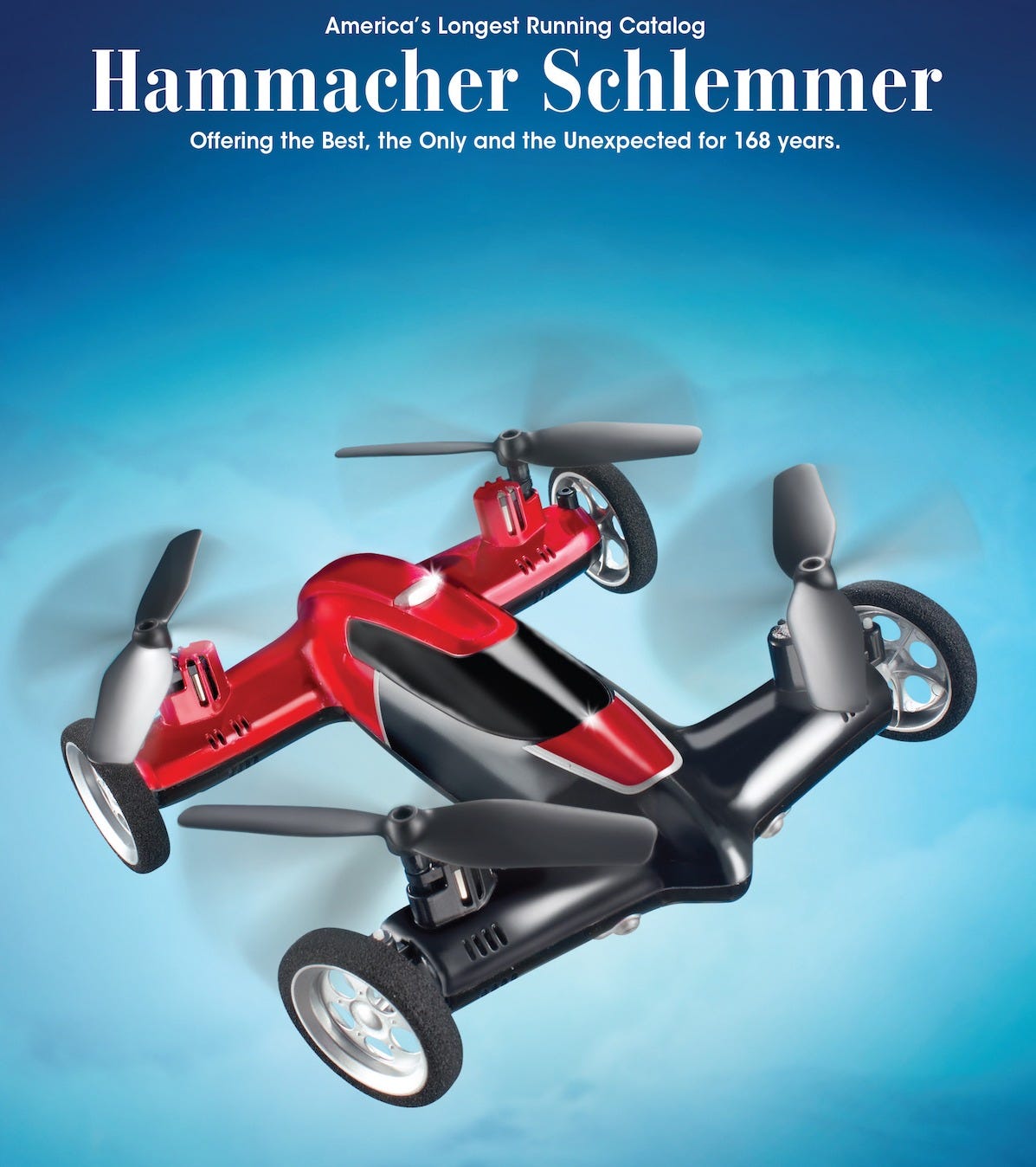
Some products were genuinely ahead of their time. Hammacher Schlemmer sold one of the first electric shavers in America (1934), pop-up toasters (1931), early microwave ovens, telephone answering machines (1968) and other unusual personal electronics long before such devices became mainstream. But the company became most famous for products that seemed to exist purely because somebody somewhere had decided they could be invented.
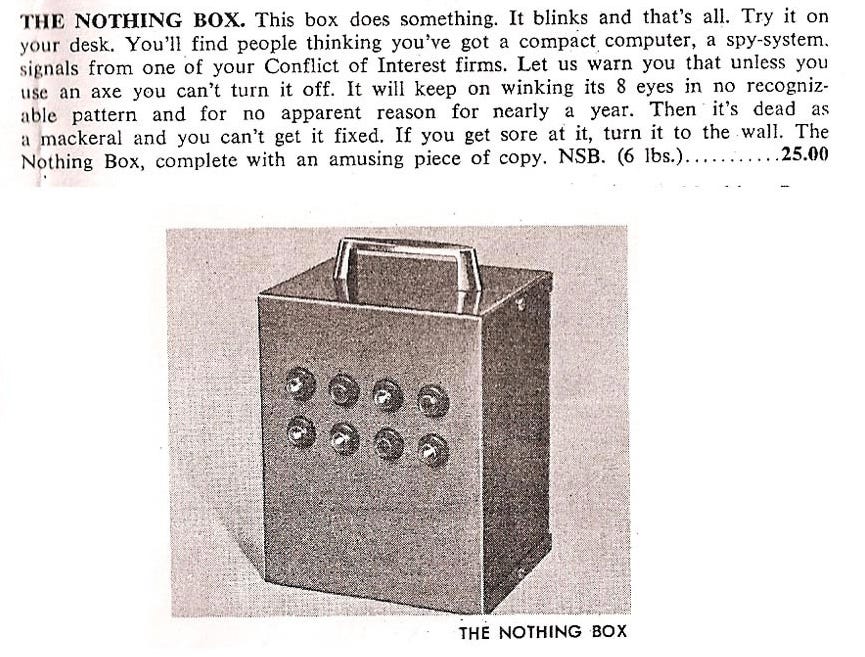
The catalogue dropped its hardware roots in the 1950s and leaned heavily into the high-end, the peculiar and the frankly inexplicable.


Among the more outlandish offerings over the years:
A personal submarine
A floating poker table
A robotic autonomous golf caddy
A 4-metre-long backyard zeppelin
A remote-controlled bald eagle
A voice-controlled martini maker
An indoor snowball launcher
A giant backyard slot-car racetrack
A full-size animatronic dinosaur
The “world’s largest” cigar humidor
An exact replica of the 1966 Batmobile
A transparent kayak
A bamboo tiki bar
A garden shed shaped like a UFO
… and perhaps most famously, a US$20,000 (US$215K today) personal fallout shelter.


In many ways, Hammacher Schlemmer anticipated the modern internet era. Long before online shopping algorithms surfaced bizarre niche products at 2 am, Hammacher Schlemmer had already mastered the art of making people exclaim: “Who on earth would buy this?” – immediately followed by “Actually – maybe I would.”
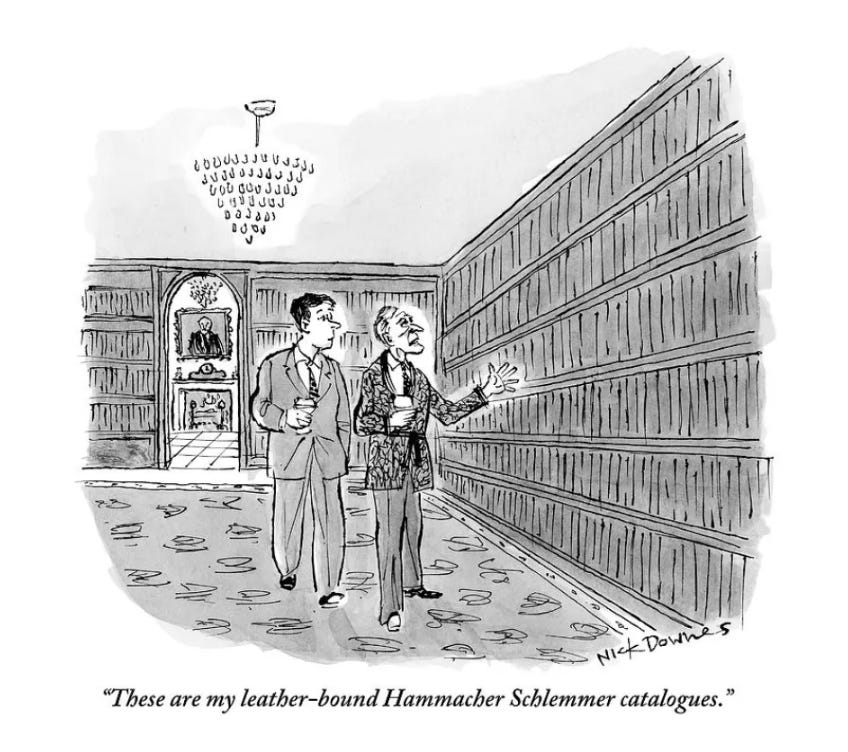
Story Idea: Gordon Garb
See also: Oddball Inventions [RR7:61]
References
entrepreneur.com/living/the-13-most-outrageous-gifts-from-hammacher-schlemmer
blogs.library.duke.edu/rubenstein/2025/06/09/announcing-hammacher-schlemmer-records
REMORANDOM Books
Order our books on the REMO store website HERE.
Enjoy 20% off for our Black Friday SALE. Enter code: REMO20
Subscribe to receive all future volumes and other printed goodies HERE.
