



Melanie and I attended the very moving tribute for ABC radio host, jazz musician and friend James Valentine at the Sydney Town Hall last Friday. It was a truly memorable event – full of love and life. Our heart goes out to James’s family – and especially his wife Jo and children Ruby and Roy.


A highlight for me was the eulogy delivered by Roy. I feel that it is probably one of the most extraordinary speeches that I have ever had the privilege to witness.
Watch it HERE on Roy’s Instagram page if you can.
Roy began his eulogy with a simple question, repeated for emphasis:
“How do you want to LIVE?”
Not: “What do you want to BE?” or even “What do you want to DO?”
It struck me as being a very powerful idea – not necessarily a new idea, but one packaged and presented in a very appealing way amidst very real circumstances.
Because “what do you want to be?” is a question that assumes that life is a process of arrival, that meaning sits somewhere ahead of you – waiting to be achieved; that happiness is conditional upon completion. James didn’t buy into that premise. And that refusal reminded me of some older voices, so I did some research.
Marcus Aurelius, writing to himself nearly two thousand years ago, kept circling the same idea from a different angle. That life is not somewhere else. That the only thing you ever actually possess is the moment you are in, not the future you are planning for, not the past you are reliving – but the act itself, unfolding now.
Stoicism, at its core, is not emotional suppression. It is attention discipline. A way of refusing to let the mind abandon the present in favour of imagined outcomes. [Ed: I have been guilty of the latter on more occasions than I would like to admit to.]


Roy’s eulogy, without ever naming it, sits very close to that idea. Except here it’s not an emperor writing in private. It’s a loving son speaking in public about a man who, apparently, understood something similar without ever needing to formalise it.
A life made of conversations, music, radio, swimming, bush walks, cooking and laughter. Not as “leisure activities” – but as the actual structure of meaning.
The present tense as a way of living, not a philosophical position.
Work Backwards
And then there is work. Or rather, the refusal to let work define the shape of a life.
Roy describes his father finding a version of radio that allowed him to work “about an hour a day” in spirit, even if not literally. More importantly, work that did not become identity. Work that sat inside life, rather than life being structured around work.
This is where something like Tim Duggan’s 2024 book Work Backwards becomes a useful comparison – and tension. Tim’s model is elegant in its own way: imagine the life you want, then design backwards from that imagined endpoint to inform the kind of work that will deliver the environment and resources you need for that life. Treat life as a planning problem. Make decisions now that serve a future version of yourself. It is essentially a philosophy of forward control via backward design.


But Roy’s eulogy exposes the limit of that framing in and of itself. Because it suggests that even a well-designed life is still only ever understood in motion. That you do not actually experience your “designed life”. You experience: Tuesdays, random chats, doctor’s waiting rooms, the taste of soup – or driving in a car with someone you love.
You experience the present, not the plan. [Ed: Cue John Lennon]
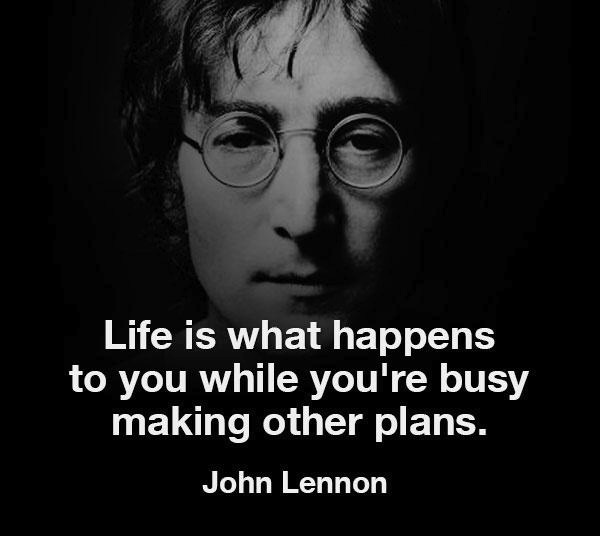
When you are inside your life – not imagining it, not designing it, not remembering it – what are you actually doing with it?
So, the question is not only: how do you want to live? – but also: are you there and fully present while it is happening?
Travel Hopefully
My own epiphany in this space (sort of) happened on the ferry that connects the town of Bayshore with the beachside communities of Fire Island just east of New York back in 2001. On that day I had a lot of reasons not to be feeling this way, but I remember feeling optimistic. (It’s a long story. You can read it below.)
Not only do I remember feeling optimistic, but I also remember coming to the realisation that this feeling of optimism was probably more important than whatever was going to happen. A feeling of optimism about the future, thankfully shared by Melanie, was delivering us a very high quality of life in the present. The outcomes of our endeavours were actually irrelevant to the quality of the lives we were living!
A few days later I spoke of this personal epiphany over the phone with a friend in LA who rewarded me with this sage quote from Robert Louis Stevenson:
“To travel hopefully is a better thing than to arrive, and the true success is to labour.”

Ever since, I’ve tried to live life with this liberating truth very much in mind.
Bonus Video
James and Roy Valentine playing together in the Django Bar at the Camelot Lounge in Marrickville on 5 October 2024
Book Chapter
This post will not appear in printed form in REMORANDOM 7. However, my story about “travelling hopefully” on the ferry to Fire Island in 2001 appears as a chapter in my 2014 visual memoir General Thinker. Browse and order it HERE.


One of the best speeches I’ve heard in years.