


Ikigai (生き甲斐, lit. “a reason for being”) is a Japanese concept referring to something that gives a person a sense of purpose, a reason for living, a raison dêtre.
The term compounds two words: 生きる (ikiru, “to live, to exist”) and 甲斐 (kai, “worth, value”).
Ikigai can describe having a sense of purpose in life, as well as being motivated. According to a study by Michiko Kumano, feeling ikigai as described in Japanese usually means the feeling of accomplishment and fulfilment that follows when people pursue their passions.
National Geographic reporter Dan Buettner suggested ikigai may be one of the reasons for the longevity of the people of Okinawa. According to Buettner, Okinawans have less desire to retire, as people continue to do their favourite job as long as they remain healthy.
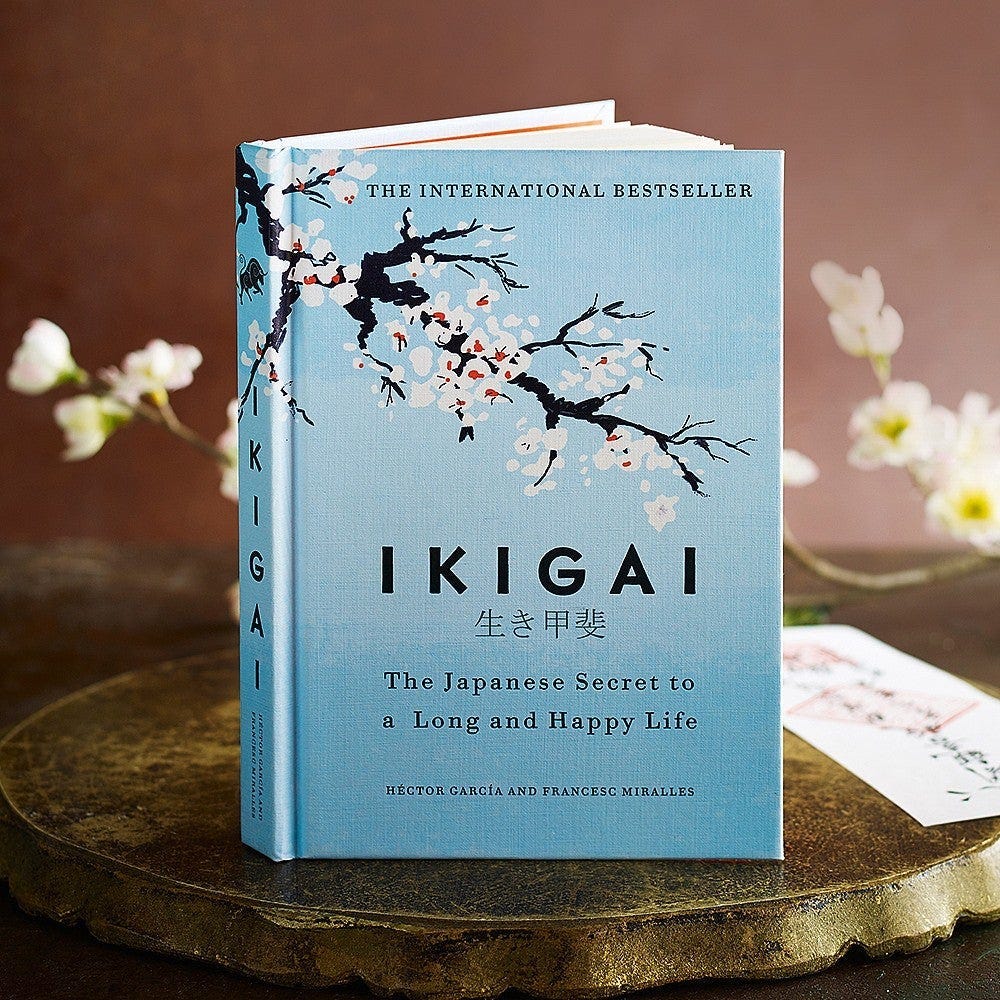
“There is no word like it anywhere in the world”, says Héctor Garcia, co-author of the popular book Ikigai: The Japanese Secret to a Long and Happy Life, which helped push ikigai into the global spotlight. Explaining that having an ikigai is the key to leading a happy life with a healthy body and mind, this book, which has been translated into 63 languages, has sold more than 3 million copies since its release in 2016.
Careerists have codified their version of ikigai by reference to a Venn diagram that intersects the following four fundamental elements: what you love, what you are good at, what the world needs and what you can be paid for.
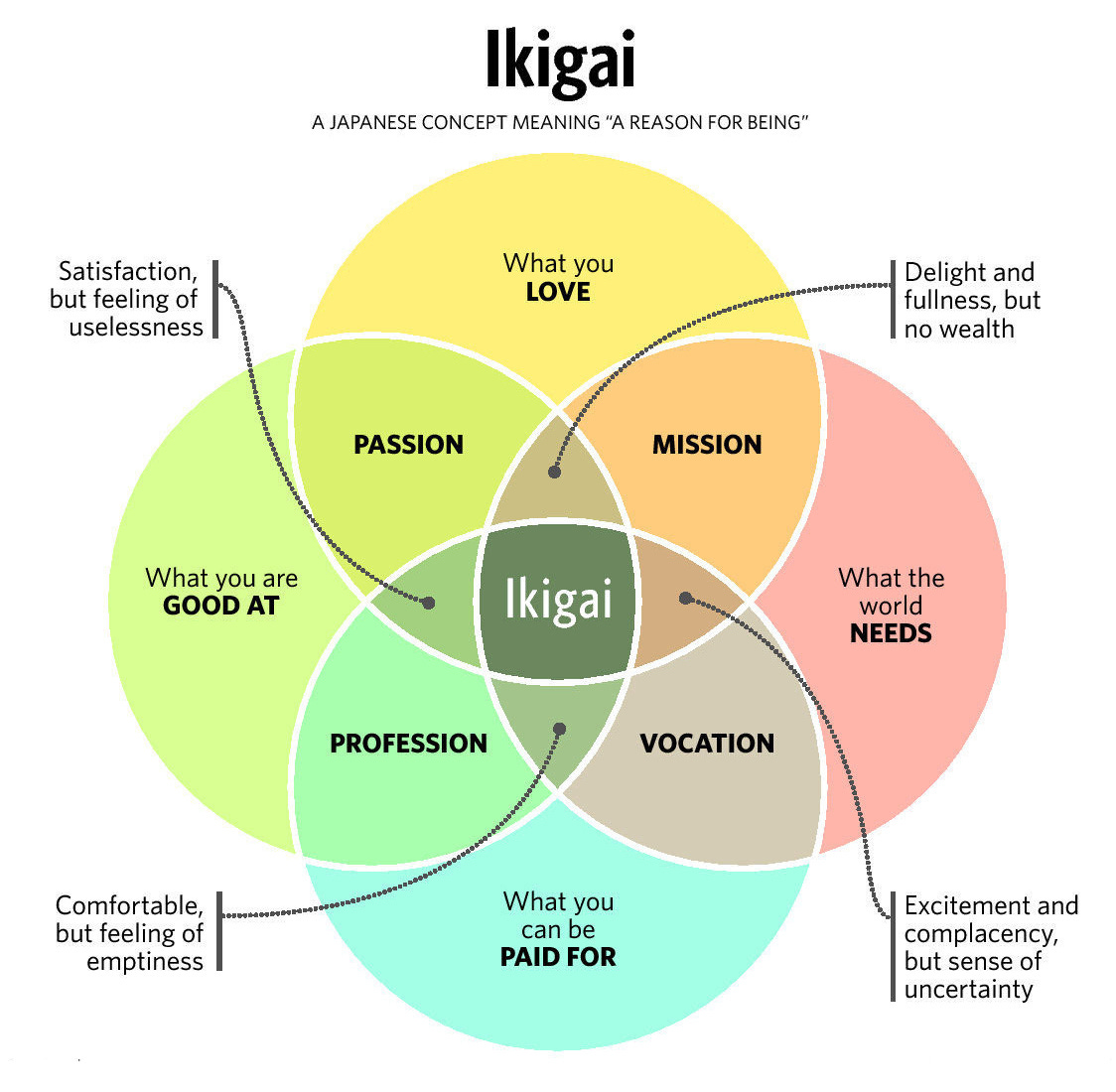
The source of this now ubiquitous and meme-like diagram to visually represent ikigai was blogger Marc Winn:
“In 2014 I merged a venn diagram on ‘purpose’ with Dan Buettner’s Ikigai concept, in relation to living to be more than 100. The sum total of my effort was that I changed one word on a diagram and shared a ‘new’ meme with the world.”
There are those who argue strongly that Winn’s Venn diagram doesn’t accurately depict ikigai, that it is just a Western misinterpretation, and that for most Japanese ikigai is not related to economic status or financial success, pointing out that many Japanese find their ikigai outside of work, in their hobbies, relationships, and by living their values.
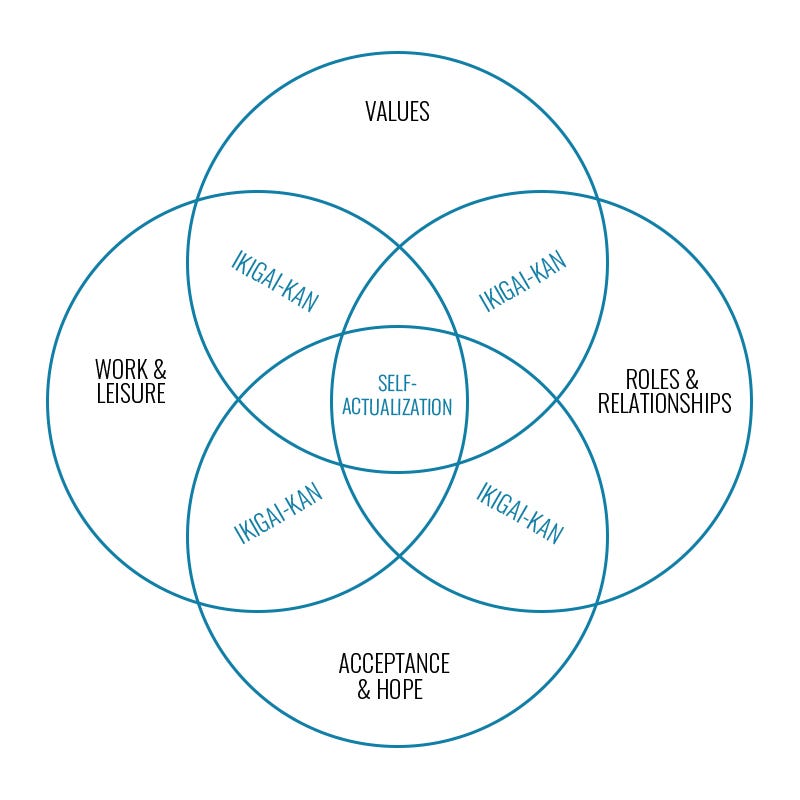
This more prosaic interpretation of ikigai has its own Venn diagram (intersecting: “Work & Leisure”, “Values”, “Roles & Relationships” with “Acceptance & Hope”) and, according to authors of the “Ikigai Tribe” website, is more about self-actualisation.
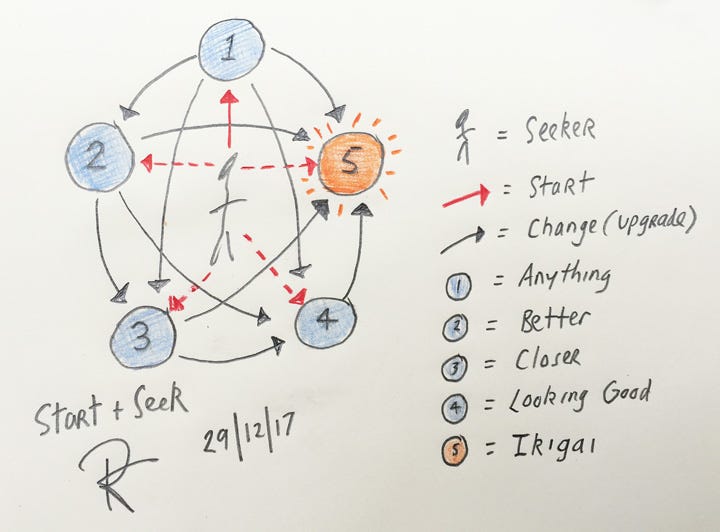
But, for both interpretations ikigai does encourage individuals to reflect on their passions, strengths and values, and to seek out opportunities that allow them to live a purposeful and meaningful life. Being a proactive seeker is always a good thing.
One final but important point to make about goals in relation to ikigai is the achievement of them is not as important as the process and effort that goes into them. For many Japanese, ikigai has an inextricable link to a concept called “kodawari”, doing things properly with great attention to detail. Hear, hear!
Video
References
REMORANDOM Books
Order our books on the REMO store website HERE. Subscribe to receive all future volumes and other printed goodies HERE.

Remo - this is exactly where I have been spending a ton of time - thanks for this compendium. My experiment is here: https://ikigai-dna.lovable.app/ I'm seeing many applications for having your ikigai available as a digital DNA source file. Stay tuned