


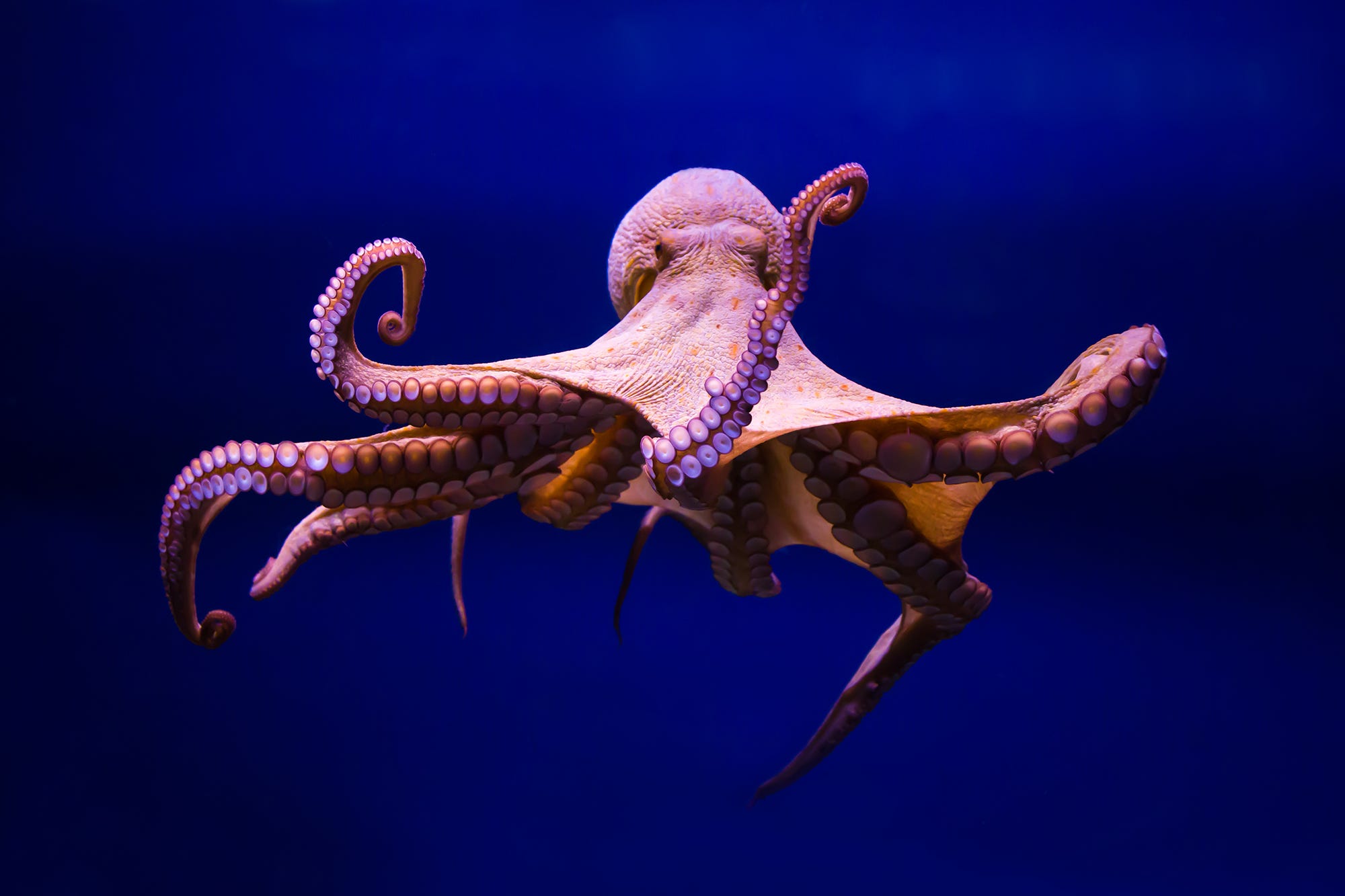
An octopus (plural: octopuses, not octopi) is a soft-bodied, eight-limbed mollusc of the order Octopoda. The order consists of some 300 species and is grouped within the class Cephalopoda – along with squids, cuttlefish and nautiloids.
Some unique and interesting things that you might like to know about octopuses:
They have been around for a very long time.
The oldest known fossil of an octopus ancestor belongs to an animal that lived some 330 million years ago, long before the dinosaurs.
They have nine brains.
One central brain controls the nervous system, and each of their eight arms has its own mini-brain that can act semi-independently. This allows an arm to explore, grab and even taste without direct instruction from the central brain.
They have three hearts.
Two of the hearts work exclusively to move blood past the gills, where it releases carbon dioxide and gains oxygen. The third circulates that oxygen-rich blood to the organs and muscles, giving them energy.
Their blood is blue.
Instead of iron-based hemoglobin (like ours), octopuses use a copper-based molecule called hemocyanin to transport oxygen – an adaptation that works better in cold, low-oxygen environments.
They are master escape artists.
With no bones and a soft, compressible body, an octopus can squeeze through any hole larger than its beak (the only hard part of its body). Many have escaped aquariums through tiny gaps and even slithered down drains to freedom.
They can change appearance in an instant.
Specialised skin cells – chromatophores, iridophores and leucophores – allow them to shift colours and patterns for camouflage or communication. They can also mimic coral or rocks.
Some species can mimic other sea creatures perfectly.
The mimic octopus (Thaumoctopus mimicus) can impersonate up to 15 species, including lionfish, flatfish and sea snakes – choosing the disguise best suited to scare off predators in the moment.
Each arm has a mind (and personality) of its own.
Their arms can continue reacting and grasping even after being severed. Studies show individual arms sometimes behave differently – some more exploratory, others more cautious.
They’re solitary and short-lived.
Most octopuses live just one to two years. After mating, the male soon dies, and the female sacrifices herself guarding and tending to her eggs until they hatch.
They use tools.
The veined octopus (Amphioctopus marginatus) collects discarded coconut shells and assembles them later as portable shelters – one of the first recorded examples of tool use by an invertebrate.
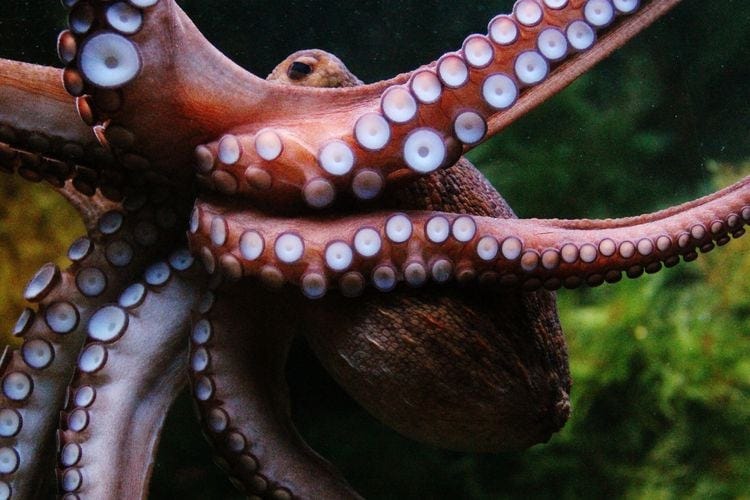
They taste with their suckers.
Each sucker is packed with chemoreceptors that let them “taste” whatever they touch – handy for finding edible items while exploring crevices.
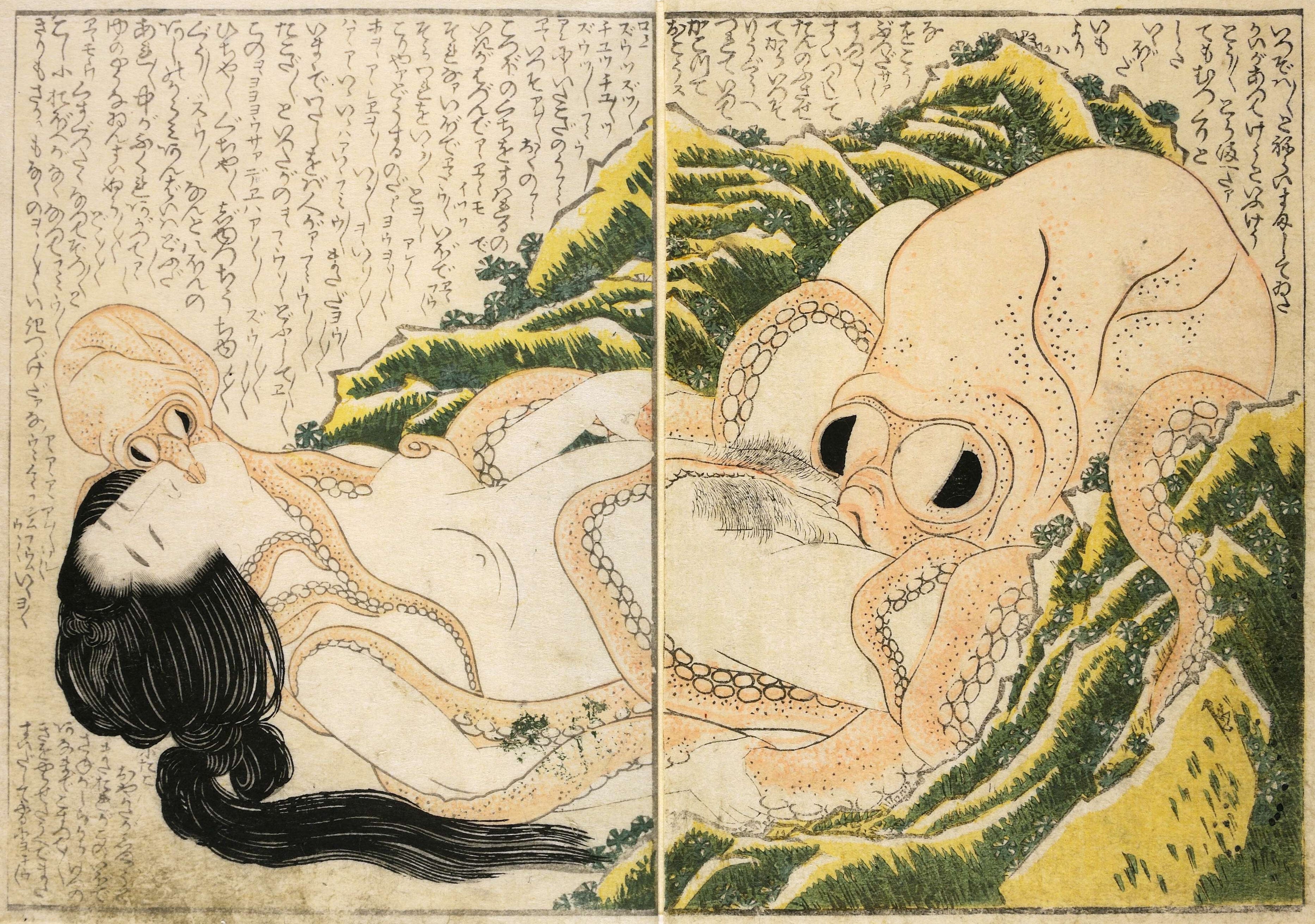
For some, they are erotic muses.
“Tentacle erotica” goes as far back as a sensual 1814 woodblock print, published in Katsushika Hokusai’s Kinoe no Komatsu collection of erotic books.
They can edit their own genetic code.
Unlike most animals, octopuses can modify RNA on the fly to adapt their nervous system to changes in temperature or environment – an extraordinary level of biological flexibility. Their genetic structure is so unusual, some scientists half-jokingly suggest they’re “evolution’s closest thing to an alien intelligence”.
Personal Postscript
We were inspired to research these fabulous creatures by a kinetic sculpture that Remo’s daughter Lola Giuffré (STUDIO LOLA) designed and crafted mimicking the movement of an octopus’s tentacles using a system of internal gears. The one minute video includes the making-of. More about Lola’s Octopus HERE.
References
REMORANDOM Books
Order our books on the REMO store website HERE. Subscribe to receive all future volumes and other printed goodies HERE.
