John Lennon and Yoko Ono’s bed-in was a famous act of performance art and peace activism that took place in March 1969, at the height of the Vietnam War. It was Lennon and Ono’s way of protesting violence and promoting peace – while also making global headlines.
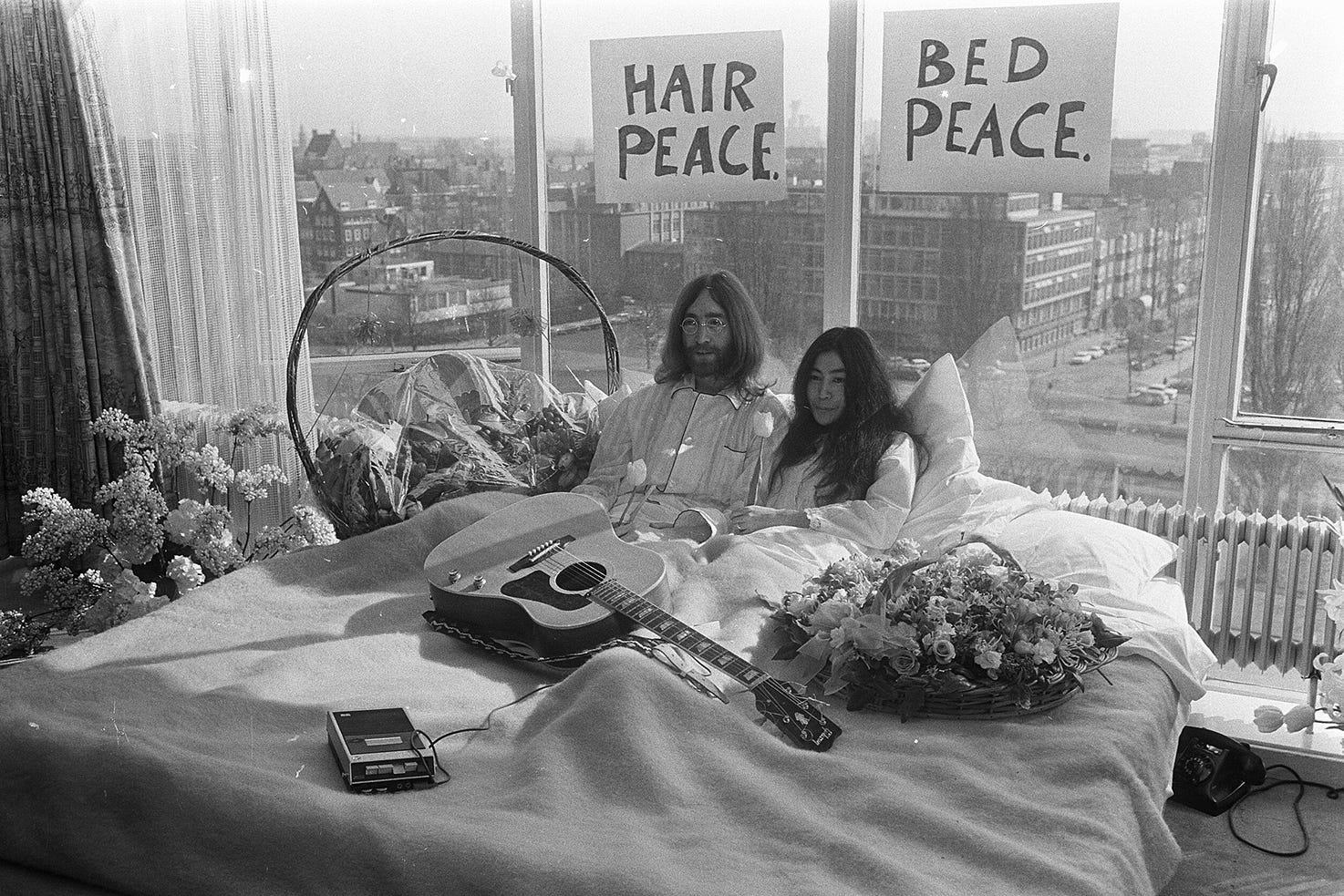
The bed-in was staged during their honeymoon. The couple had married on 20 March 1969 in Gibraltar, and rather than spending their honeymoon in privacy, they turned it into a public statement. From 25 to 31 March, they occupied the presidential suite at the Amsterdam Hilton. Lennon and Ono invited the world’s media to see them in bed. Their slogan was simple: “Hair Peace. Bed Peace.”
Journalists and photographers were expecting something scandalous – this was 1969 after all, and “bed” had connotations other than sleep. Also, remember this was a honeymoon. Lennon was happy to let imaginations run wild. Instead, they found Lennon and Ono sitting up in their pyjamas, surrounded by flowers and handwritten peace signs, calmly discussing nonviolence for hours on end. The couple gave interviews, posed for photos, and answered questions about war and peace, peppered often with Lennon’s trademark wit. The press played along, even if some were skeptical, and the images of the couple in bed, framed by their iconic signs, quickly spread worldwide.


The bed-in wasn’t a one-off stunt. After Amsterdam, they staged a second bed-in in Montreal from 26 May to 2 June 1969. This second event was even more famous because it produced the anthem Give Peace a Chance – and a documentary called Bed Peace that you can watch on YouTube. With a room full of friends, activists and journalists, Lennon led the sing-along that became a global protest song. The lyrics were improvised, the recording was lo-fi, but the message resonated far beyond the hotel walls. The track was soon being chanted at anti-war demonstrations around the world.
Why a bed? Lennon and Ono believed that if violence could capture the world’s attention, then peace should too. They turned something intimate and vulnerable – two people in bed – into a global performance. It was subversive in its simplicity: no marches, no speeches on podiums, just stillness and conversation.
The humour and absurdity of it, and frankly, its banality, also disarmed critics. As Lennon put it at the time:
“We’re saying to the world, ‘Just sit in bed and grow your hair’. If you want peace, just stay in bed.”


The bed-in reflected the late 1960s counterculture’s faith in art, media and personal action as tools for change. It blurred the lines between celebrity and activism, private life and public spectacle. Some [Ed: even modern day Yoko] mocked it as naive, others saw it as a brilliant act of protest.
Today, the bed-in is remembered as a cultural landmark – an image of Lennon and Ono in white pyjamas, in a bright hotel room, asking the world to imagine peace.
More Videos
REMORANDOM 6 is coming in May