


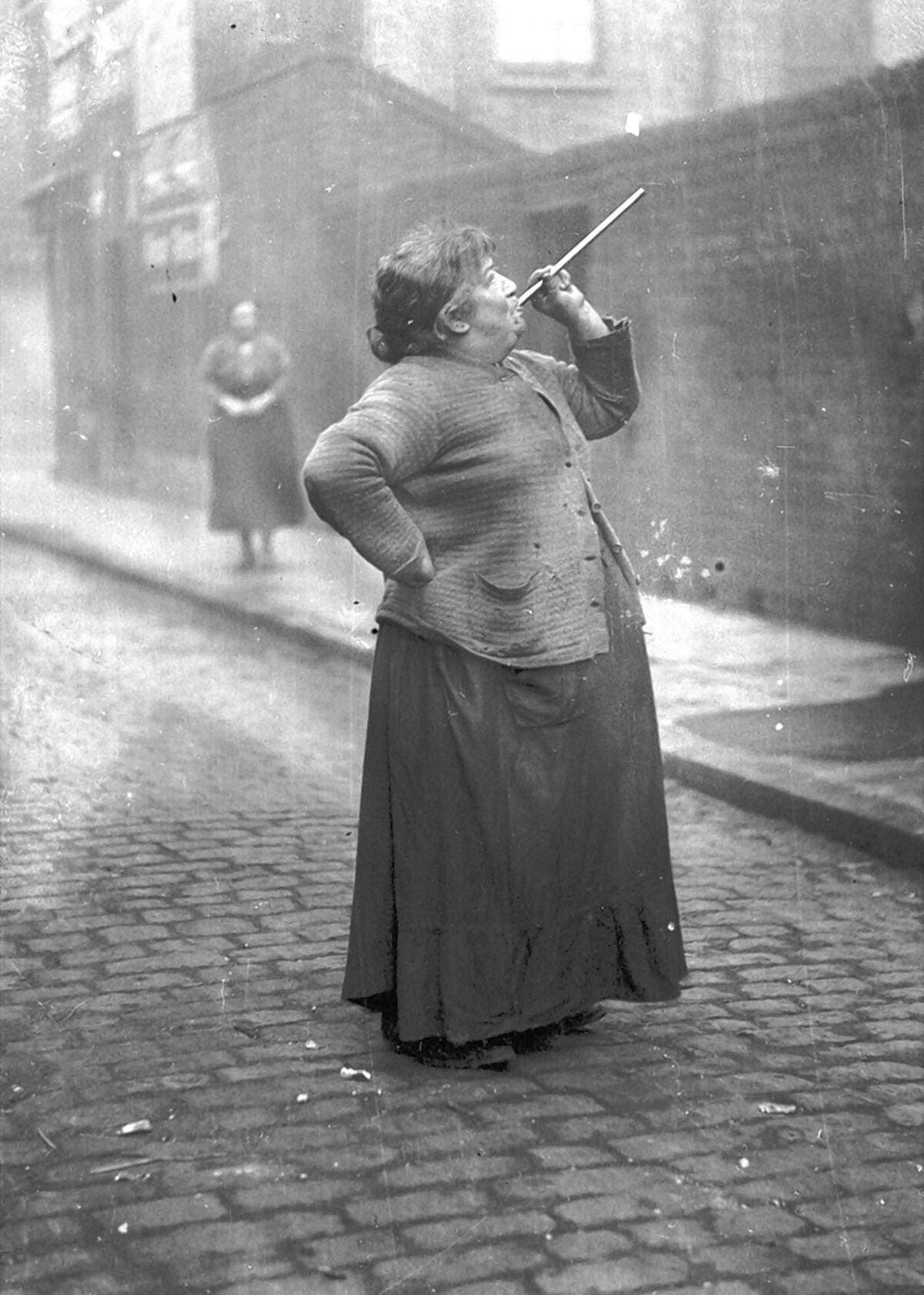
The Industrial Revolution brought about significant changes to UK society, including a proliferation of coal mines, factories and the need for a more disciplined and punctual workforce. Labourers really had to wake up early in the morning as being late for work in those days could mean instant dismissal and a speedy spiral for those workers and their families into poverty and destitution.
To meet the demand for waking people up on time, the opportunistic-but-short-lived profession of the “knocker-upper” emerged. These people woke their clients at their required times, especially workers who had early morning shifts.


Knocker-uppers used various methods and tools to wake their clients. Most common were long, light sticks, often made of bamboo, to tap or scratch on the windows of the people that they needed to wake. The level and nature of the waking sound had to be just right, loud enough to wake the client, but not so loud as to wake sleeping neighbours or freeloaders who weren’t paying for their own knocking-up.
Some knocker-uppers used soft hammers, and others used pea shooters. One famous photograph shot in 1931 by John Topham shows Mary Smith a knocker-upper in East London using a long rubber tube to shoot dried peas at her clients’ windows. Now, that’s a cool job. Smith was known for the rapping, clacking sound of her peas against windows and doors. A colourful character by all accounts, she is also the hero of a children’s picture book by Andrea U’Ren called Mary Smith.


Knocker-uppers maintained tight schedules. They would travel from one house to another, ensuring that everyone they were responsible for woke up on time. Some knocker-uppers would not leave a client’s window until they were sure that the client had been awakened, while others simply tapped several times and then moved on, fingers crossed.
There were large numbers of people doing this job, especially in bigger industrial towns such as Manchester. Generally the job was done by elderly men and pregnant women but sometimes police constables supplemented their pay by performing the task during early morning patrols.
Each client might pay sixpence a week for the service, and a speedy knocker-upper might manage to earn 40 shillings per week from a full roster of clients.
Miners’ houses sometimes had slate boards set into their outside walls onto which they would write their shift details in chalk so that the colliery-employed knocker-upper could wake them at the correct time. These boards were known as “knocky-up boards” or “wake-up slates”. [Ed: Language was so much more colourful in those days.]


The decline of the knocker-upper profession began with the increasing availability and affordability of alarm clocks in the early 20th century. Damn that technology.
By the 1940s and 1950s, the profession had more or less entirely died out, although was still continued in some pockets of industrial England until the early 1970s. The last knocker-upper retired from the job in 1973, in Bolton.
REMORANDOM Chapter

Excellent edition! I imagine a lot of parents with teenagers would still like to outsource the dangerous job of waking their children for school.