Laughter is a shared experience. If someone laughs in your vicinity, you’re likely to follow suit. Psychologists consider laughing a social signal that strengthens bonds between people and relieves tension. And what’s more, a 1974 study in the Journal of Personality and Social Psychology established that people were more likely to laugh at jokes that were followed by laughter – even if that laughter wasn’t authentic.
A laugh track is an audio recording consisting of laughter (and other audience reactions) used as a separate soundtrack for comedy productions. The laugh track may contain live audience reactions or artificial laughter (canned or fake) made to be inserted into the show, or a combination of the two. The use of canned laughter to “sweeten” the laugh track was pioneered in the early 1950s by CBS sound engineer Charles “Charley” Douglass.


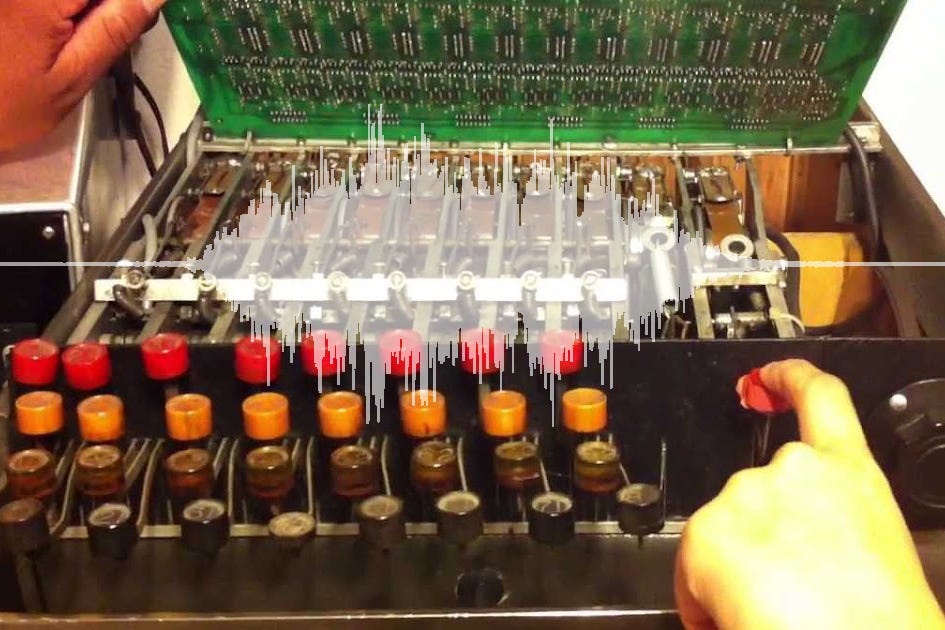
Early television comedies like The Jack Benny Program and I Love Lucy relied on studio audiences, but editing those shows was tricky. If a line was reshot, the laughter wouldn’t match. To fix this, Douglass built a secretive device he called the “laff box”. About the size of a typewriter, it contained dozens of magnetic tape loops of audience laughter, organised by intensity, gender and age group. Using a keyboard-like control panel, Douglass could “play” laughs to suit a scene – a soft chuckle here, a booming guffaw there, 320 laughs on 32 tape loops – blending them seamlessly with live reactions.
Douglass stoked Hollywood’s demand for artificial laughter but cloaked every facet of his operation. Nobody but his immediate family members were allowed to look inside the laff box and see how it worked, and he kept the box tightly padlocked, rarely leaving it alone. It was his goose, and the laugh tracks were its golden eggs. By the late 1950s and ’60s, the Douglass laugh track became a defining feature of American sitcoms and sketch comedies – a dominance that would last until the late 1970s.


Shows like Gilligan’s Island, Bewitched, The Beverly Hillbillies and The Brady Bunch all relied on Douglass’s laugh track services. The practice created a sense of community – the illusion that you were part of a crowd, laughing together in the living room. Friends and Seinfeld were two notable more recent shows that also relied on a laugh track. Critics, however, have long been divided. Some argue that laugh tracks are manipulative and condescending, telling viewers when to laugh rather than allowing humour to land organically. Others note that they originally helped guide audiences through a new, unfamiliar medium – television – where cues from a live theatre audience were absent.
By the 1980s and ’90s, technology advanced and tastes had shifted. The rise of single-camera comedies – M*A*S*H, The Wonder Years, and later The Office and Arrested Development – signalled a move toward more naturalistic storytelling. Many modern viewers have come to see laugh tracks as artificial or old-fashioned – embracing laughtrack- free shows like 30 Rock, Curb Your Enthusiasm, Modern Family or The Simpsons.
Postscript
Douglass’s original laff box was bought at auction in 2010. It was subsequently featured in an episode of Antiques Roadshow, where its value was appraised at US$10,000. [Ed: Seems cheap.] Watch that appraisal HERE.
Video
REMORANDOM