


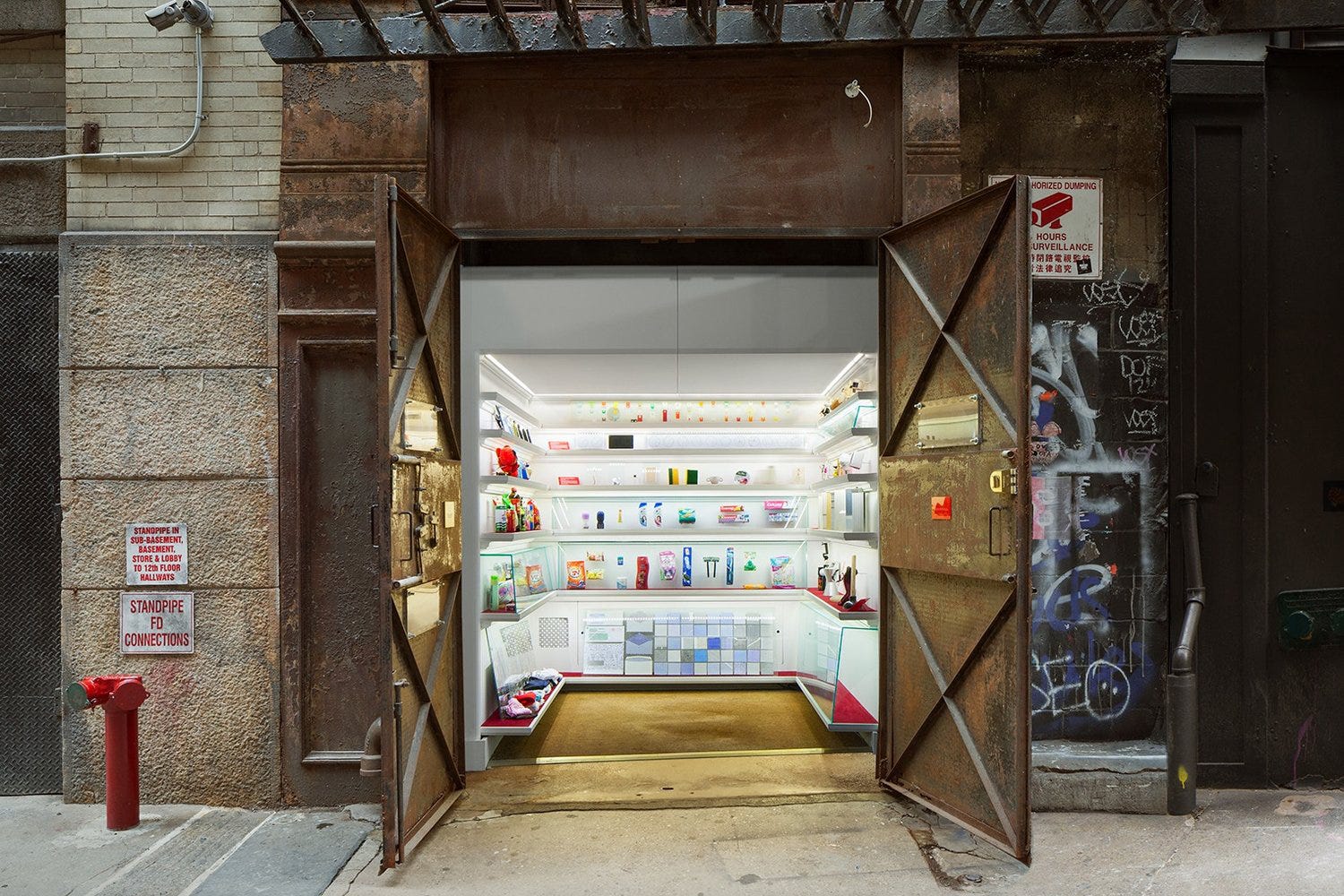
Founded in 2012 by Alex Kalman (longtime friend of REMO) and the Safdie brothers (the filmmakers behind Uncut Gems), this micro-museum defies the conventions of traditional institutions. Its mission? To exhibit “modern-day artifacts” that tell the story of the contemporary world in all its weird, poignant and mundane glory.


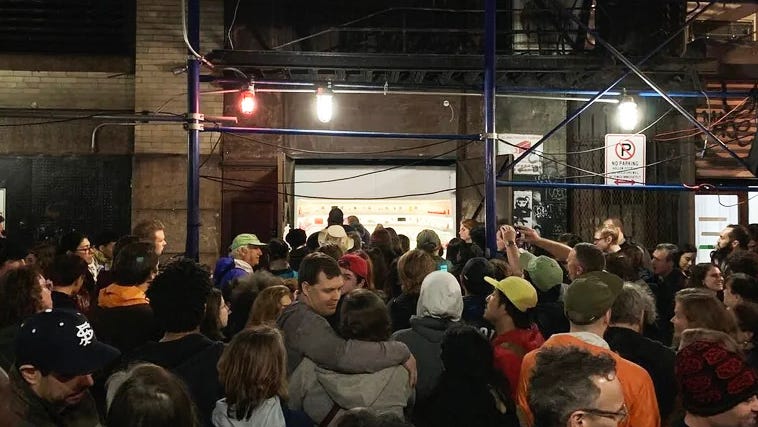
Despite its size (no bigger than a walk-in wardrobe), it’s a world unto itself. Visitors peer in through a glass window or step inside the repurposed elevator shaft (if the museum is open).
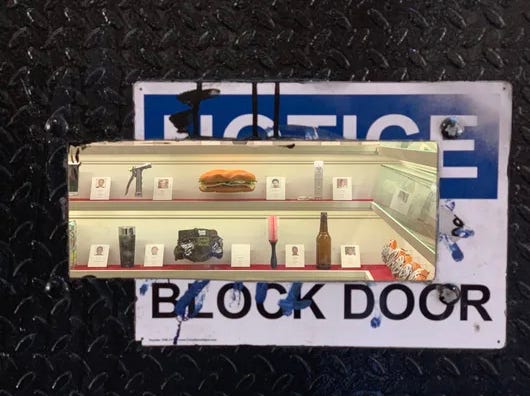
Mmuseumm operates on the principle of “object journalism” – a belief that objects, even the most overlooked ones, can reveal deep truths about who we are and how we live.
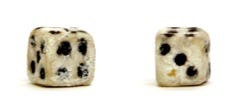
Each season, Mmuseumm curates a rotating selection of items from around the globe. Past exhibits have included dice made out of bread by a prison inmate, the last pair of Al Goldstein’s gold lamé Nike Air Jordan sneakers, a plastic bag from Syria, the shoe thrown at George W. Bush in Iraq, a range of air sickness bags from different airlines and even personal notes confiscated by the TSA.


More recently Alex curated a collection of rubble from around the world, and Remo was pleased to be able to contribute a piece from the Bondi Beach Promenade.


These objects, accompanied by detailed labels and often unexpected backstories, elevate the everyday into the extraordinary. The goal isn’t to impress with grandeur, but to provoke curiosity and insight through intimacy and oddity.
What makes Mmuseumm especially compelling is how it challenges the idea of what belongs in a museum. Instead of masterpieces or rare antiquities, you’ll find mass-produced objects, strange cultural relics, or personal mementos that reflect global politics, pop culture, consumerism, conflict and the human condition.
There’s humour and pathos in equal measure – an exhibit of international toothpastes [RR1:84] might sit next to a bulletproof clipboard used in a US school.
Alex’s role is a hybrid of curation and journalism, i.e. “curatorial journalism”. Rather than using text, photo, video or digital to create immersive stories, Mmuseumm uses the objects themselves as proof and testament. Mmuseumm doesn’t tell visitors what to think, but it rewards curiosity. There’s also an audio tour available by phone (via the “Audio Guide” number posted on the wall), making it accessible 24/7, even when the museum is closed.
A second wing, Mmuseumm 2, debuted in 2015 a few doors down from Mmuseumm 1. It once showcased Alex’s grandmother Sara Berman’s closet, recreated in collaboration with Alex’s mother Maira Kalman [RR7:54], as a testament to “the way you can create order and meaning in a chaotic life,” he said. That show later travelled to The Met [RR4:47].
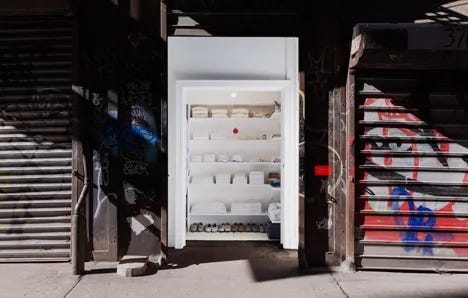
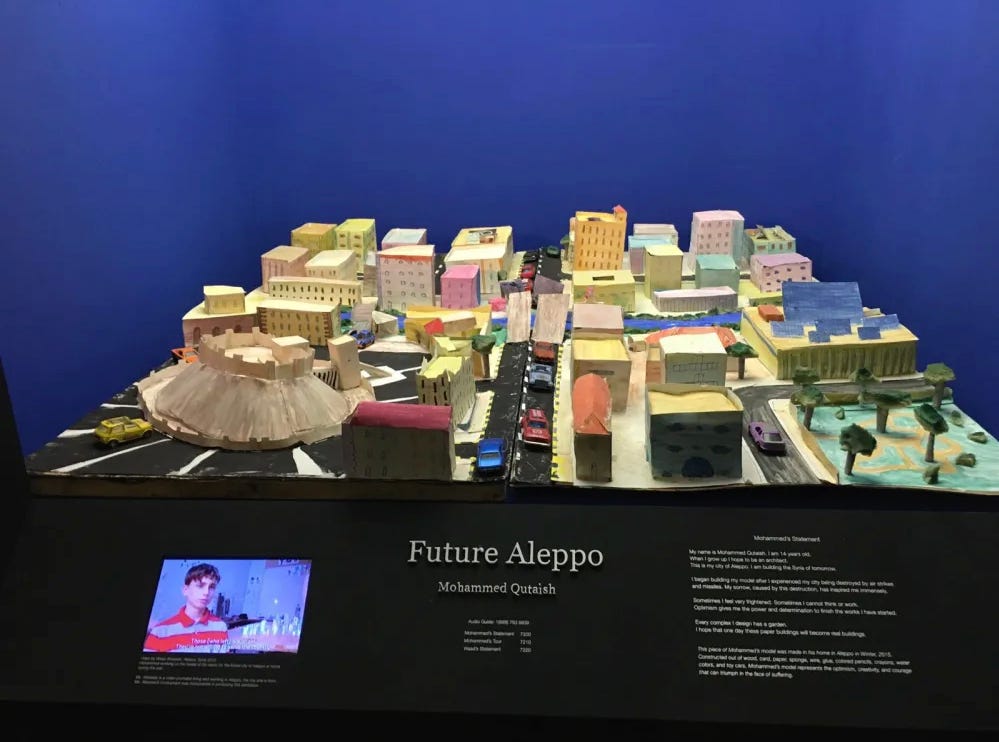
And a 2016 exhibition in the same tiny space featured “Future Aleppo”, a model made of wood, paper and other objects by an inspired 14-year-old Syrian named Mohammed Qutaish, created in a vacant basement as bombs were destroying the current Aleppo.
Mmuseumm has developed a cult following not just in New York but internationally. Its curatorial approach has been exhibited in satellite locations and special installations, and it has sparked conversations about the future of museums in an age of shrinking attention spans and expanding global complexity. It’s one of those rare places that makes you feel more awake to the world around you.
Personal Postscript
Video
Future Aleppo by Mohammed Qutaish. Well worth a watch.
REMORANDOM Chapters


I've visited Mmuseumm many times -- what a treasure.