


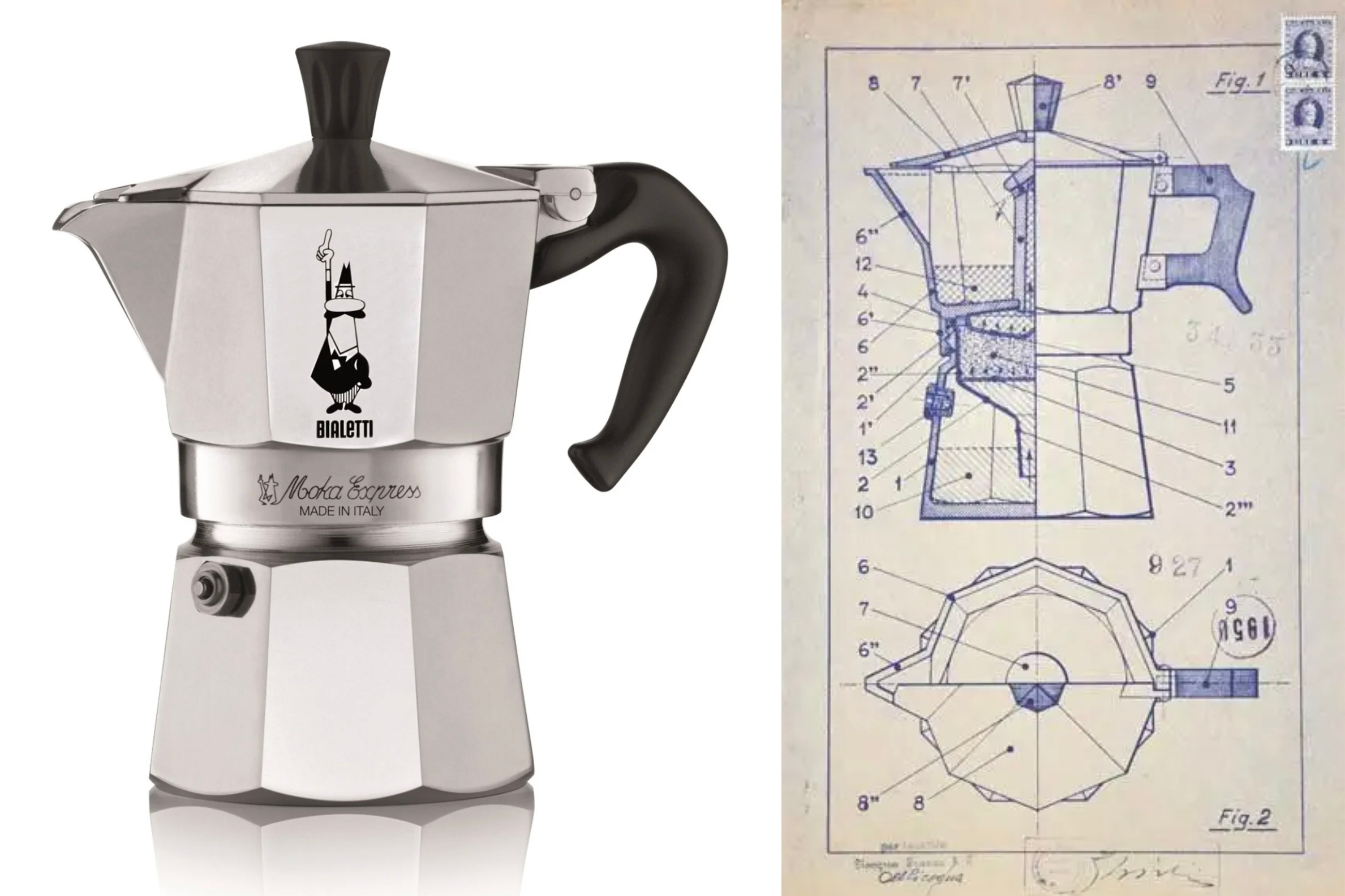
The moka pot, also known as the stovetop espresso maker, was invented in 1933 by Alfonso Bialetti, an Italian engineer who ran a small aluminium smelting foundry. It is an industrial object that has remained unchanged since its first appearance.
The design was actually inspired by an early 20th-century laundry system that used steam pressure to push soapy water through clothes. Bialetti applied this concept to coffee, creating a simple yet, at the time, revolutionary method for brewing rich, espresso-like coffee at home.
During World War II, Italy faced economic hardship, making espresso coffee an expensive luxury. The moka pot, manufactured by Bialetti, became a household staple, democratising espresso-style coffee. The selling proposition was this: in casa un espresso come al bar (“an espresso at home just like at a cafe”).


By the 1950s, with Alfonso’s ambitious son Renato driving the family business, the Moka Express had become an iconic product in Italian homes, and its popularity soon spread worldwide. Renato had a gift for showmanship. Using the medium of television, he popularised his product on the main RAI TV station and created a brand trademark around his distinctive handlebar moustache, as can be seen in the trademark icon, a caricature of a man with a finger raised in the air ordering another cup of coffee.
The moka pot works as a pressure-driven coffee brewer, consisting of three main chambers. The bottom chamber holds water, the middle funnel with a filter basket contains ground coffee, and the top chamber collects the brewed coffee. When placed on a heat source, the water in the bottom chamber heats up, creating steam pressure. This pressure forces hot water up through the coffee grounds and into the top chamber, resulting in a strong, concentrated coffee – similar to espresso but with a slightly lighter body and less crema.


While Bialetti is the most iconic and widely recognised brand, several other manufacturers – e.g. Alessi, Pezzetti and Ilsa – produce high-quality moka pots with unique designs and features. Despite the competition, Bialetti remains the industry leader, largely because of its historical legacy, quality craftsmanship and cultural significance.
Beyond its function, the moka pot has also become an industrial design icon. Its octagonal shape and Art Deco aesthetic have made it a permanent fixture in museums like the Museum of Modern Art (MoMA) in New York. The original Bialetti Moka Express, with its mustachioed mascot, remains a best-seller and a symbol of Italian coffee culture.
Despite the rise of espresso machines, pod systems and pour-over methods, the moka pot remains popular due to its affordability, simplicity and sustainability. It requires no electricity, uses no disposable pods or filters, and delivers a bold, rich coffee experience.
Postscript
Alfonso Bialetti also happens to be the grandfather of famous Italian designer and manufacturer Alberto Alessi. Makes sense. See also Juicy Salif [RR1:43].
REMORANDOM Chapter

A design icon perhaps, but leave it on the shelf to admire rather than use it. Aluminium is a very real health risk (see below). Wish they made it in stainless steel.
High-level, chronic exposure to aluminum is linked to neurological impairment, bone diseases (osteomalacia), and respiratory issues. While generally considered safe in low amounts, excessive accumulation can trigger neurotoxicity, with some research suggesting a link to neurodegenerative disorders like Alzheimer’s, though studies are mixed. Risk is highest for individuals with kidney disease.