


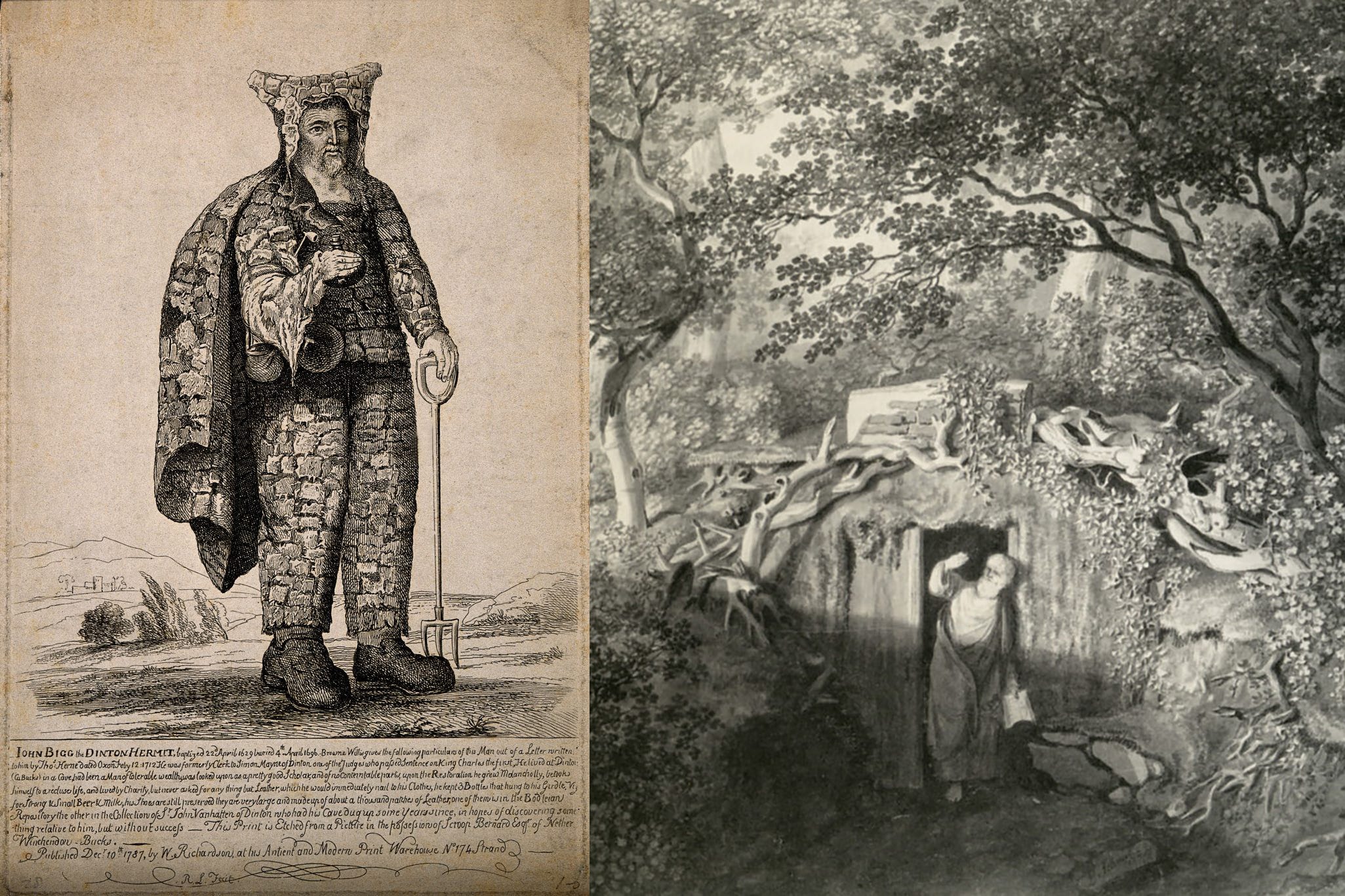
If you were a wealthy gentleman back in the 18th and early 19th centuries, simply owning a grand country estate with elegantly landscaped gardens wouldn’t be enough to impress and astonish your guests. What you needed was an ornamental hermit. An ornamental hermit was not a real hermit, but rather a man who was employed by the estate owner to reside in a contrived hermitage for a period of time and make scheduled appearances on the grounds at the pleasure of the employer and to be seen and marvelled at by guests.
It sounds crazy and Pythonesque today – but apparently it seemed like a good idea at the time. These living curiosities became part of an estate’s grand design, lending a touch of mystery and philosophical gravitas to the manicured landscapes of the Enlightenment. As the Age of Reason collided with a growing fascination with nature and contemplation, the idea of the wise, solitary figure communing with nature gained cultural traction. Ancient hermits and monks had long symbolised simplicity, reflection and withdrawal from worldly corruption.


Professor Gordon Campbell of the University of Leicester, author of the 2013 book The Hermit in the Garden: From Imperial Rome to Ornamental Gnome, suggests the practice started somewhere in southern Europe and that Francis, a Roman Catholic friar from Paola in Calabria, was among the first of the trend, living as a hermit in the early 15th century in a cave on his father’s estate. Thereafter, throughout France, estates of dukes and other lords often included small chapels or other buildings where a resident hermit could remain in attendance.
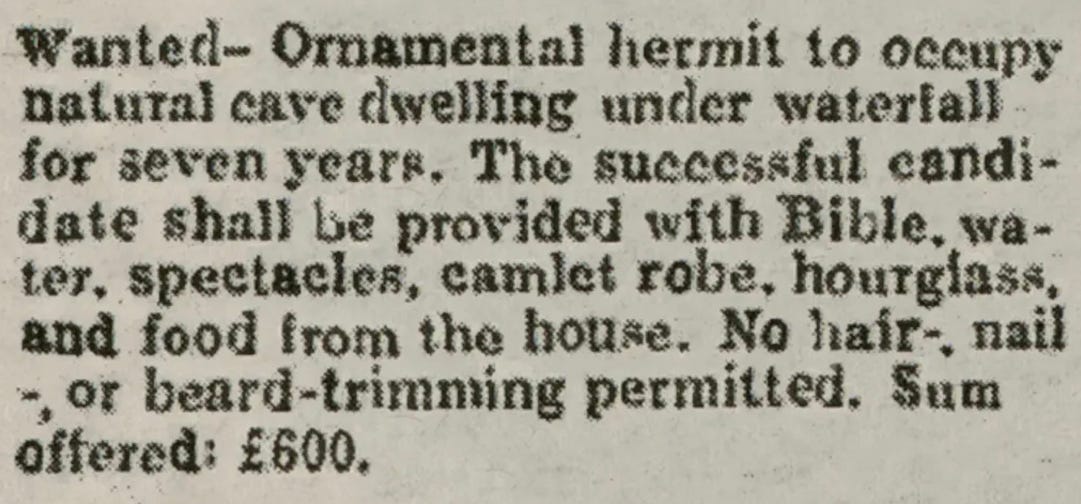
But it would be the British aristocracy who would push the trend to the next level. Estate owners like the 18th-century English aristocrat Charles Hamilton of Painshill Park constructed rustic hermitages as part of their picturesque gardens. These were designed to evoke an idealised wilderness – a carefully crafted imperfection that counterbalanced the order of formal landscaping. Hamilton advertised for a hermit willing to take up residence for seven years, under strict conditions: no speaking, no washing, no cutting of hair or nails, and no leaving the grounds. The reward was £700, a fortune at the time. The story goes that Hamilton’s first hermit lasted only three weeks before being dismissed after being spotted drinking in the local pub. [Ed: Fair cop, Guv.]


Not all ornamental hermits were failures, and not all were entirely real. Some landowners used mannequins dressed in robes to give the illusion of a resident sage glimpsed through a window or doorway. [Ed: Doubly fake. Cheating!]
Some social commentators of the time mocked the practice as absurd. The satirist Thomas De Quincey and others used the ornamental hermit as shorthand for the eccentricity and moral emptiness of the gentry. Still, the fad reflected some genuine anxieties of those times. Industrialisation and urbanisation were beginning to change the world. The ornamental hermit embodied a yearning for authenticity, for a simpler existence supposedly closer to nature – even if only simulated. In this way, the hermit’s hut was both a retreat and a pastoral fantasy set against the encroaching modern world.


By the mid-19th century, the fashion for living and breathing ornamental hermits had faded as landscaping tastes shifted and realism replaced romanticism.
Story Idea: Hugh Ramage
REMORANDOM Chapter
