


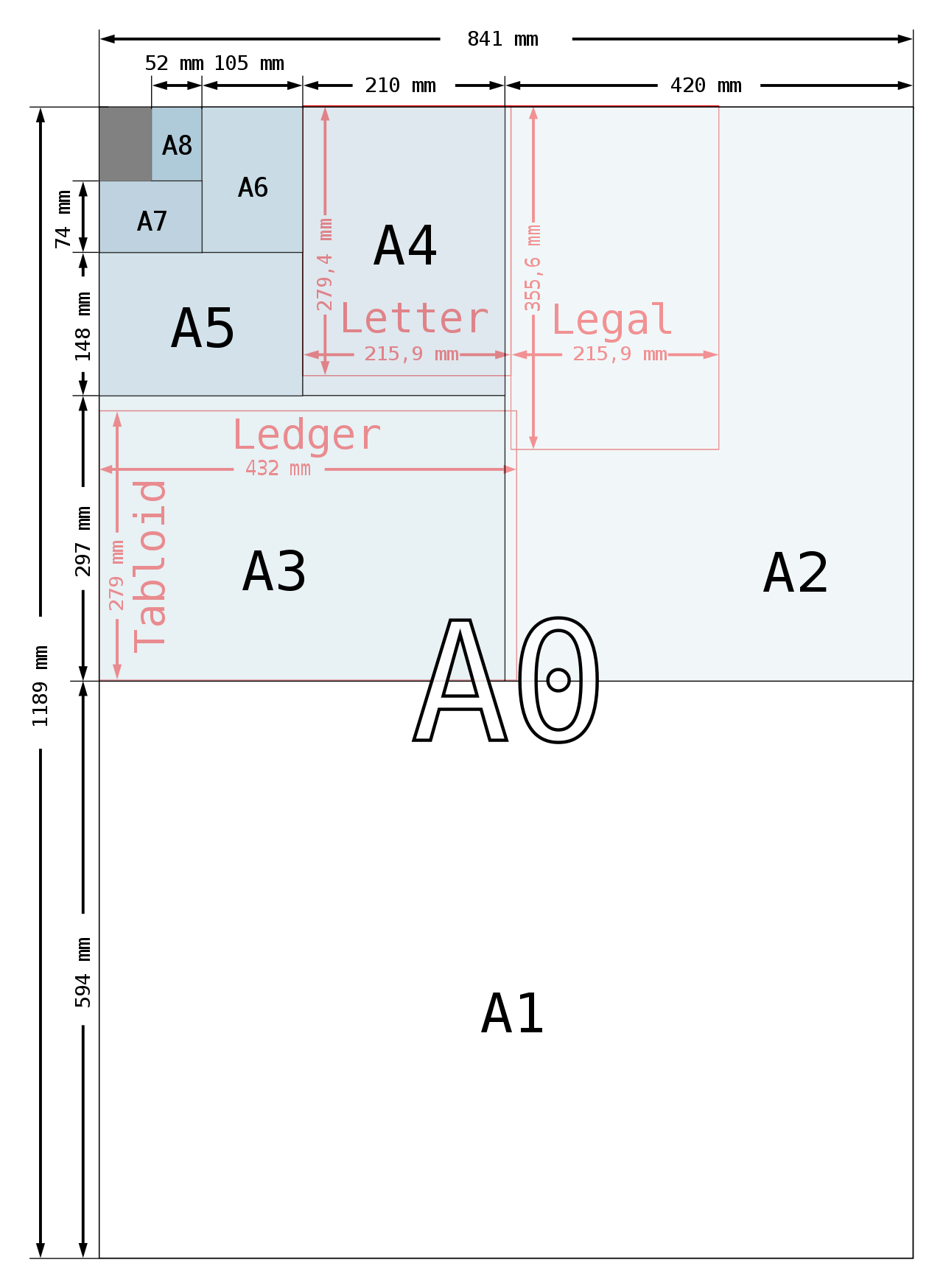
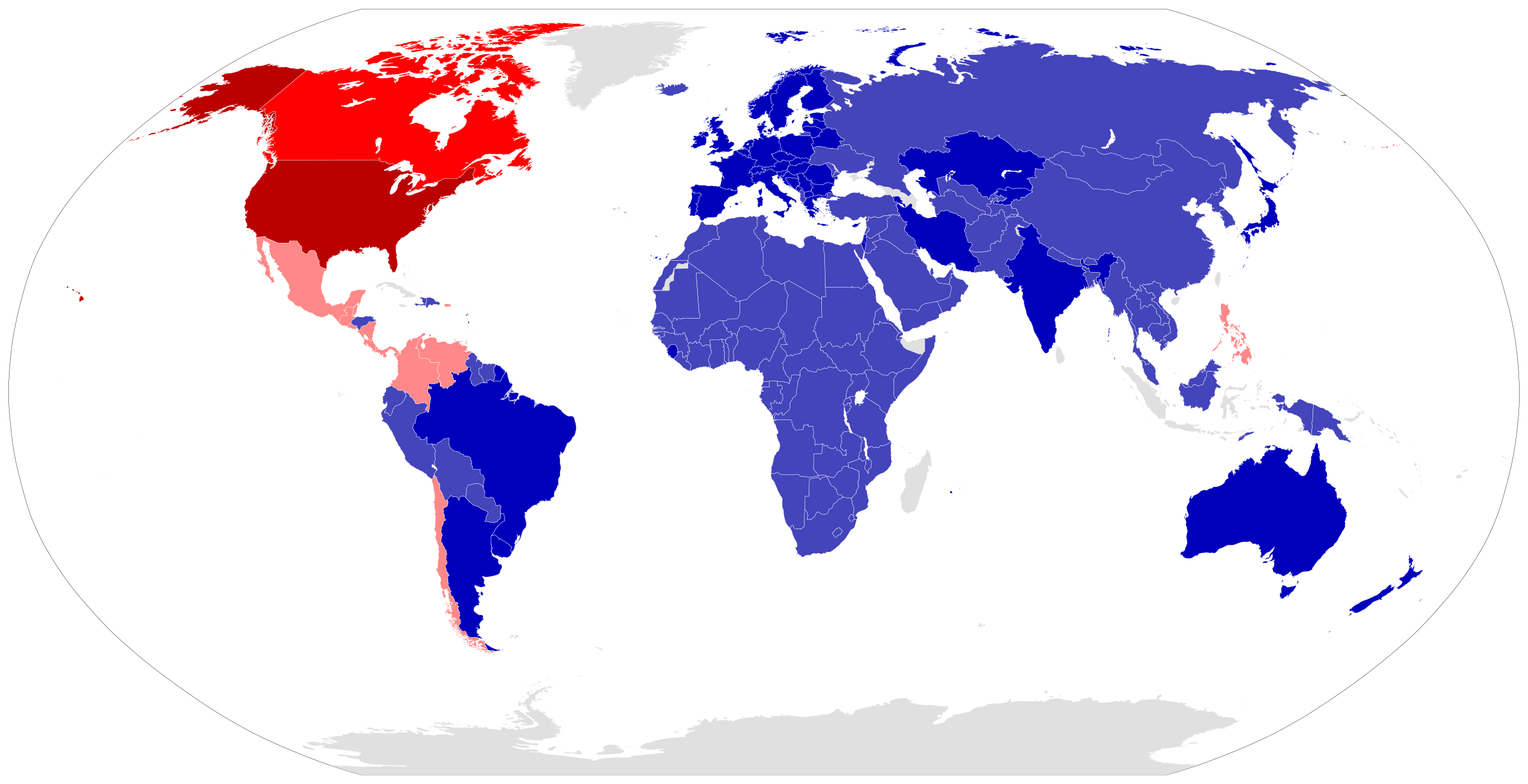
Paper size standards govern the size of sheets of paper used as writing paper, stationery, cards, and for some printed documents. The ISO 216 standard, which includes the commonly used “A series” and A4 size, is the international standard for paper size. Introduced in 1975, it is used worldwide except in North America and parts of Central and South America, where US paper sizes such as Letter and Legal are used.
The first evidence of standard paper sizes being discussed was in a letter dated October 1786 from physics Professor Georg Christoph Lichtenberg to his friend Johann Beckmann. In his letter, Lichtenberg outlined the benefits of a height to width ratio of 1 to the square root of 2.

And indeed, that’s where we’ve arrived. ISO 216 paper sizes are all based on a single aspect ratio of 1 to the square root of 2, or approximately 1:1.41421; and each ISO paper size is one half of the area of the next larger size in the same series.

There are 11 sizes in the A series, designated A0 to A10. The A0 base size is defined as having an area of 1m2 with dimensions, rounded to the nearest millimetre, of 1,189mm x 841mm. As metric paper weights are usually measured in grams per square metre (gsm), this doubling/halving relationship between each size makes mass calculations very easy when dealing with large volumes of paper in the print and publishing industries. An A0 sheet of 80gsm paper weighs 80g. So, an A5 sheet of that same paper would weigh 1/16 of that 80g, i.e. 5g.
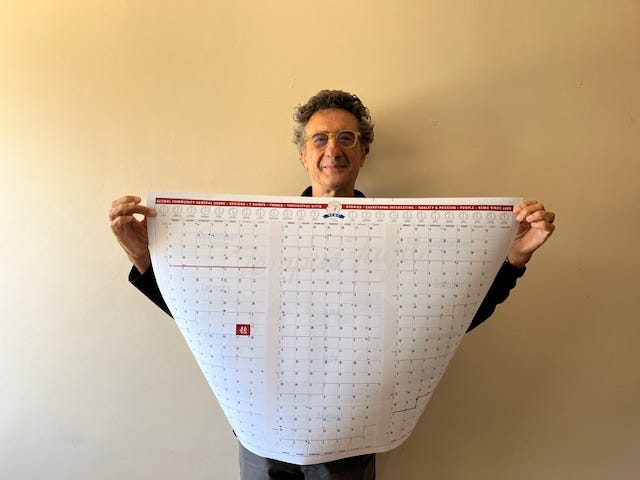
This gives the A series of paper a great trick up its sleeve that saves printers and designers time when estimating weights for printed things, e.g. a REMO wallplanner printed on an A1 sheet of 200gsm paper weighs 100g.
The shared aspect ratio across all sizes also means that (say) an A4 page can be scaled up by 41% and all the artwork and text is the perfect width and height to fill an A3 page. Similarly, scaling A4 artwork down to 71% of its original size will see it fit perfectly on an A5 page with no unpleasant stretching, squashing, or redesigning of artwork required.
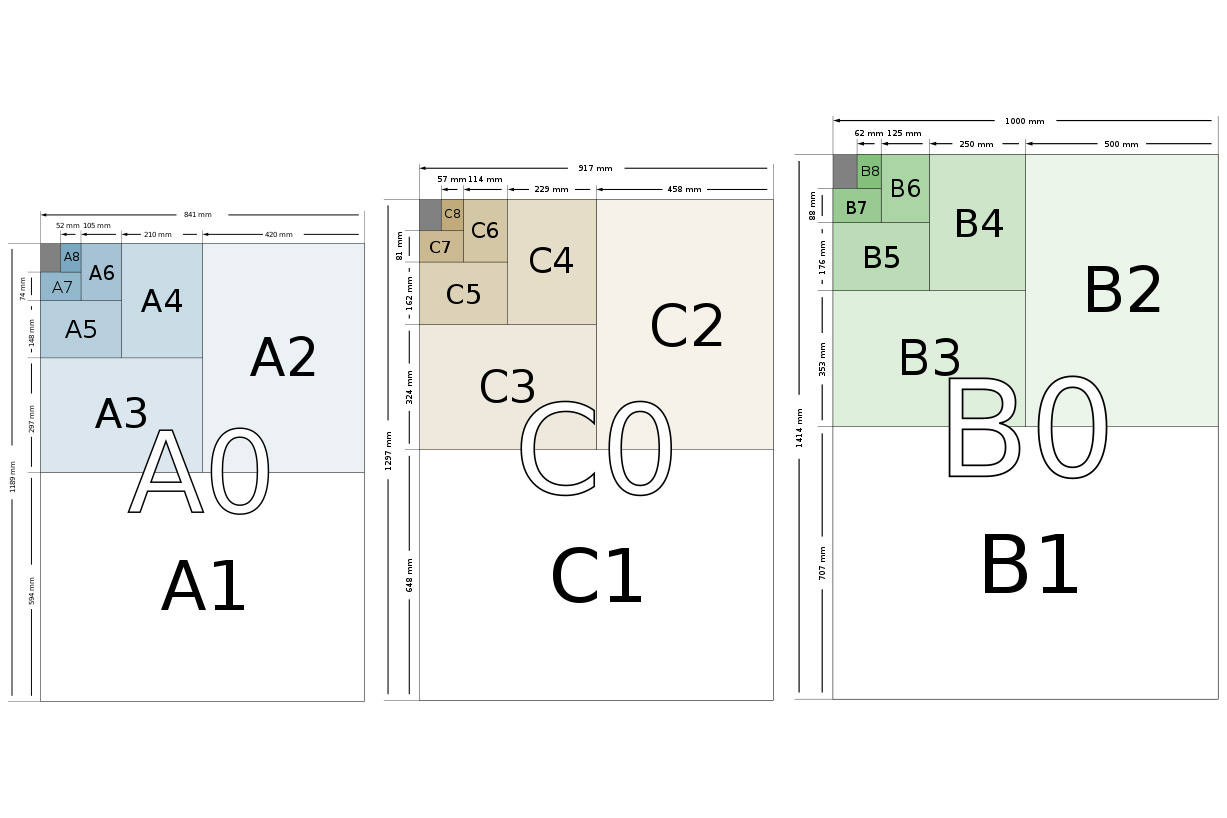
“Series C”, the basis for many envelope formats, is based on C0 with width of 917mm, and “Series B” is a bit bigger again, based on B0 with width of 1m.
This is all very soothing. But the United States will have none of it. Over there, the US Letter (8.5 x 11 inches) and Legal (8.5 x 14 inches) sizes are used almost exclusively.
And why those particular sizes? The answer is historical and somewhat pragmatic. Early paper makers dipped wooden framed screens of various sizes into vats of water and pulp. These “vat men” would then heave them back out — all by hand — and once they’d left them to dry, they’d end up with large sheets of paper. One of the common frame sizes was a size that was about 44 inches x 17 inches. Cutting those paper sheets into quarters would result in “letter” sized sheets that were 8.5 x 11 inches.
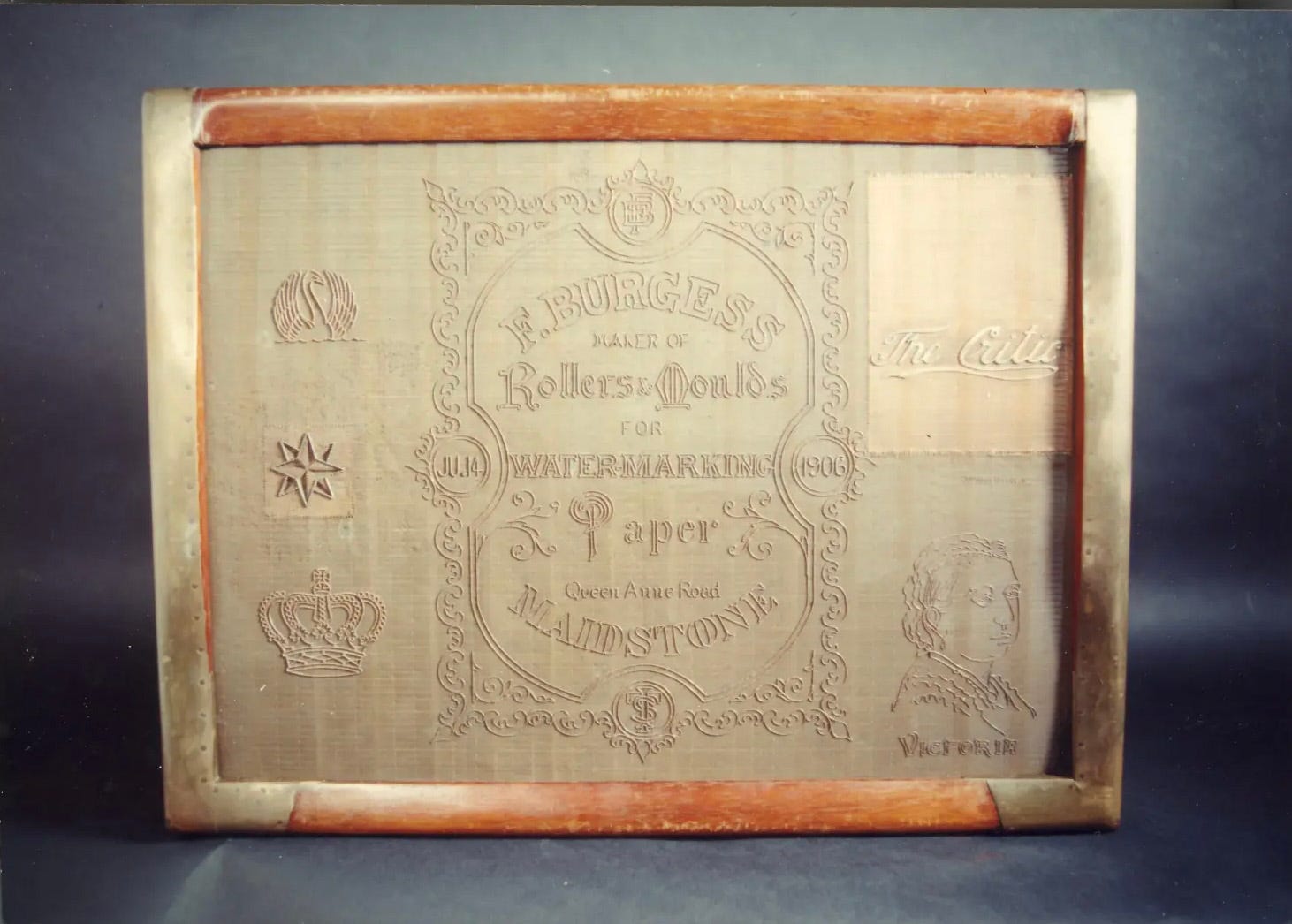
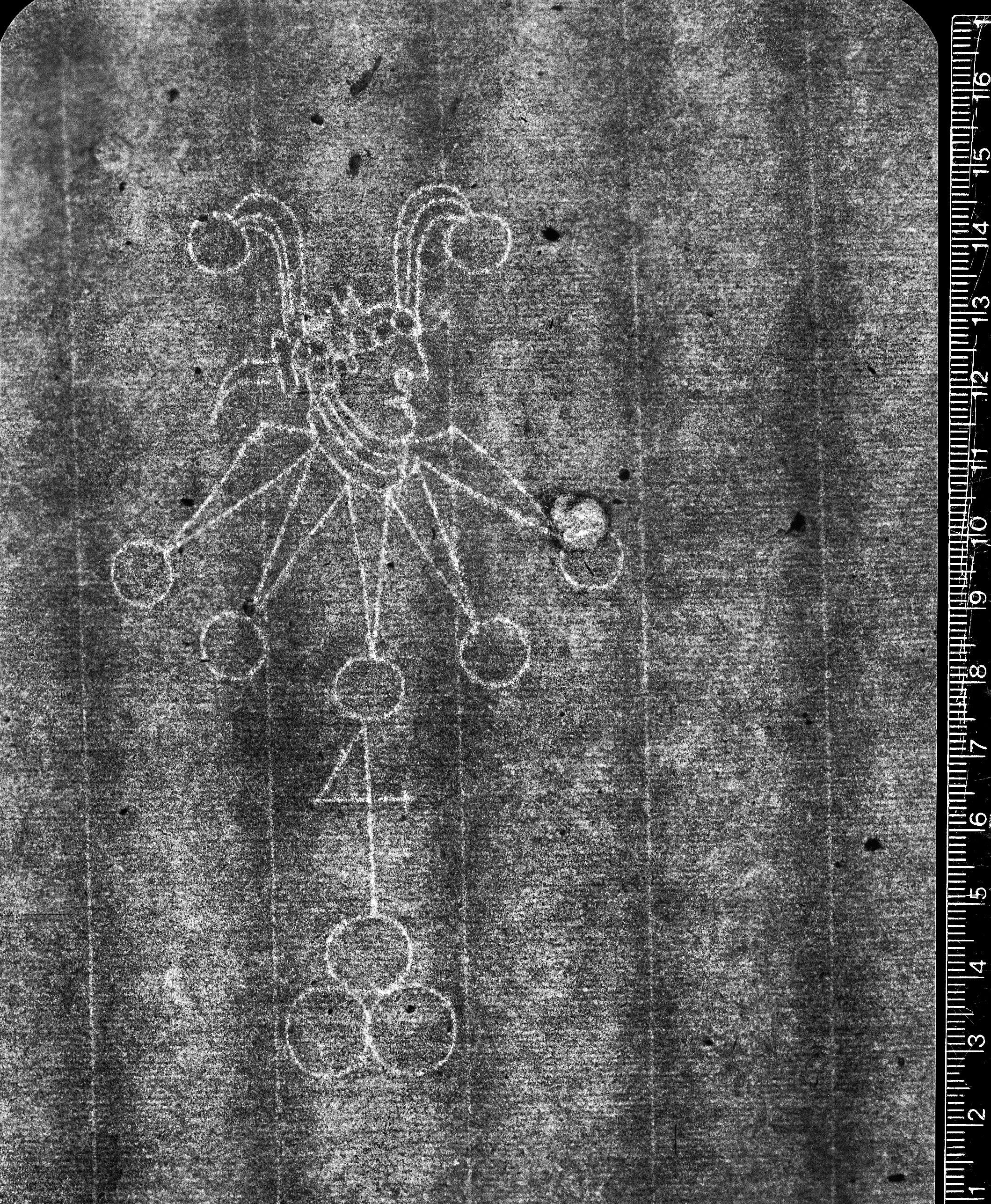
Last but not least there is “foolscap” at 8 x 13 inches (British) or 8.5 x 13.5 inches (Imperial). Foolscap was named after the “fool’s cap and bells” watermark commonly used from the 15th century onwards on paper of these dimensions.
Apparently American restaurants are still big buyers of foolscap paper; the extra length works well for a daily menu. Folded in half, they make a perfect cocktail menu, and in half again, it’s just right for daily specials.
Story Idea: Jane Campbell
REMORANDOM Chapter
