


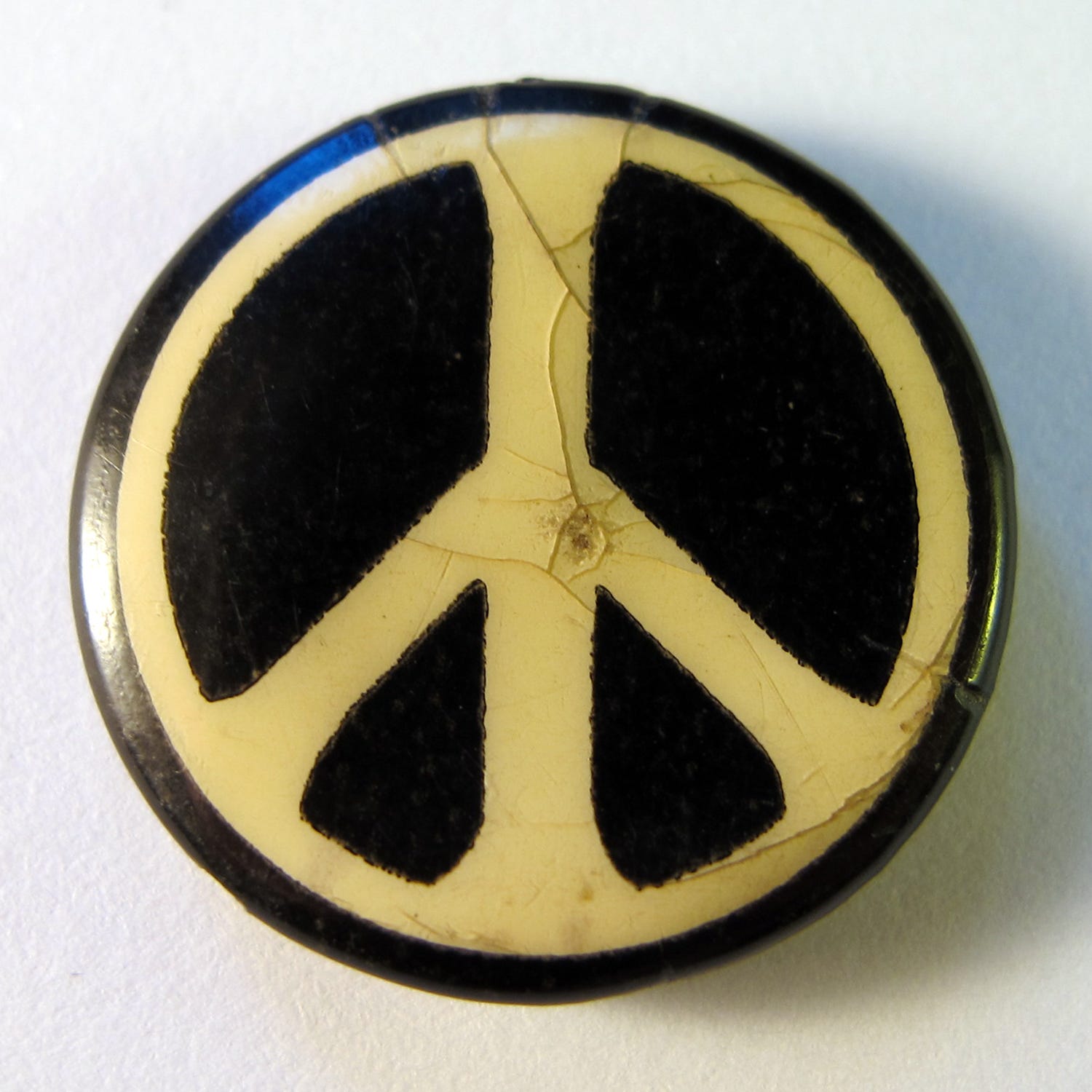
The peace symbol began life as a symbol for the British anti-nuclear movement in 1958.
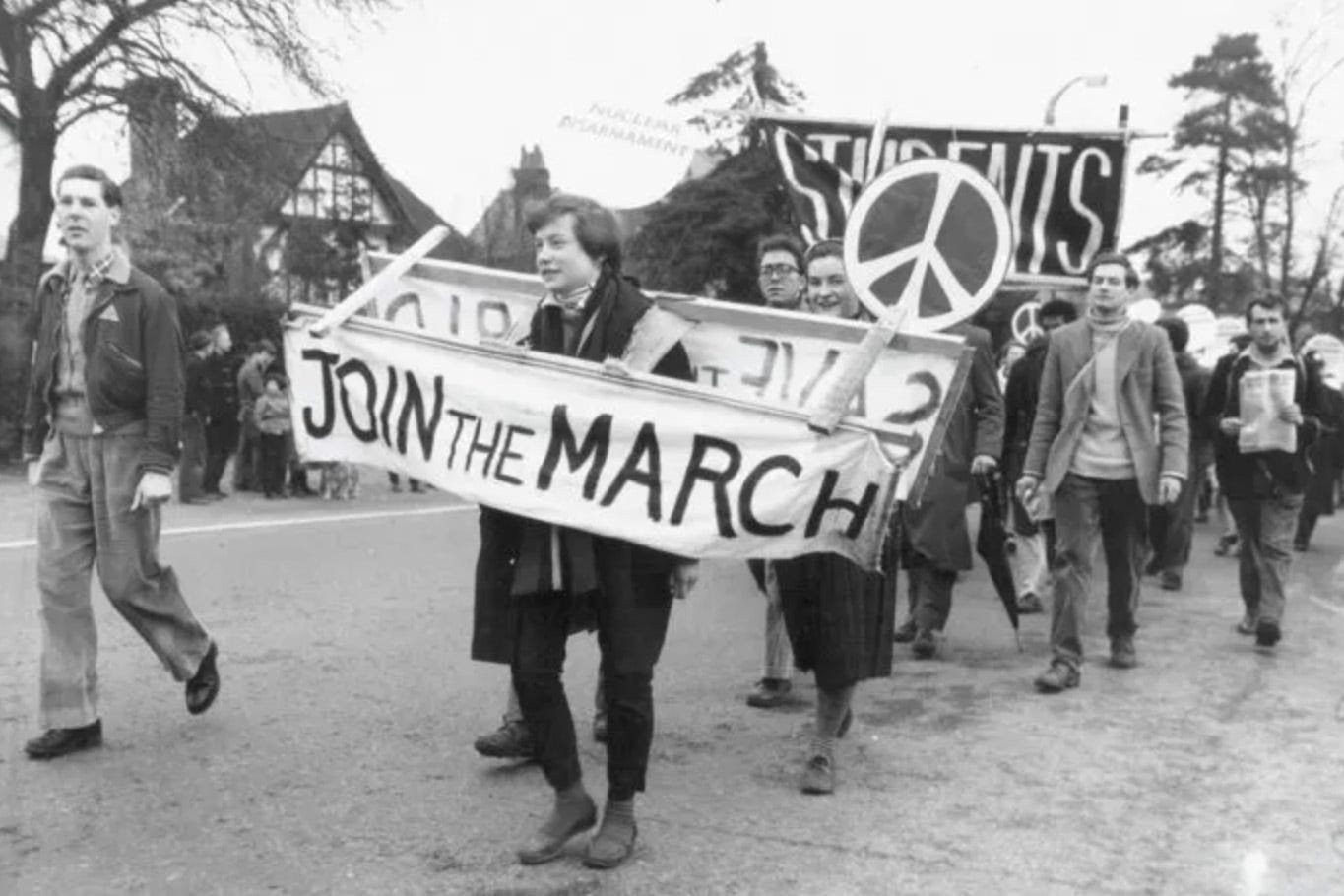
It was designed by Gerald Holtom (1914–1985) and presented to the Direct Action Committee on 21 February 1958, where it was immediately accepted as the branding for what would be an 84km march from Trafalgar Square, London, to the Atomic Weapons Research Establishment at Aldermaston in Berkshire, Britain’s first major demonstration against nuclear weapons.
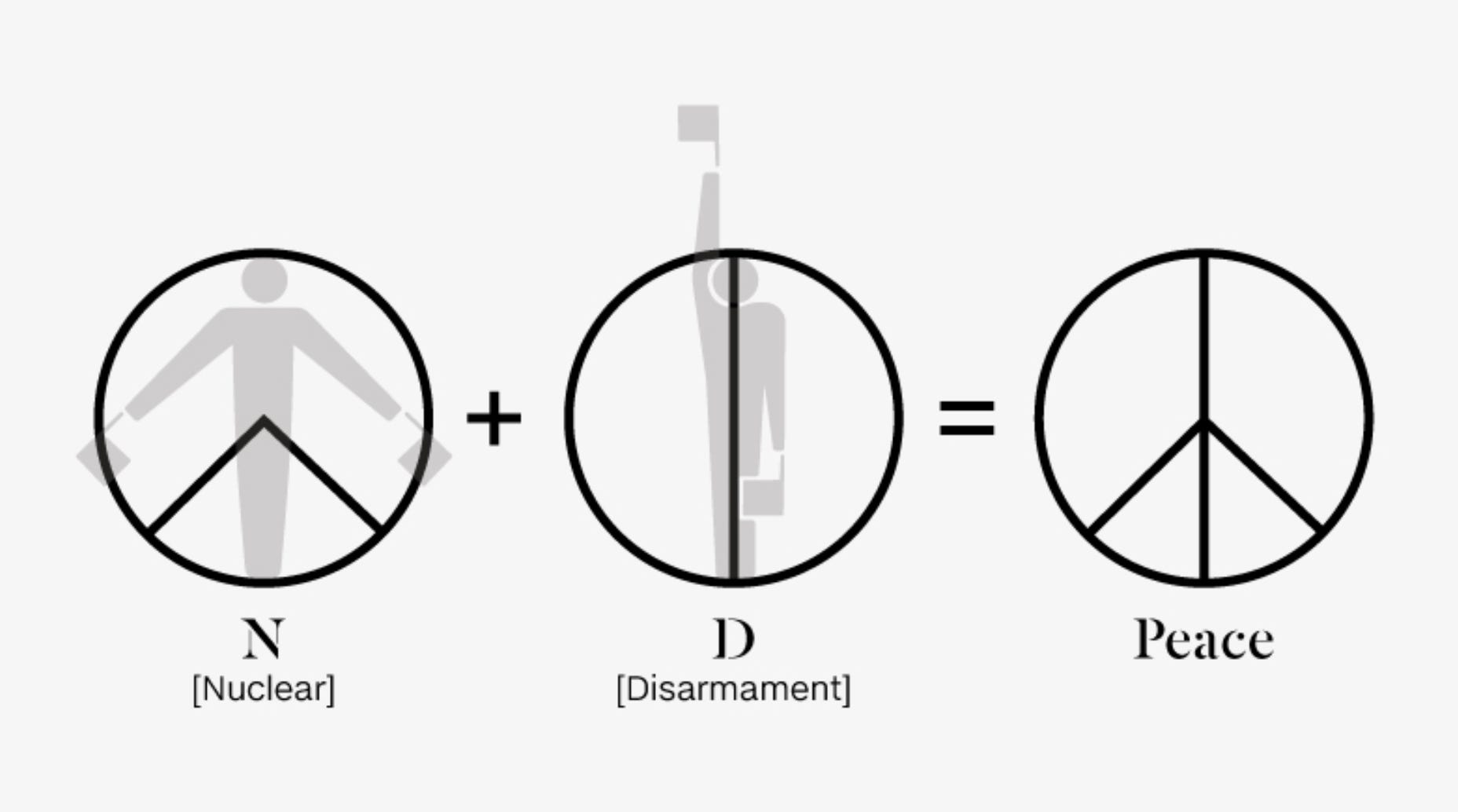
The peace symbol is actually a superimposition of the flag semaphore signals for the letters “N” and “D”, standing for Nuclear Disarmament. The circle surrounding them represents planet Earth. Did you already know that?


In addition to this primary genesis, Holtom additionally cited as inspiration Spanish artist Francisco Goya’s painting The Third of May 1808 (1814) wherein a Spanish peasant freedom fighter, about to be massacred by a Napoleonic French firing squad, is holding up his arms as an assertion of his victimhood and humanity.
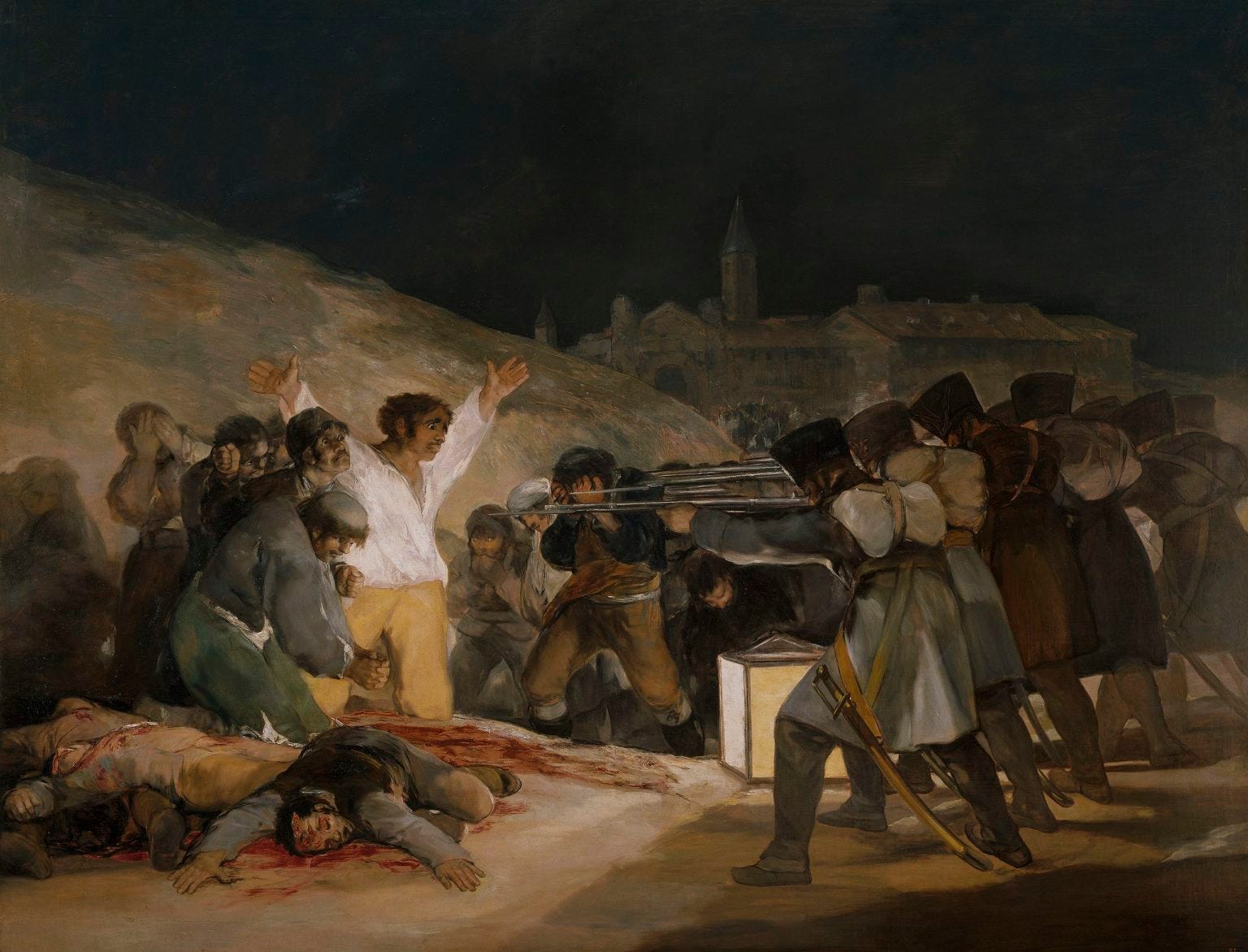
Unfortunately, the arms in the painting are pointing the wrong way, up and not down, which is why Holtom tried to backtrack and have the symbol used upside down with “U” standing for Universal or Unilateral taking the place of “N” for Nuclear. Too late. The symbol was off and running and, in 1960, became truly famous all over the world when an American student named Philip Altbach persuaded the Student Peace Union to adopt it.
By the end of the 1960s, it had become a universal symbol of peace, and possibly the most widely used protest symbol in the world.


Ken Kolsbun, a peace symbol historian [Ed: There’s such a thing?], believes the design’s simplicity played a role in its continued success. “You can have a 5 year old draw it,” he said in a phone interview with CNN’s Jacopo Prisco in 2019. “It’s such a powerful symbol with a sort of hypnotic appeal.”
The symbol has influenced and inspired many other protest artists over the years. American artist Shepherd Fairey [Obey Giant, RR1:53] interviewed for Peace: Photographs by Jim Marshall says:
“The peace sign has long been an important image and symbol for me, not just because I am pro-harmony and anti-war, but because it is the graphic icon that taught me the power of an easily recognized and reproduced symbol.”


After the 2015 Paris terror attacks, French artist Jean Jullien reimagined the design using the shape of the Eiffel Tower, a mash up that quickly went viral, creating a worldwide symbol of solidarity in condemnation of the attacks.
Story Idea: Bonnie Siegler
Video
Finally, for this week, a short message from Ringo:
REMORANDOM Chapter

Interesting piece, Remo. One layer that often goes unmentioned is that the “peace symbol” visually overlaps with two older runic forms — the Life Rune and the Death Rune.
These symbols come from Germanic runic tradition and were later politically misused in the 20th century. Because of that history, they carry manifest cultural meanings that some people still perceive, even if unintentionally.
The Life Rune (Lebensrune) points upward and symbolizes birth, vitality, protection, growth.
The Death Rune (Todesrune) is the inverted form, pointing downward, symbolizing death, dissolution, and the end of a cycle.
The modern peace symbol resembles the downward-pointing form, which is why some observers read it as echoing the Death Rune visually — even though its official originmight really be the semaphore combination for “N” and “D” (Nuclear Disarmament).
This doesn’t change the peace movement’s meaning, but it explains why the symbol can evoke different emotional or historical associations depending on cultural background.
Symbols accumulate layers over time, and people sometimes react to those layers even when they’re not part of the designer’s intention.