


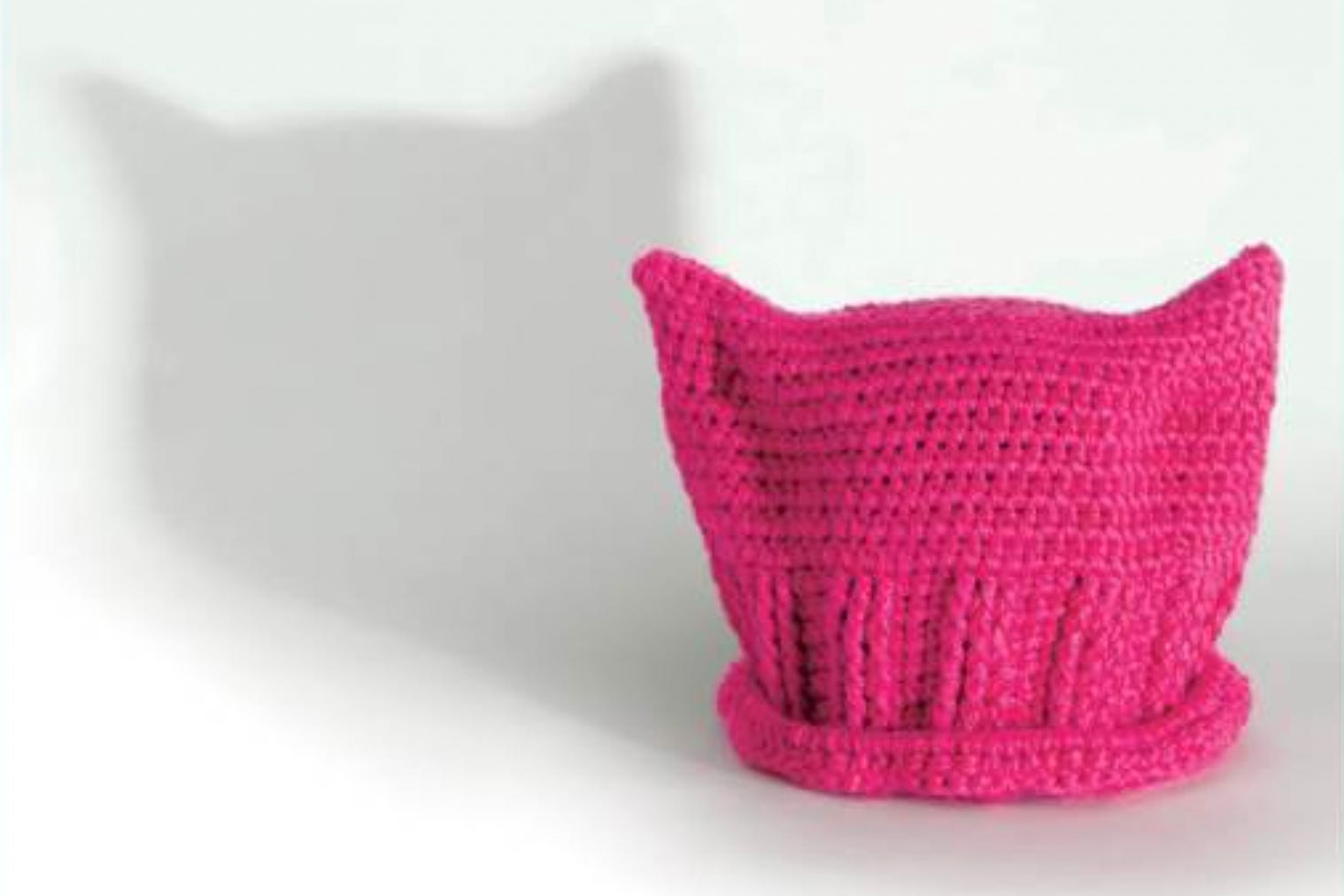
The Pussyhat Project was initiated by screenwriter Krista Suh and architect Jayna Zweiman, two friends and activists based in Los Angeles. They wanted to create a visual symbol that would be easily recognisable and could be worn by participants in the Women’s March on Washington that took place on 21 January 2017, the day after the presidential inauguration. Suh was initially just looking to knit something that would keep her Southern Californian head warm in the DC cold, and then realised that it could also serve a bigger symbolic purpose.


The name “pussyhat” is a play on words, combining “pussy” as a reference to the infamous “grab them by the pussy” comments made by then-presidential candidate Donald Trump, with “hat” … instead of cat. The pink colour was chosen because (and even pre-Barbie movie, there’s no denying this) it continues to be associated with femininity and is a colour that is often used to represent women’s issues.
Suh and Zweiman worked with Kat Coyle, the owner of a local yarn store called The Little Knittery, to come up with the original design. The project launched in November 2016 and quickly became popular on social media with over 100,000 downloads of the pattern to make the hat. You can still download it HERE.


In response to this call, crafters all over the United States began making the hats. Even if they weren’t able to attend the march themselves, they could be there in spirit by providing a hat for one of the marchers. Those hats optionally contained notes from the crafters to the wearers, expressing support. They were distributed by the crafters themselves, by yarn stores at the points of origin, carried to the event by marchers, and also distributed at the destination.


Said Zweiman at the time:
“I think it’s resonating a lot because we’re really saying that no matter who you are or where you are, you can be politically active.”
On the day of the march, National Public Radio in the US compared the hats to the “Make America Great Again” hats worn by Trump supporters. Both represented groups that had at one point been politically marginalised, both sent “simultaneously unifying and antagonistic” messages, and both were simple in their messages. Pussyhats were later featured on the fashion runway, on the heads of various well known people, and on the covers of both Time and The New Yorker.


Pink pussyhat has become a potent symbol of women’s activism, solidarity, and resistance against various forms of discrimination and inequality, and has been used in protests and demonstrations to advocate for women’s rights, gender equality and social justice.
REMORANDOM Chapters

