


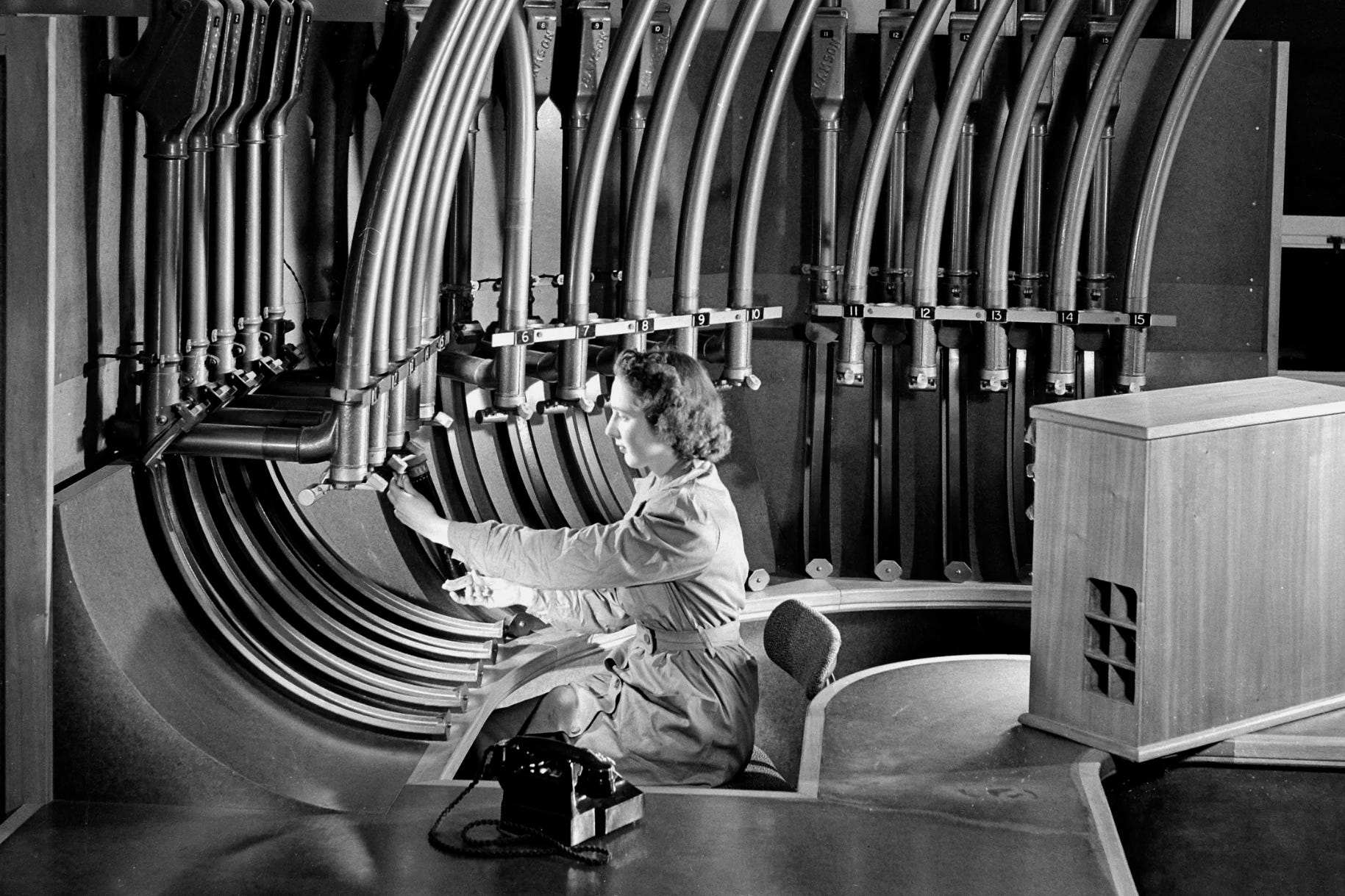
The origin of pneumatic tube transport can be traced back to 19th century London, with the first documented use dating back to 1836, when a pneumatic tube system was used to transport telegrams. But it was in the latter half of the 19th century that pneumatic tubes gained significant traction, particularly in the realm of delivering small packages, documents and even people across short distances in urban areas.
One of the most notable implementations of pneumatic tubes was in the postal service. Major cities like London, Paris and New York adopted pneumatic tube systems to speed up mail delivery between post offices and central hubs. These systems consisted of a network of tubes running underground or through buildings, via which cylindrical capsules containing mail or other items would be propelled by compressed air.


Take New York for example. Put into operation in 1897 by the American Pneumatic Service Company, a 44-kilometre (27-mile) system connected 22 post offices in Manhattan and the General Post office in Brooklyn. The pipes ran between 1 to 4 metres (4 to 12 feet) underground, and in some places the tubes ran along the subway tunnels. At the height of its operation it carried around 95,000 letters a day, or one third of all the mail being routed throughout New York City.


During the late 19th and early 20th centuries, pneumatic tubes were also used in department stores, banks and even hospitals for delivering paperwork, cash and medications. Maybe you’ve seen capsules whooshing through tubes on the walls in old films.
As technology advanced and alternative transportation methods emerged, the use of pneumatic tubes gradually declined. But even so, pneumatic tube transport continues to find niche applications in certain industries. For instance, hospitals still rely on pneumatic tubes for transporting samples between different departments swiftly and safely.


From the beginning, there were those who imagined that pneumatic tubes might carry people. As early as 1812, English mechanical engineer and inventor George Medhurst (1759–1827) proposed sending people on a train driven by “the power and velocity of air”. He called his contraption the “Aeolian Engine” named after Aeolus, the mythological Greek ruler of the wind.


Over 50 years later, at the American Institute Exhibition in New York in 1867, Alfred Ely Beach demonstrated a model of a basic pneumatic subway system, in which air pressure in the tube pushed the cars. Although the Beach Pneumatic Transit lasted only three years, transporting 400,000 people, the project gave rise to the New York pneumatic tube mail delivery system described above.


Today there is renewed interest in pneumatic tube transport, particularly in the context of urban mobility and last-mile delivery solutions, e.g. Elon Musk’s 2013 white paper proposing a high-speed transportation system for both passengers and freight that he called the “hyperloop”. Maybe one day.
Video
REMORANDOM Chapter

This one took me way back. I can recall waiting with my mother in shop while a sales person sent off the docket and payment via a pneumatic capsule. Lo and behold, minutes later (or hours to my very young mind) the receipt and change appeared via the same means. The days of swoosh and go; not swipe and go.