


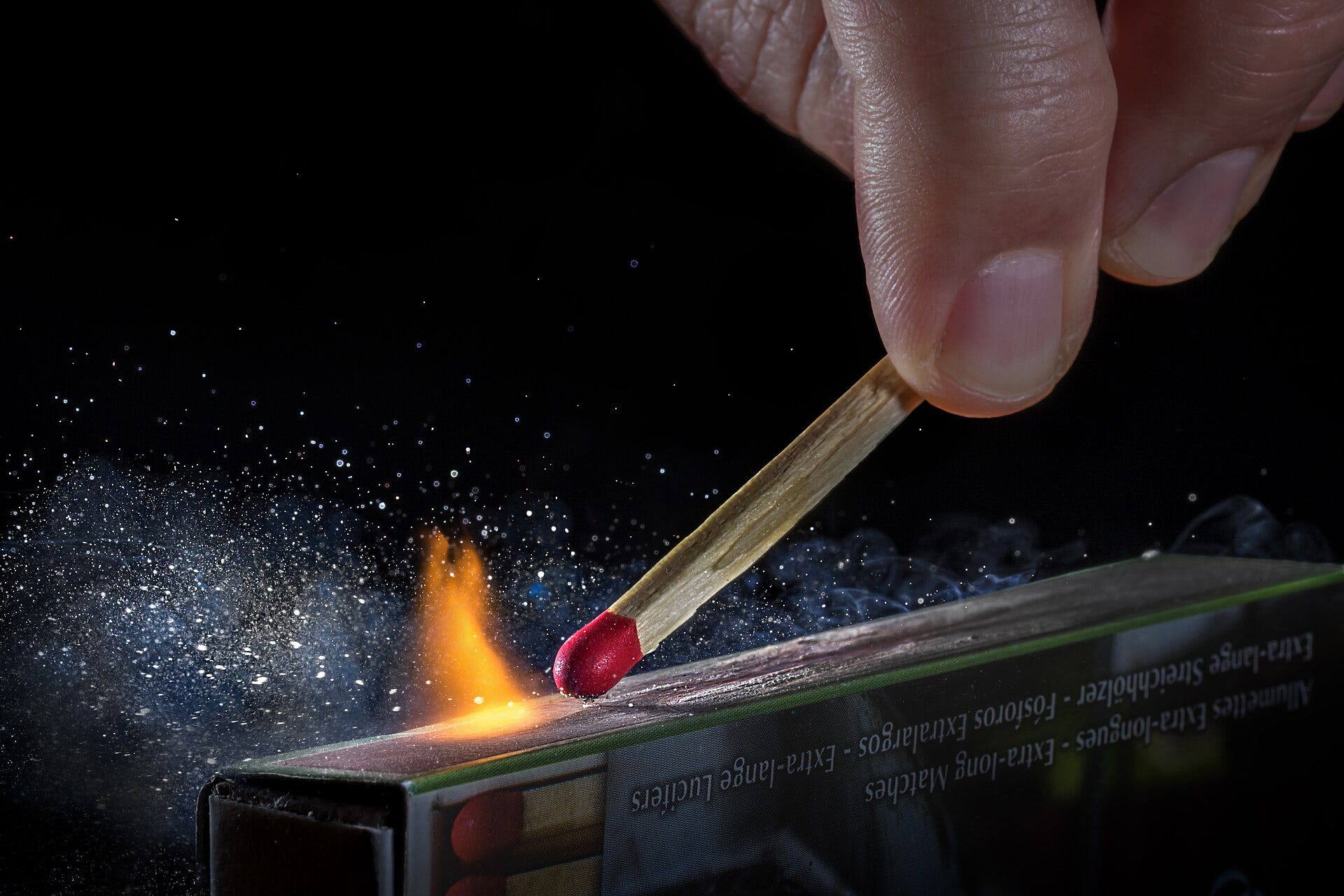
Prior to the introduction of the safety match, lighting a flame required patience, equipment or risk. You might strike flint against steel, tend embers from last night’s hearth, or gamble with one of the early “friction matches” of the 1820s – temperamental sticks tipped with chemicals that could flare without warning. They were nicknamed “Lucifers”, which tells you everything. The problem was phosphorus.
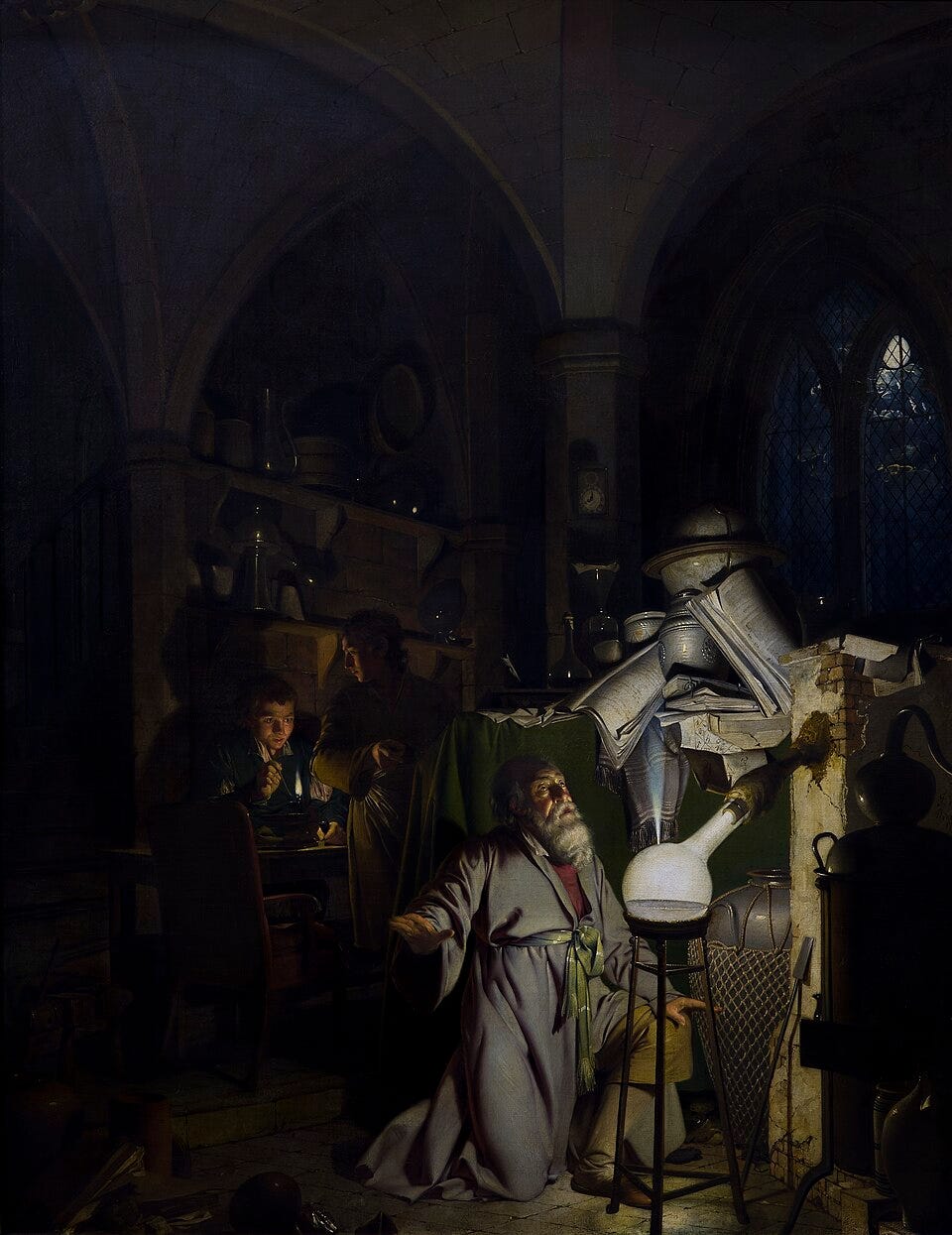
Early matches relied on white phosphorus, a substance as useful as it was toxic. It ignited easily – sometimes too easily – and factory workers exposed to its fumes suffered “phossy jaw”, a gruesome industrial disease that literally rotted bone [RR6:65]. Fire had been domesticated thousands of years earlier. Making it safely was another matter entirely.


The breakthrough came in Scandinavia. In the 1840s and ’50s, Swedish chemists separated the dangerous chemistry. Instead of placing all the reactive ingredients in the match head, they split them: the match head contained a stable oxidiser and fuel; the striking surface on the box held red phosphorus. Only when the two met – through friction – would ignition occur. Voilà!
Safety matches ignite due to the extreme reactivity of phosphorus with the potassium chlorate in the match head. It is controlled chaos – a brief negotiation between oxygen, fuel and temperature. Strike, flare, flame.
Red phosphorus, unlike its white cousin, is far less volatile and far less poisonous. The new design was called the “safety match”, and the name stuck because it was finally true. Swedish manufacturers industrialised the innovation and exported it worldwide. Entire towns grew around match production. Fire became standardised, packaged, branded.
The safety match also democratised ignition. Candles, oil lamps, fireplaces and stoves – all became easier to light. By the late 19th century, matches were everywhere: in waistcoats, kitchen drawers, military kits, cigar boxes. They were printed with advertisements, hotel logos, political slogans. A humble utility became a marketing surface.


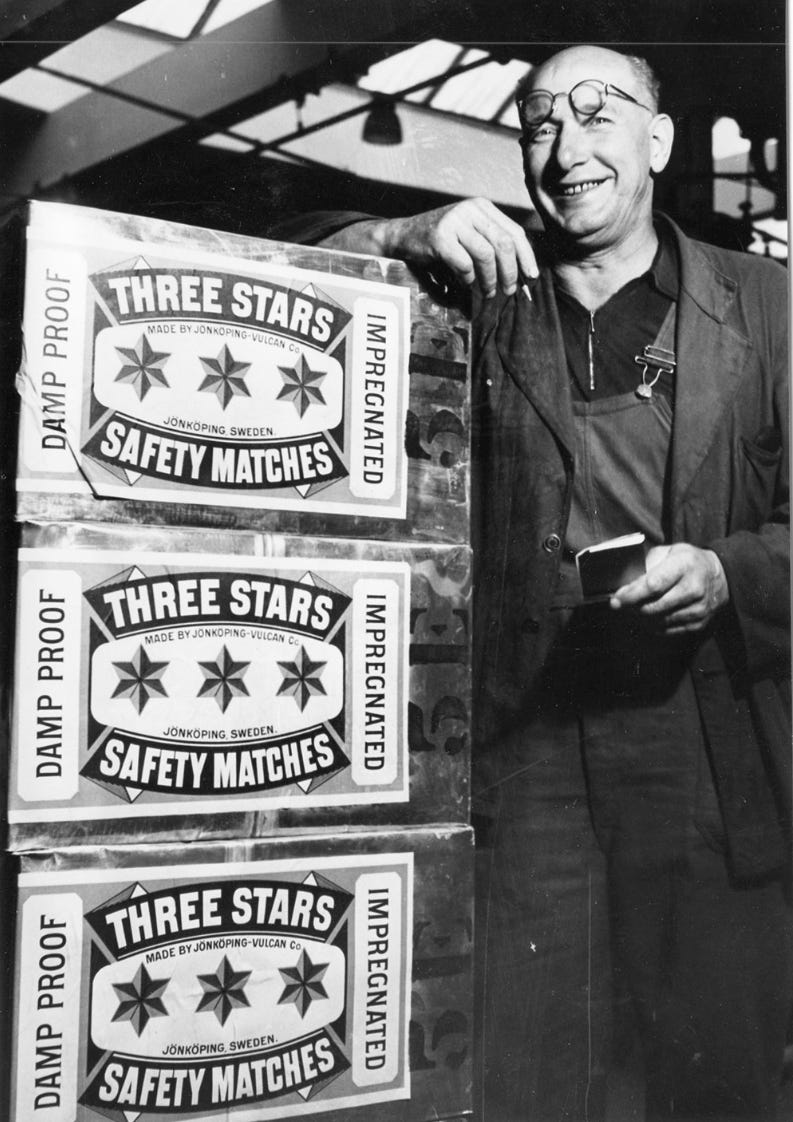
The world’s largest match manufacturer historically and today is Swedish Match Industries, a Swedish company with over 150 years of production and distribution history. Swedish Match produces millions of safety matchboxes daily in its factories in Tidaholm and Vetlanda, Sweden, and its brands (such as Solstickan, Swan Vestas, Redheads and Three Stars) are sold in more than 100 countries worldwide. Over the years, as many as 155 match factories have existed in Sweden.
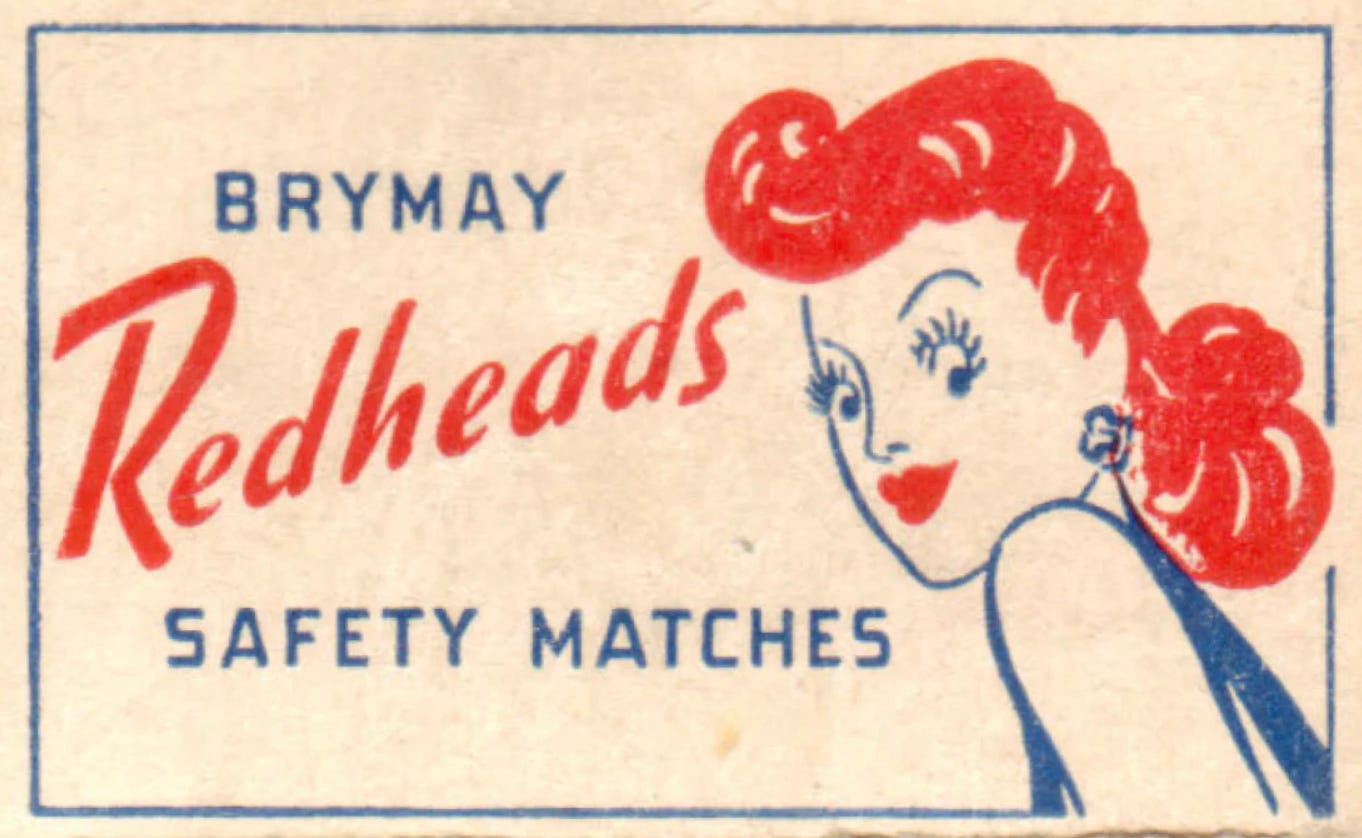
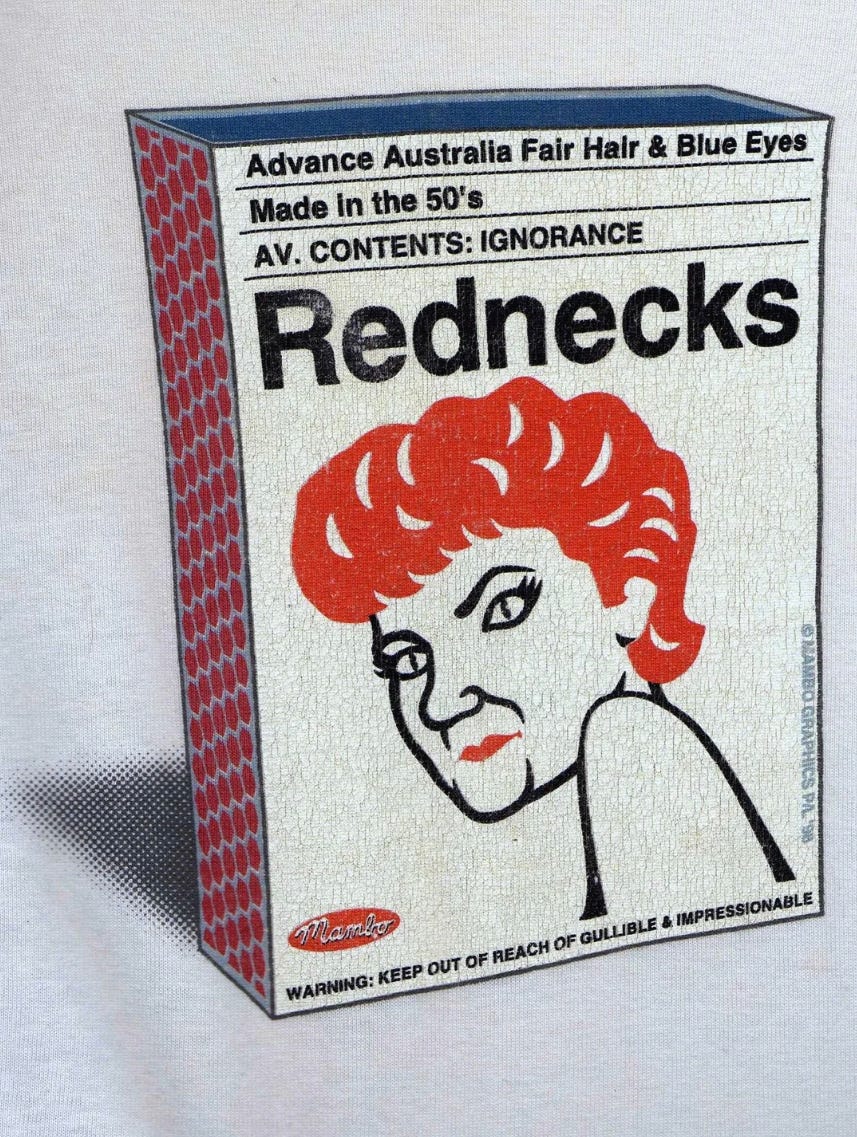
The iconic “Redheads” logo, affectionately known as “Miss Redhead”, was created in 1946 when the brand was owned by Bryant & May (prior to being acquired by Swedish Match in 1998). It first appeared on matchbox packaging in 1947. Designed by contest winner Rupert Hing, the logo cemented Redheads as Australia’s top match brand.

REMORANDOM Chapter


I loved the green headed matches (wax coated for camping and other outdoorsy pursuits) which didn’t rate a mention in this article. Do they still exist?
Also, I cannot believe you included the pic of the Whitley/Dillon sculpture without comment. Such a tease Remo.