


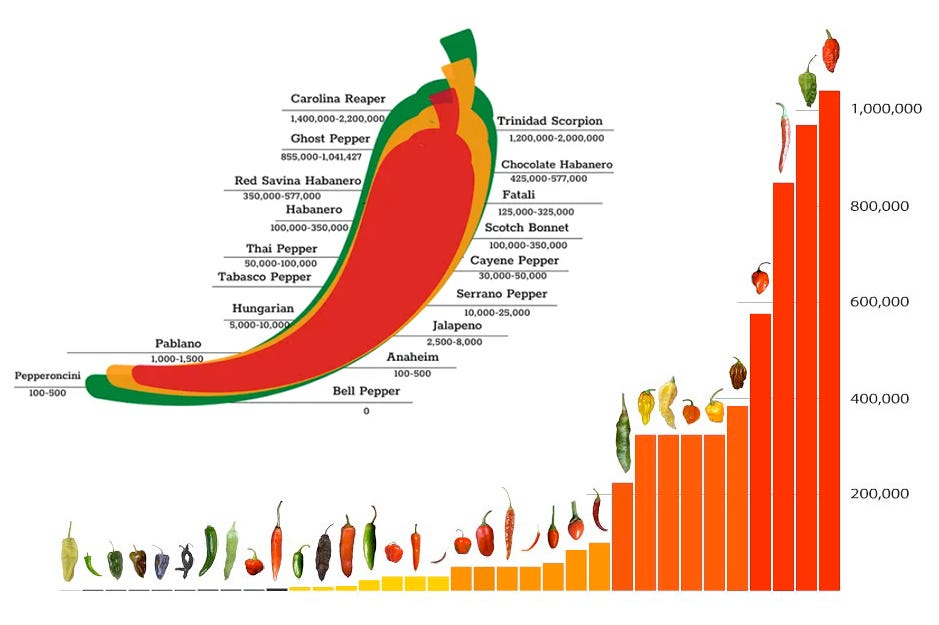
Chilli peppers belong to Capsicum, a genus of the nightshade family. Horticulturists consider them to be fruits. Most chillis contain capsaicin, an alkaloid compound that binds to pain receptors on the tongue, producing a sensation of burning. Chilli peppers are widely used in many cuisines as a spice to add “heat” to dishes.
The Scoville scale is a measurement of the spiciness or heat of chilli peppers and other spicy foods. It is based on the concentration of capsaicinoids, particularly capsaicin, which is the active component that produces the sensation of heat. The scale is named after its creator, Wilbur Scoville, an American pharmacist who developed it in 1912.

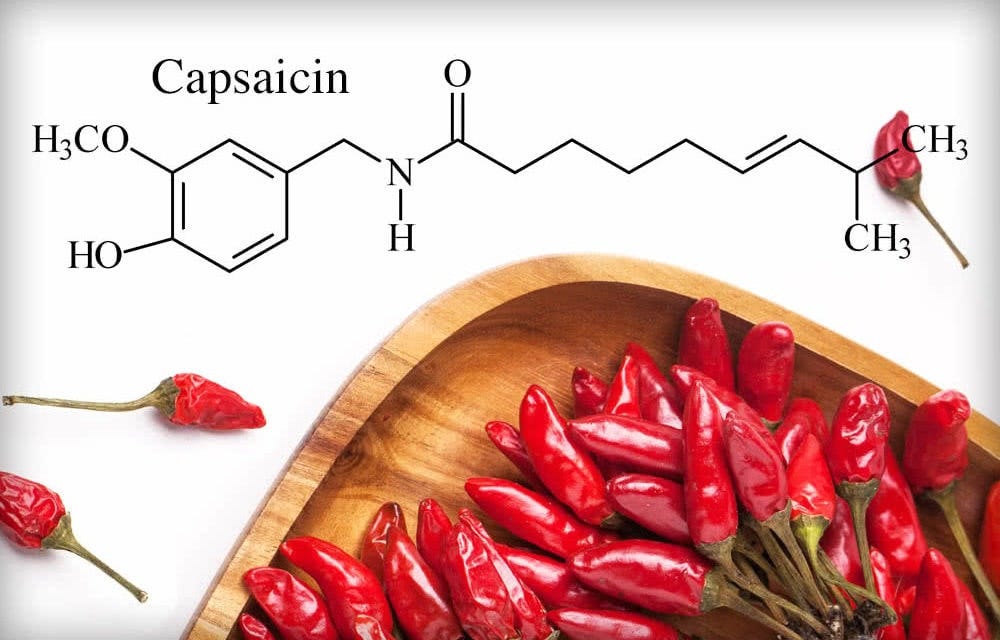
The Scoville Heat Unit (SHU) is used to quantify how many times an exact weight of dried pepper dissolved in alcohol must be diluted in sugar water until its heat is no longer detectable by a majority (at least three) of a panel of five trained tasters. The heat level is based on this dilution, rated in multiples of 100. The higher the SHU, the hotter the pepper.
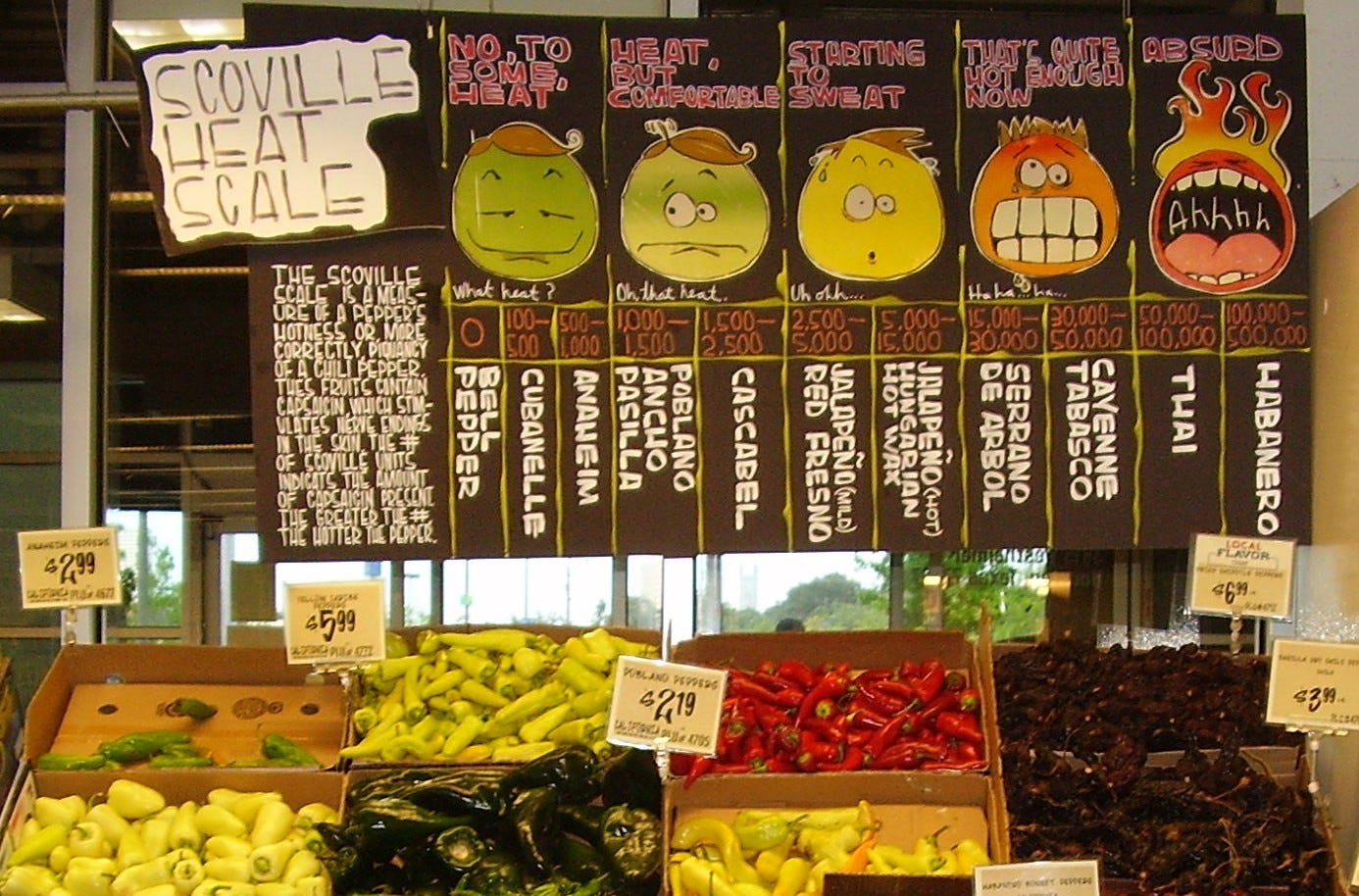
Examples of chillis on the Scoville scale:
Bell Pepper: 0 SHU
Jalapeño Pepper: 2,500–8,000 SHU
Cayenne Pepper: 30,000–50,000 SHU
Habanero Pepper: 100,000–350,000 SHU
Ghost Pepper (Bhut Jolokia): 800,000–1,041,427 SHU
Carolina Reaper: 2,200,000 SHU (Guinness World Record from 2017–2023)
Pepper X: 2,600,000+ (Guinness World Record since 2023)
The weakness of this so-called Scoville “organoleptic test” is its imprecision due to human subjectivity, depending on the taster’s palate and number of mouth heat receptors, which vary widely among subjects. Another shortcoming is sensory fatigue; the palate is quickly desensitised to capsaicinoids after tasting a few samples within a short time period. Results vary widely (up to +/- 50%) between laboratories.
As a result, and since the 1980s, spice heat has been assessed quantitatively by high-performance liquid chromatography (HPLC), which measures the concentration of heat-producing capsaicinoids. The results of this test can be converted to Scoville Heat Units.


As it happens, there are a lot of people out there who are obsessed with chillis – crossbreeding them, growing them, eating them, making sauces out of them, etc. “Chilliheads” seem to be mostly American, British and Australian men.
“Smokin” Ed Currie, the South Carolina hot chilli expert who crossbred and grew a “Carolina Reaper” that’s hotter than most pepper sprays police use to subdue criminals, recently broke his own world record with a chilli that’s three times hotter. “Pepper X” was publicly named the hottest pepper in the world on 9 October 2023 by Guinness World Records.

Since 2015, US YouTuber and Hot Ones host Sean Evans has put an impressive mix of celebrities in the literal hot seat, challenging them to eat increasingly spicy chicken wings while simultaneously answering probing questions crafted by his research team. [Ed: Nichey.] Hot Ones playlist on YouTube HERE. Sample reactions below.
Story Idea: Gene van Grecken
Video
REMORANDOM Chapter

Beers have a similar index called International Bitterness Units. I've long thought that that would be a splendid name for a punk band.