


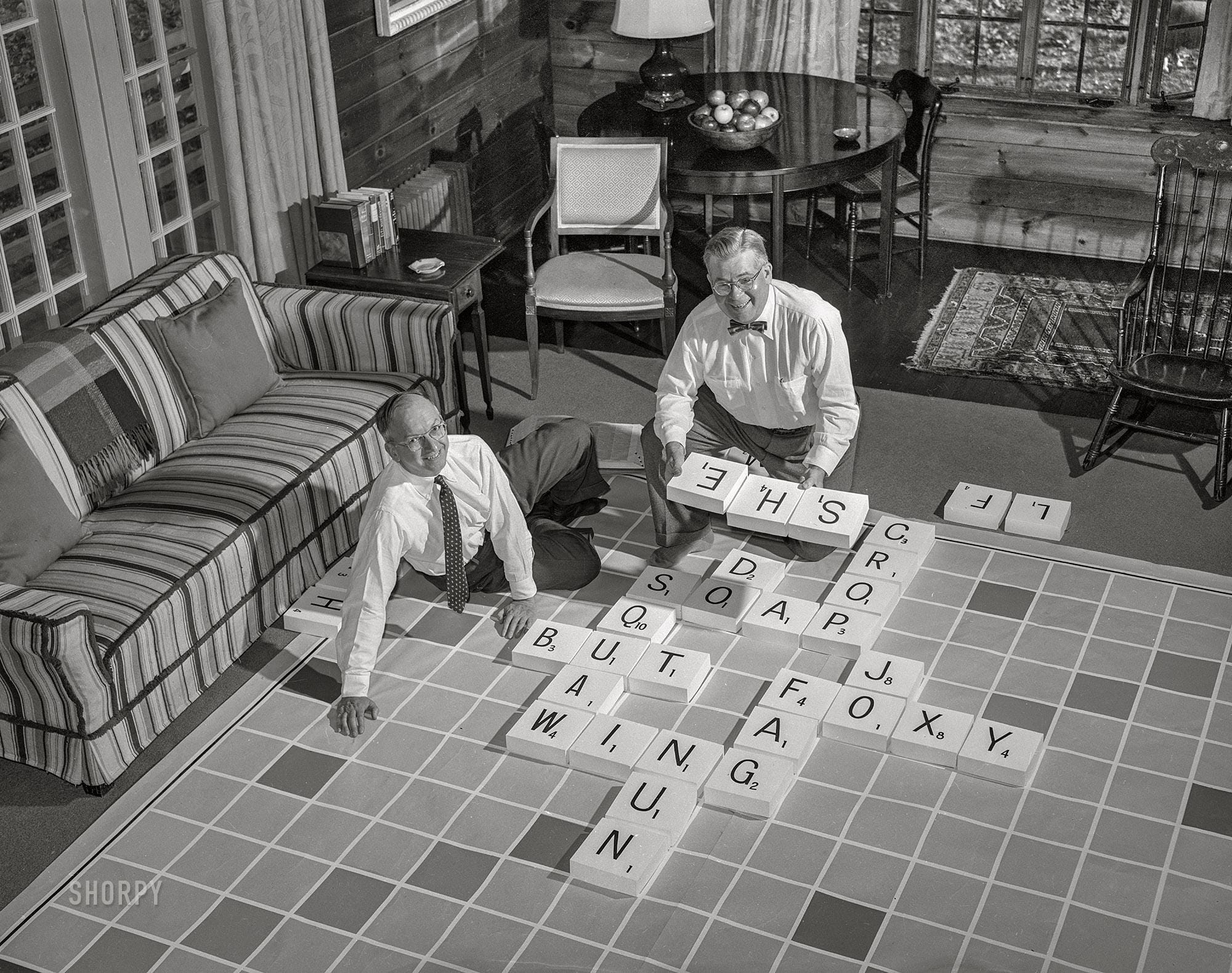
In 2007, during a Scrabble tournament in the UK, a player named Philip Appleby played a seven-letter word that left everyone baffled. He played the word “CAZIQUES” which refers to South American tribal leaders, earning an impressive 392 points for that single move. It is the highest-scoring single play ever recorded in a Scrabble tournament.
Fair enough, but where did Scrabble come from?
In the midst of the Great Depression, an unemployed architect named Alfred Mosher Butts became determined to create a game of skill not chance that could provide entertainment during tough times. Butts began tinkering with lettered tiles and a board, combining elements of crossword puzzles and anagrams. He meticulously calculated the frequency and value of each letter, designing a system that would reward players for strategic word placement. After several iterations, Butts initially called his creation “Lexiko”.


Butts faced numerous rejections from game manufacturers, as they deemed the game too complex or unmarketable. Eventually, he caught the attention of James Brunot, who saw potential in the game. In 1948, Brunot acquired the rights and renamed it “Criss-Cross Words”.
Brunot initially manufactured the game by hand, but the demand soon outpaced his capacity. In 1952, he licensed the game to Selchow and Righter, a company that had previously turned down Butts’ proposal. Under their management, the game was rebranded as “Scrabble”, an actual word meaning “scratch or grope around with one’s fingers to find, collect, or hold on to something”.
Scrabble’s popularity began to soar in the early 1950s, as families and friends discovered the joy of arranging letters into words. Selchow and Righter embarked on marketing campaigns, organising tournaments, and promoting the game’s proven educational and literacy-promoting benefits. By the mid-1950s, Scrabble had become a cultural phenomenon, capturing the imagination of players across the United States.
As Scrabble’s success spread, international editions were developed, adapted to different languages and alphabets. The game’s appeal transcended borders and cultures, showcasing the universality of language and the delight of wordplay. Scrabble tournaments emerged, attracting competitive players who honed their skills and strategised to maximize their scores.


In 1972, Selchow and Righter faced financial difficulties and sold the rights to the game to the toy company Coleco. Later, in 1986, Coleco’s own financial troubles led to Hasbro’s acquisition of the Scrabble brand. Hasbro has since become the leading producer of Scrabble worldwide, although Mattel owns the rights for many countries as well.
The advent of the internet and digital technology has brought new opportunities for Scrabble. Online versions of the game allow players to compete with opponents from around the globe, transcending geographical boundaries. Mobile applications have made it possible to carry Scrabble in one’s pocket, providing instant access to wordplay entertainment.
REMORANDOM Chapter

Scrabble REMO | 1992
Scrabble at REMO merchandise HERE

