


The sunk cost fallacy describes the human tendency to continue to pursue an endeavour that we have already committed to in terms of investing money, time or effort – even if those historical “sunk” costs are not recoverable. It’s a type of cognitive bias, a thinking error that makes us misinterpret information and affects the decisions we make.
Abandoning a project or a relationship or a boring movie or the declining value of an asset after committing to it and investing resources into it will likely cause negative feelings of guilt and wastefulness. Since we want to avoid negative feelings of loss, we are likely to follow through on a decision that we have invested in, even if it is not in our best interest.
Psychologists Amos Tversky and Daniel Kahneman first coined the idea of cognitive bias in 1972, laying the foundation for published research into the sunk cost fallacy by American economist Richard Thaler in 1980.

Only prospective (future) costs are relevant to a rational decision. At any moment in time, the best thing to do depends only on current alternatives. Past mistakes are irrelevant. Any costs incurred prior to making the decision have already been incurred no matter what decision is made. It’s “water under the bridge”.
Some examples where sunk costs may adversely influence the making of good decisions:
Should I walk out of this really boring movie?
Should I hold or sell those shares that keep dropping in value?
Should I stay in this long term relationship?
Should I complete my home renovation or build from scratch somewhere else?
Should we continue with this war that has already killed so many people?
Should I keep waiting for the already-very-late bus?
Should I keep eating this paid-for meal even though I’m no longer hungry?


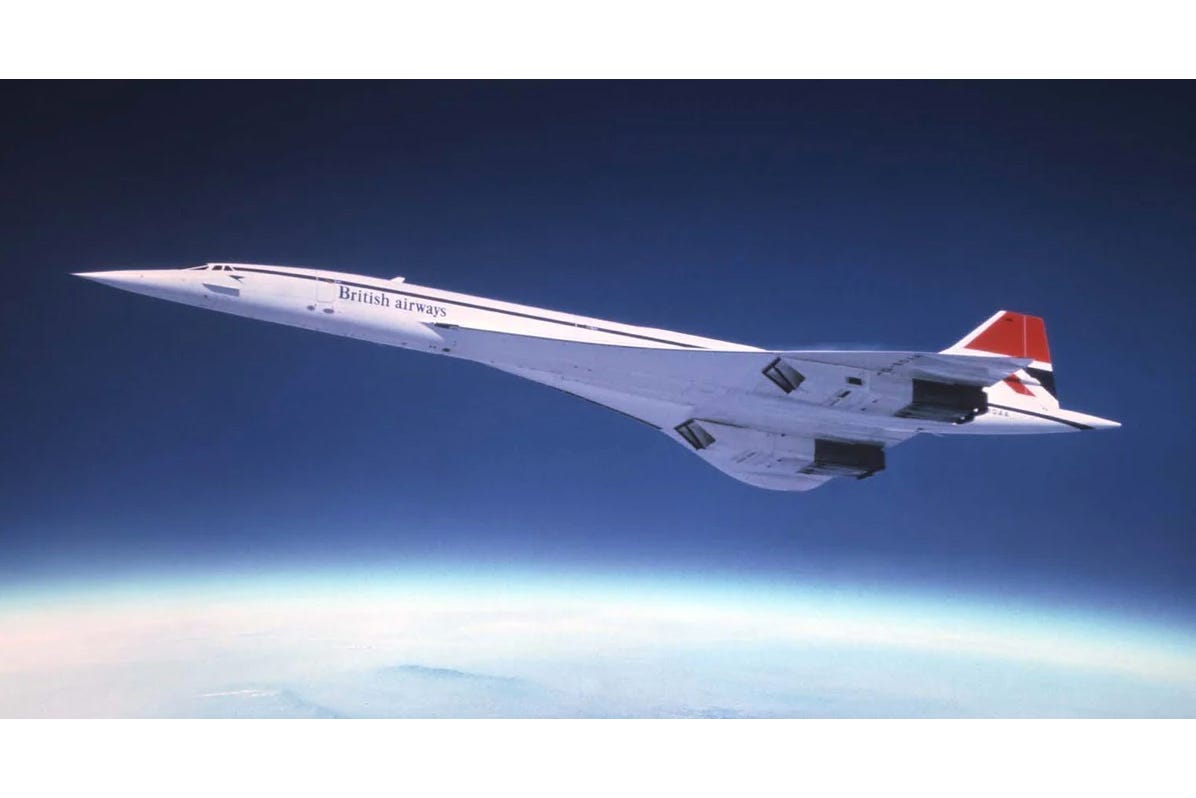
The sunk cost fallacy is also sometimes referred to as the “Concorde fallacy” deriving from the fact that the British and French governments continued to fund the joint development of that costly supersonic airplane even after it became apparent there was no longer an economic case for the aircraft. Political and legal issues made it very hard for either government to pull out.
Luckily, the sunk cost fallacy isn’t a done deal. Just being aware of the bias is a great first step to avoid its pull. So if you’ve read this far, you’re already less likely to make irrational decisions. [Ed: You’re welcome.] That’s because when you understand how the sunk cost fallacy works and the different psychological factors that feed into it, you can check yourself for cognitive biases each time you make a decision.


Finally, reducing the impact of the sunk cost fallacy may be facilitated by the use of AI machine learning tools that can help us to determine when a project is worth giving up and when it is worth pursuing. Not influenced by emotion, AI can accurately predict which strategies will likely work and which should be abandoned.
Sometimes the robots do know better.
REMORANDOM Chapters


Even so, there are some that subscribe to, and profit from, a contrarian investment strategy. Thats the difficulty with generalisations.
Concorde is a really interesting example because even though its economic case dried up (the Concorde and Boeing 747 prototypes were famously exhibited together at the 1969 Paris Airshow and it was already clear that the world's biggest airliner was a smarter business case than its fastest) it is still one of the most unique aircraft ever made and, most importantly, the political pressure of carrying the project through forged the "prototype" of cooperation that became Airbus. The Airbus A300 (the world's first twin engined wide body airliner) prototype already flew in 1972.