


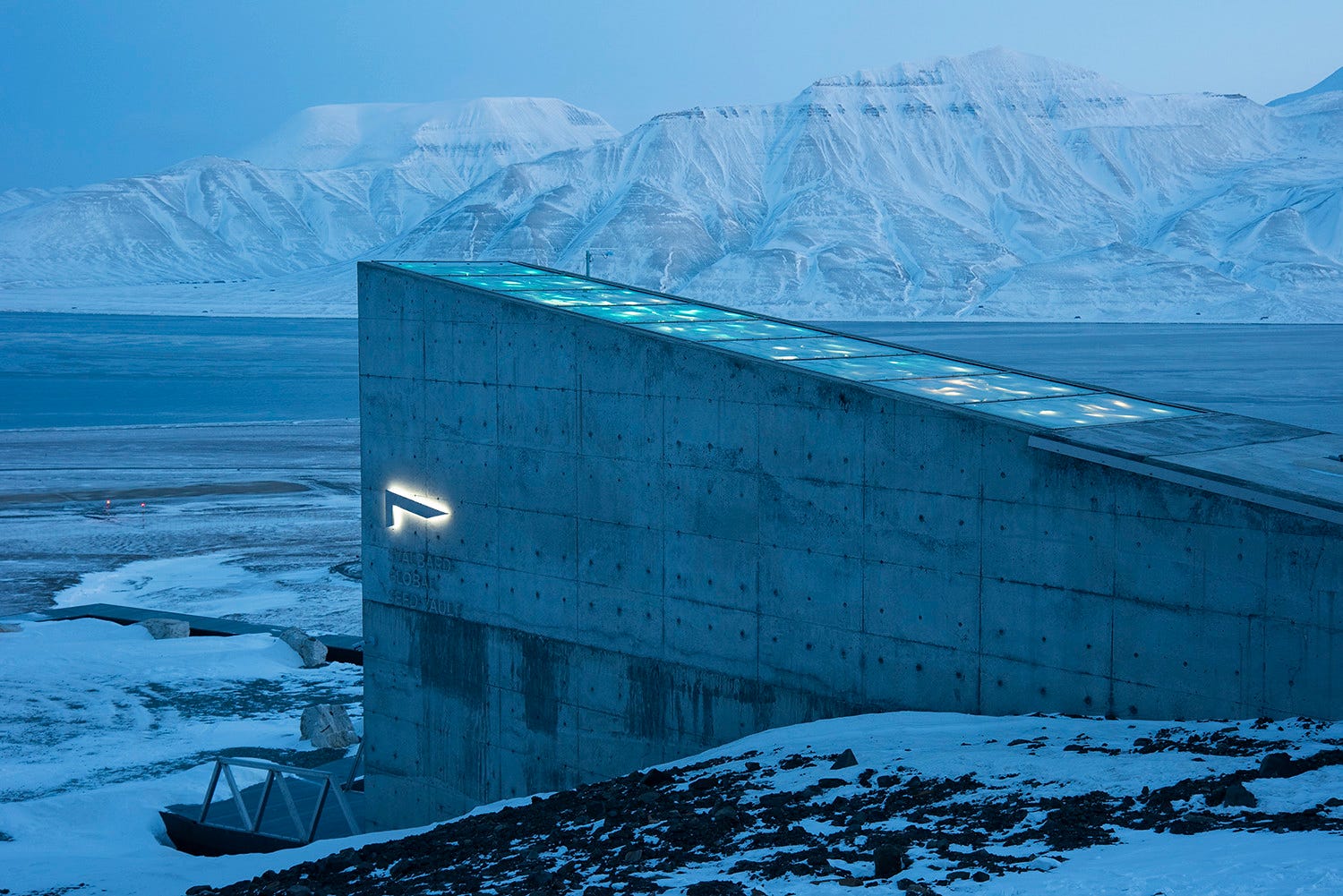
The Svalbard Global Seed Vault is a secure seed bank located near the town of Longyearbyen on Spitsbergen Island, part of the Svalbard archipelago, in Norway. This situates it about half way between Norway and the North Pole. It’s pretty damn remote.
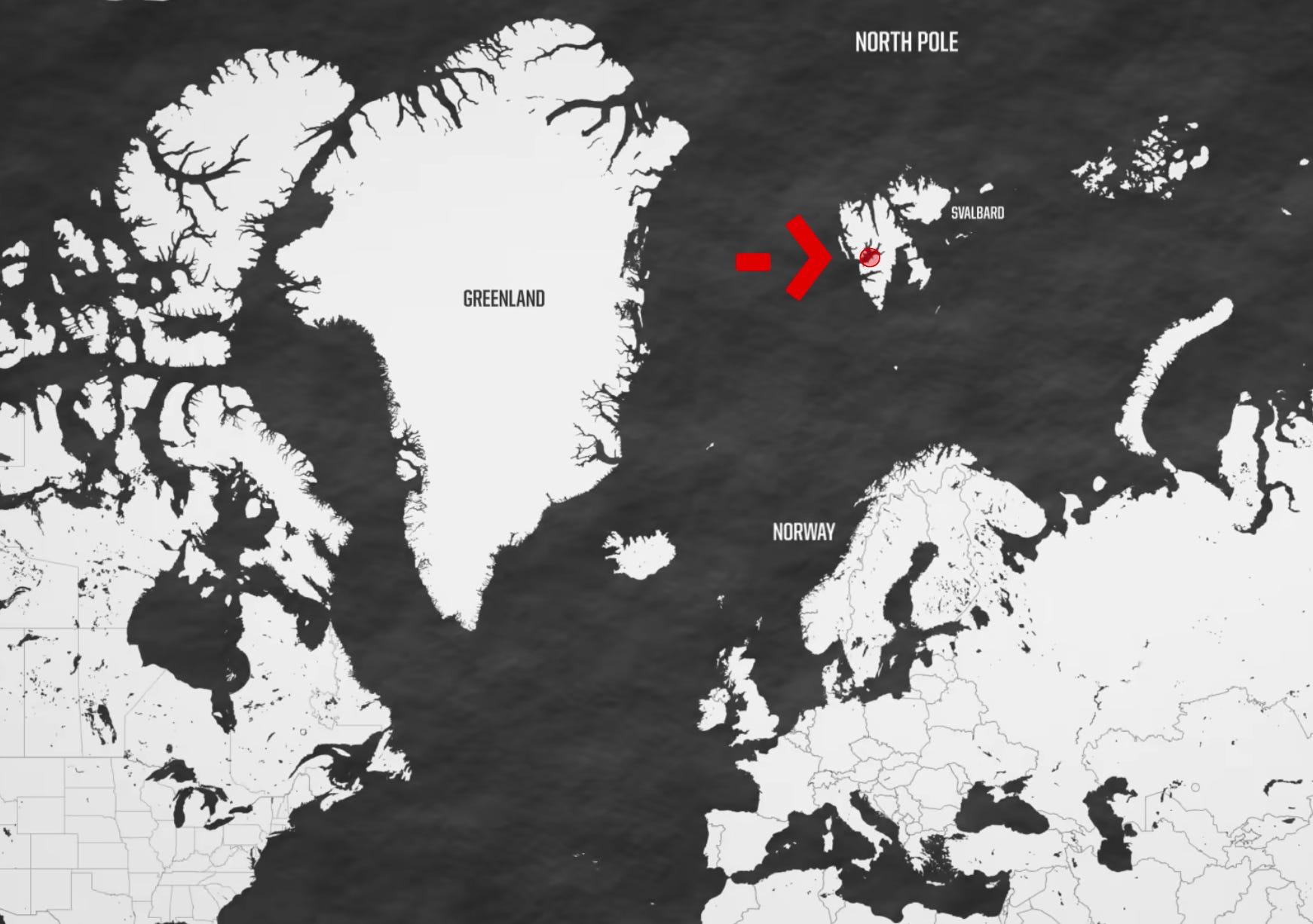
Often referred to as the “Doomsday Vault”, it was established in 2008 to ensure the preservation of a wide variety of plant seeds from around the world representing, in the words of Brian Lainoff, lead partnerships coordinator of the Crop Trust, which manages the vault: “13,000 years of agricultural history”.
The vault, living at the end of a 150 metre tunnel inside a mountain, effectively acts as a global insurance policy against the loss of crop diversity due to natural disasters, war, climate change and other threats.
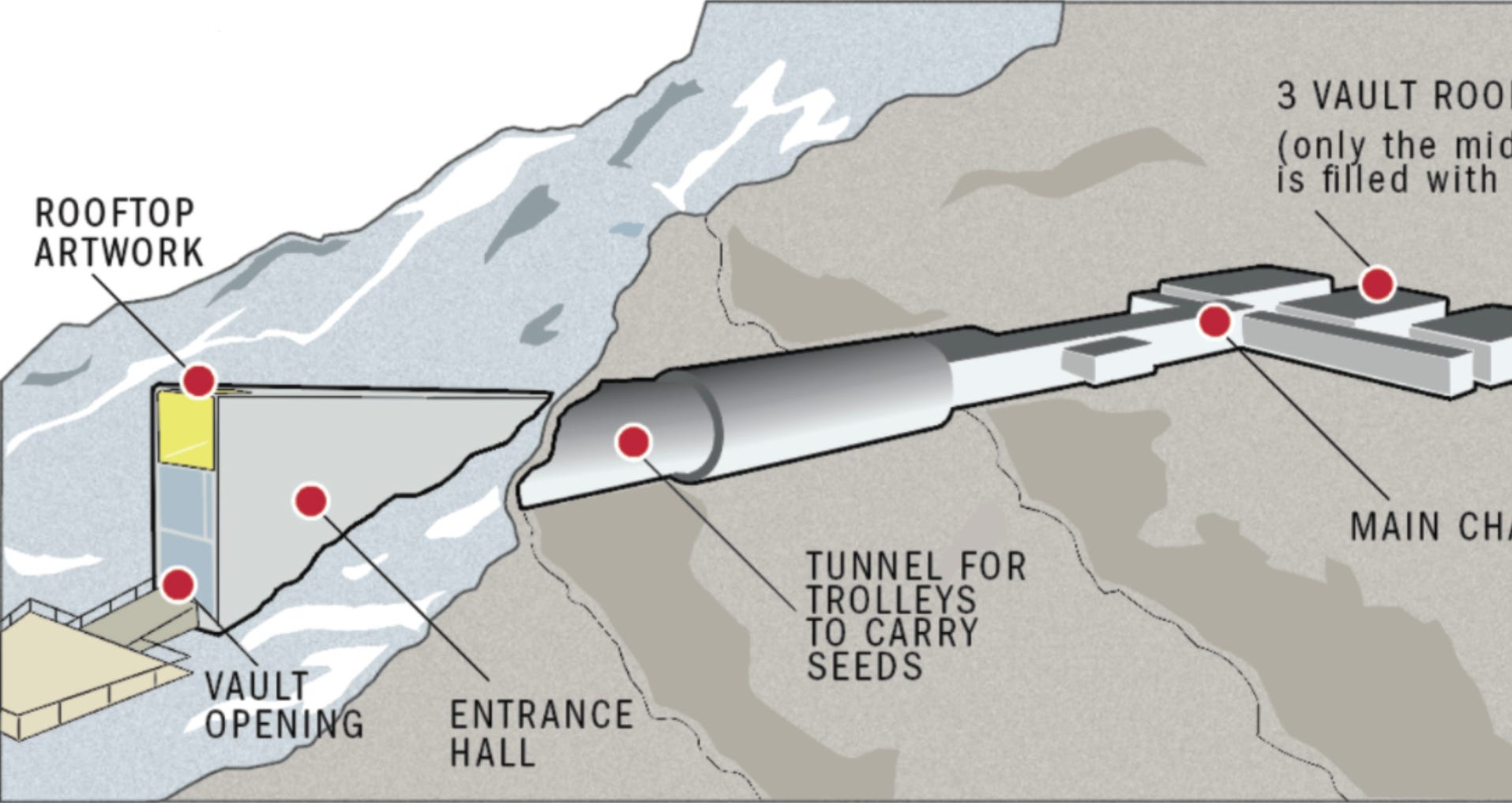
It’s located 130 metres (430 feet) above sea level ensuring the site will remain dry even if the ice caps totally melt. [Ed: Doomsday indeed.] The permafrost and thick rock provide natural refrigeration, ensuring that the seeds remain frozen even without power. Walking down the tunnel and through five different doors takes the rare visitor through a -4˚C zone once the tunnel is surrounded by permafrost, and then ultimately through the door to the vault where the temperature is artificially maintained at -18˚C, cold enough to freeze and disconcertingly crackle the moisture inside one’s nostrils – or so we are told.
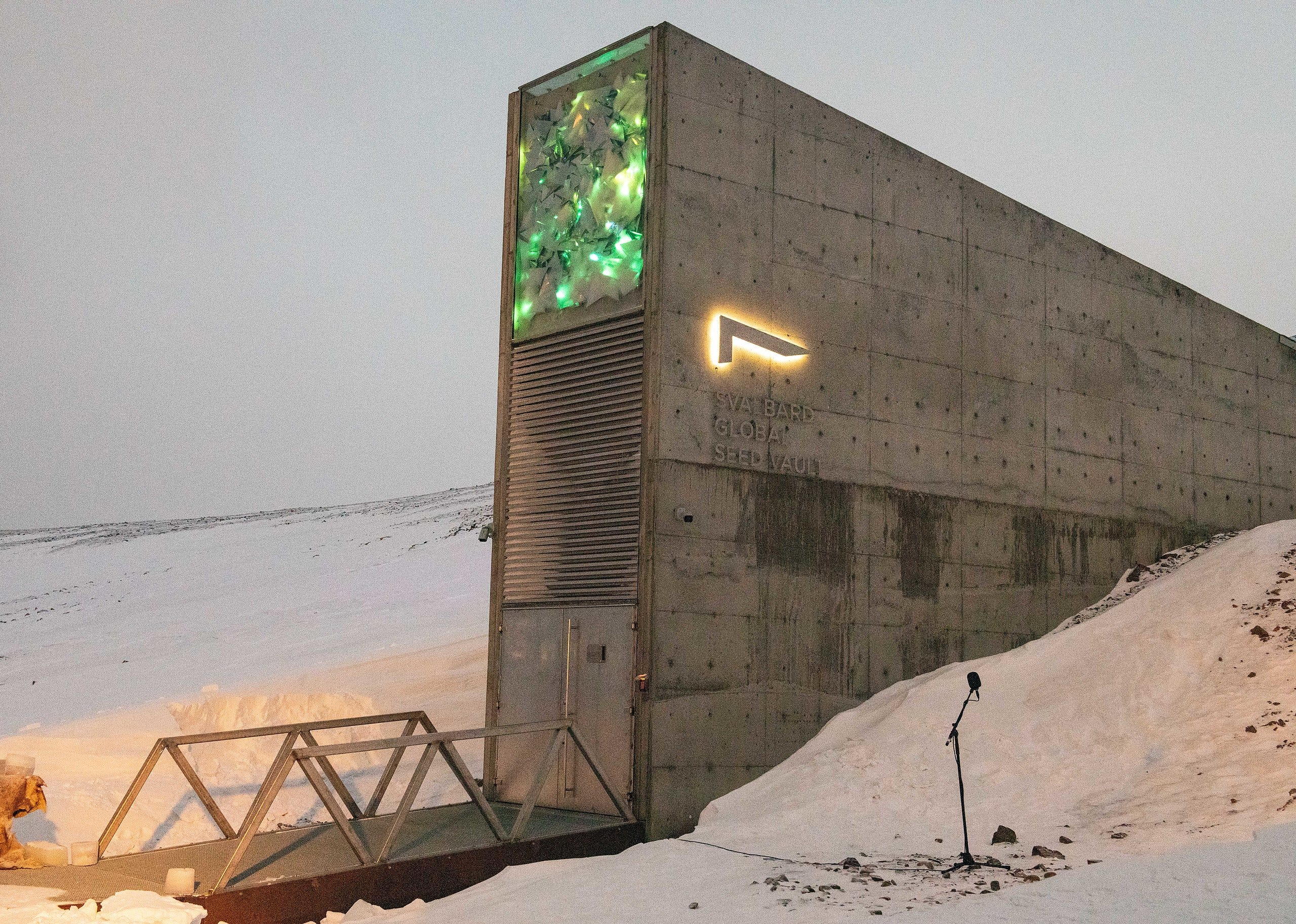
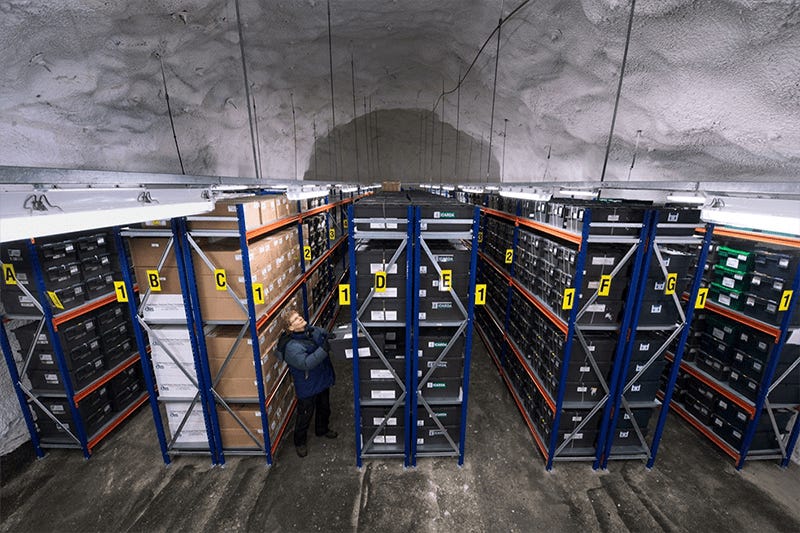
The vault is designed to withstand both natural and human-made disasters, and has the capacity to store up to 4.5 million different seed samples, with each airtight 3-ply aluminium sealed foil pouch containing around 500 seeds. It currently holds more than a million seed samples from gene banks located in nearly every country throughout the world, representing thousands of plant species and crop varieties.
It’s the ultimate back up.
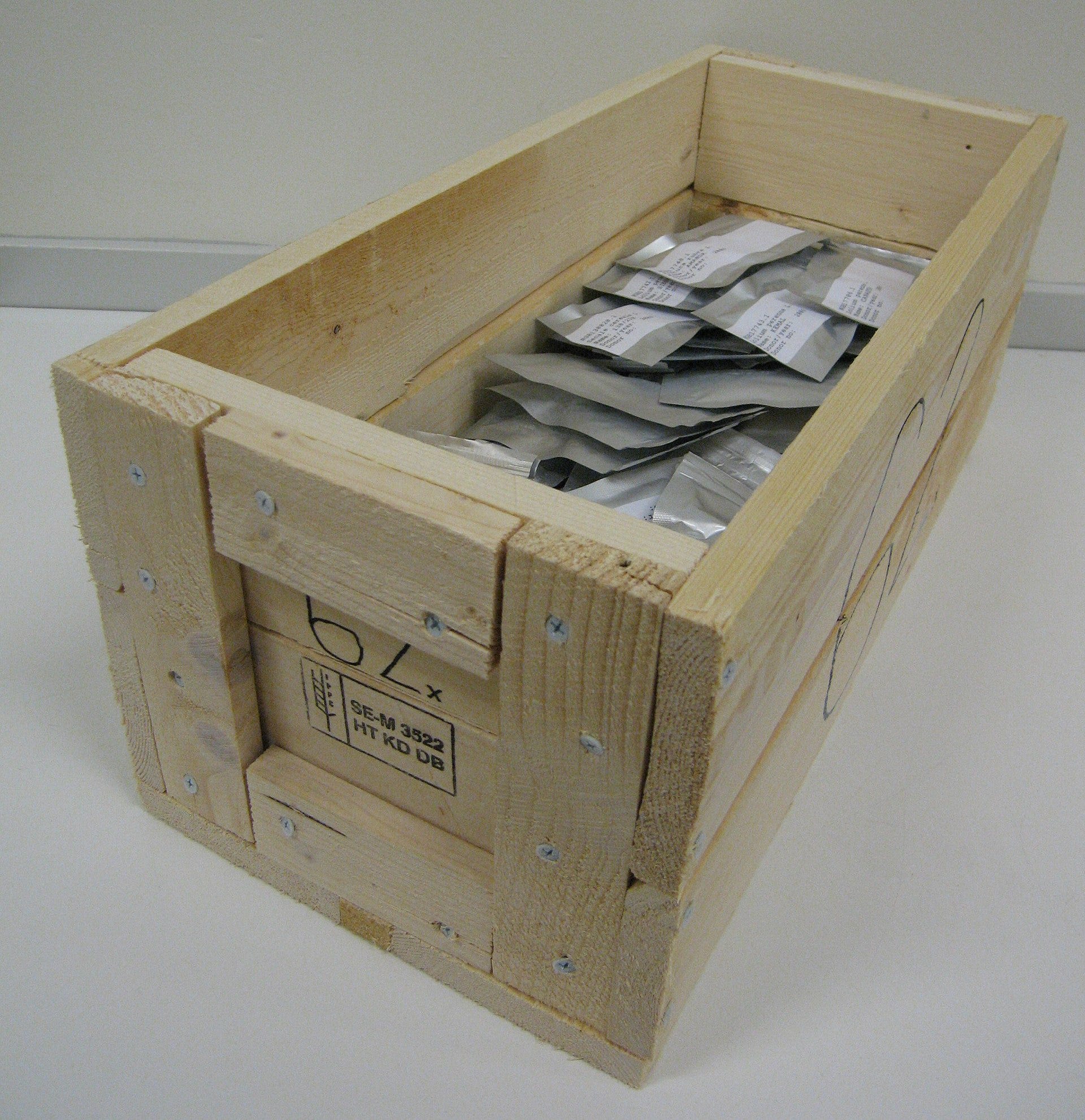
Diversity is key, and crucial when breeding new crop varieties that can withstand pests, diseases and changing climate conditions – which explains why there are 140,000 types of wheat stored there, along with 150,000 rice variations.
It works just like a bank’s safe deposit system. Seeds, which remain the property of their respective gene banks, are deposited within those pouches, packed inside boxes of a specified size, but are never opened at the vault. The only potential withdrawer is the original depositor – as it was in late 2015 when Syria made a withdrawal after the gene bank in war-torn Aleppo was bombed and completely destroyed.
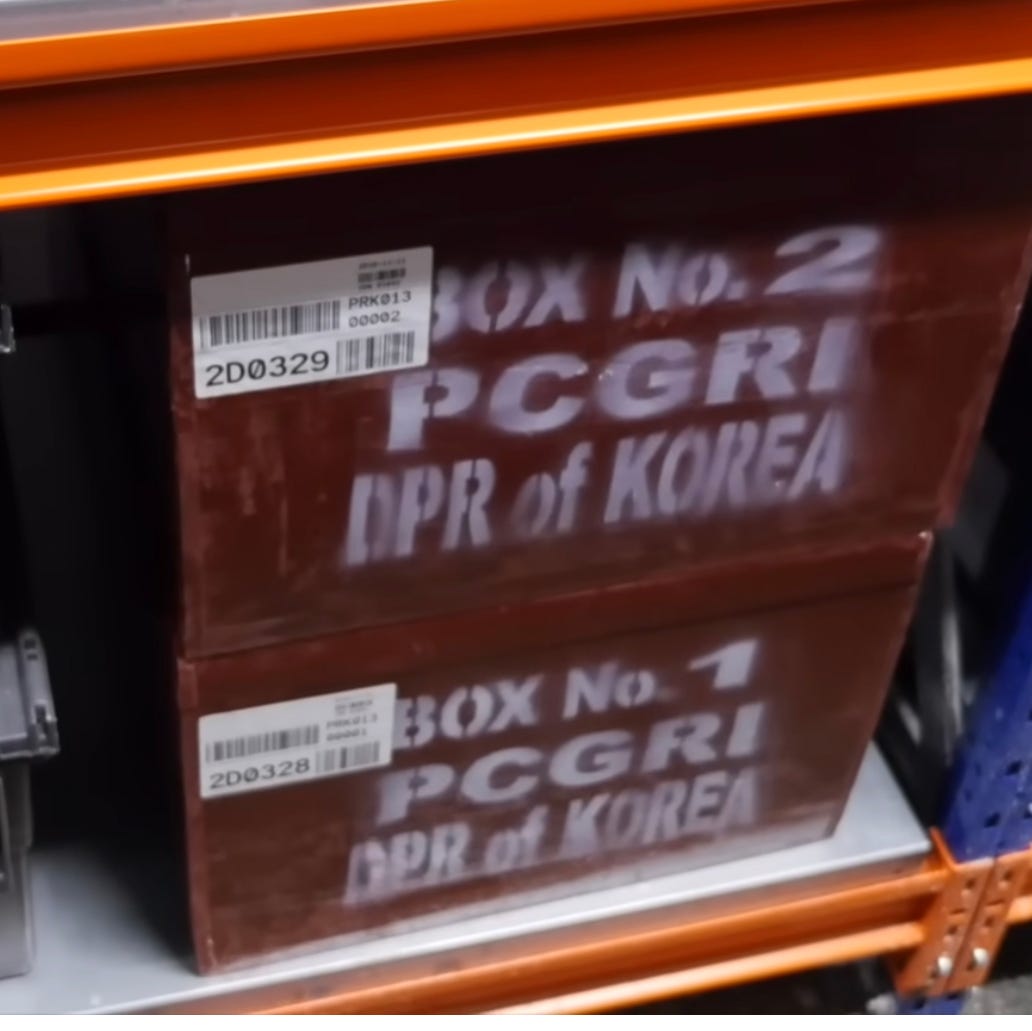
It’s a bit like the United Nations in there, but without the politics. Cooler heads rule – quite literally. Russian and Ukrainian boxes sit next to each other, and the funky handmade-yet-dimensionally-compliant wooden boxes from North Korea sit very near the boxes from the United States. Australia’s in there too, punching above its weight, with 12 boxes containing 11,000 seeds from “Australian Grains Genebank”.
Says Jennifer Duggan in a piece for TIME in 2015:
“In an age of heightened geopolitical tensions and uncertainty, the Svalbard vault is an unusual and hopeful exercise in international cooperation for the good of humankind.”
Story Idea: Melanie Giuffré
Videos
REMORANDOM Chapter

References