


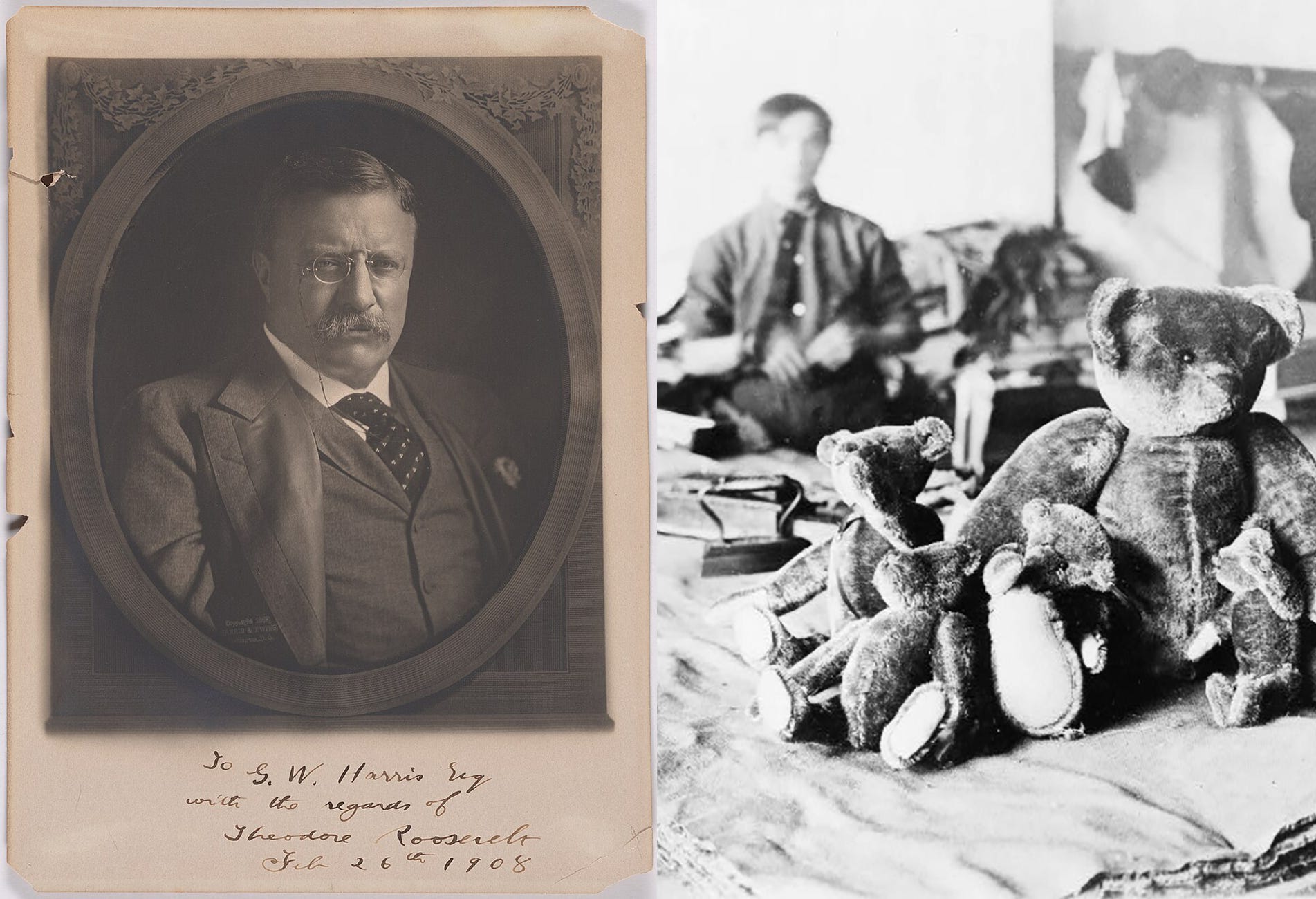
The origin of the teddy bear lies not in a nursery, but in a political incident involving an American president and a newspaper cartoon.
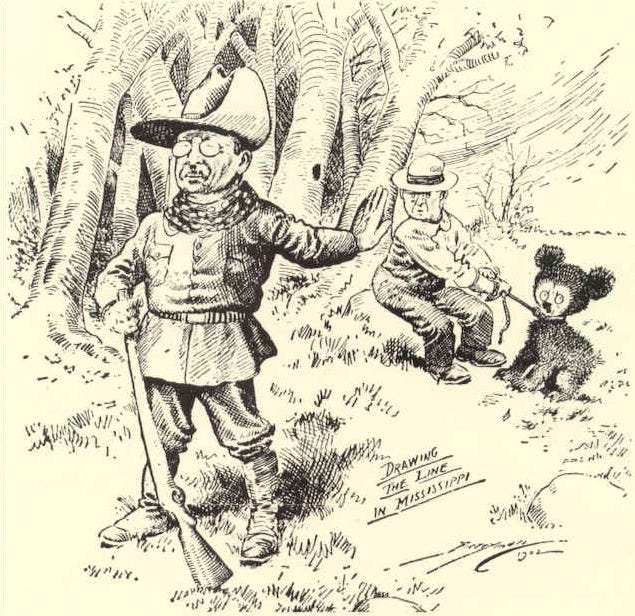
After US President Theodore “Teddy” Roosevelt failed to shoot a black bear during a hunting trip in Mississippi in 1902, aides captured an injured one and tethered it to a tree so that the president could kill it easily. Roosevelt refused, calling the act unsportsmanlike. The incident was reported widely, and a cartoon by Clifford Berryman, published in The Washington Post, depicted Roosevelt sparing a small, wide-eyed bear cub. [Ed: Makes me nostalgic for presidential statesmanship.]
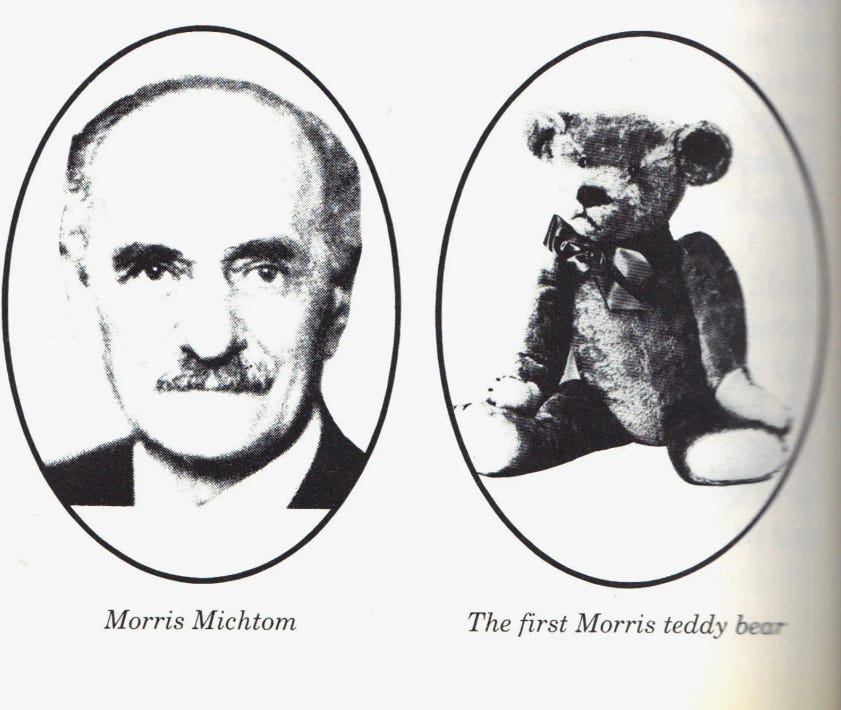
The image captured the public imagination – and sparked an idea. In Brooklyn, shopkeepers Morris and Rose Michtom created a small stuffed bear and displayed it in their window with a sign reading “Teddy’s Bear”. After receiving Roosevelt’s permission to use his name, the toy sold quickly.
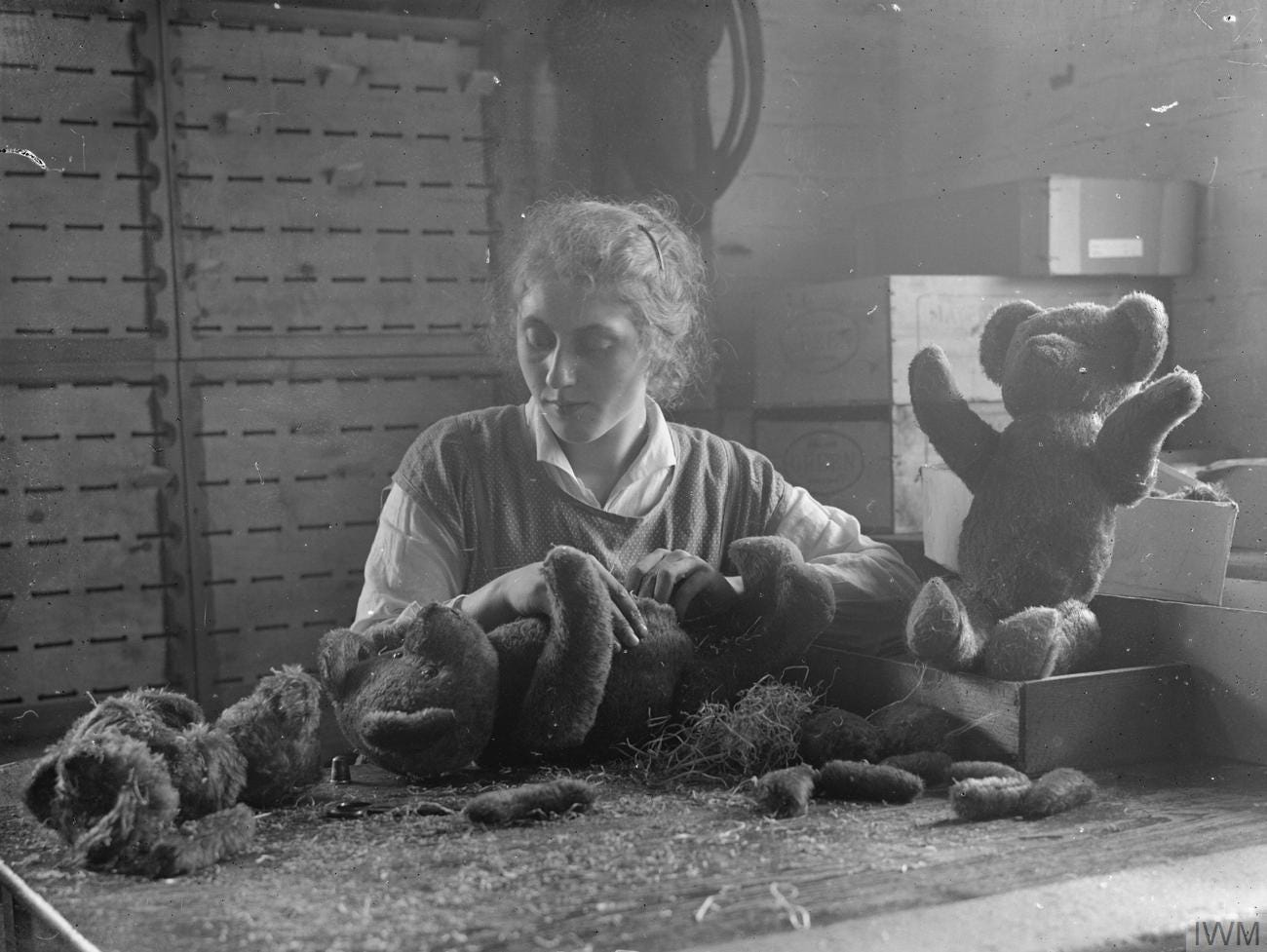
Around the same time – and independently – German toymaker Margarete Steiff was producing jointed plush bears in Europe. Her nephew, Richard Steiff, introduced a bear with movable arms and legs at the 1903 Leipzig Toy Fair, where, unsurprisingly, it attracted significant attention from American buyers. By the 1910s and 1920s, teddy bears had become immensely popular in Europe and North America.
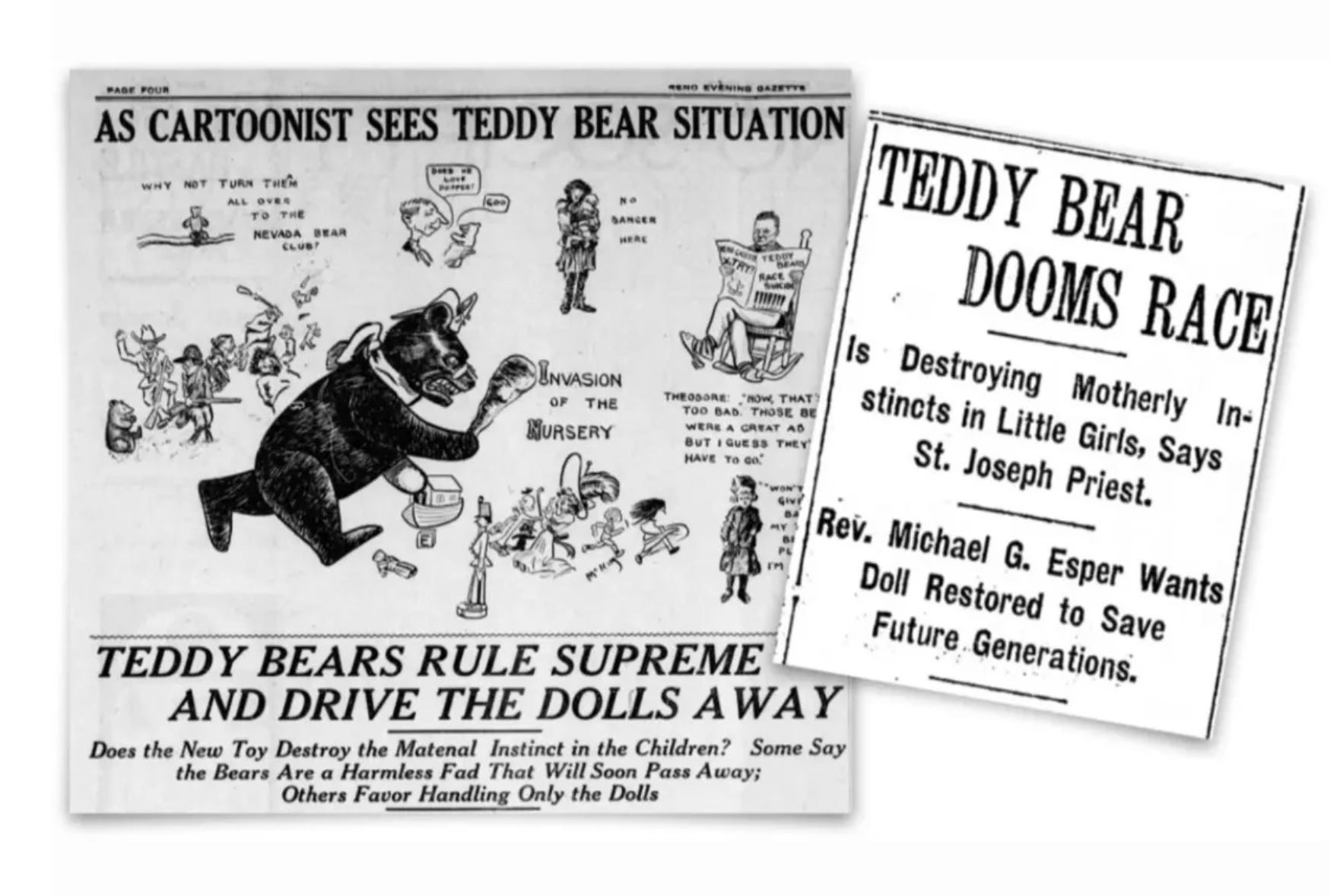
Not everyone was happy about this. A few social commentators feared that some girls’ preference for soft animals over humanlike dolls would become all-consuming, replacing the female urge to nurture babies – and eventually lead to childless marriages. In 1907, the Rev. Michael G. Esper of Michigan warned his congregation that “the fad for supplanting the good old dolls of our childhood with the horrible monstrosity known as the teddy bear” would lead to falling birthrates aka “race suicide”. [Ed: Really?]
Teddy bears survived this existential attack, and as the 20th century progressed, they also softened – literally and figuratively. Synthetic fabrics replaced mohair, cotton stuffing gave way to foam and polyester fibre, and designs became rounder, cuddlier and more child-friendly. Soft, comforting and universally recognisable, teddy bears also became emotional objects, associated with bedtime, security and memory rather than novelty or display.


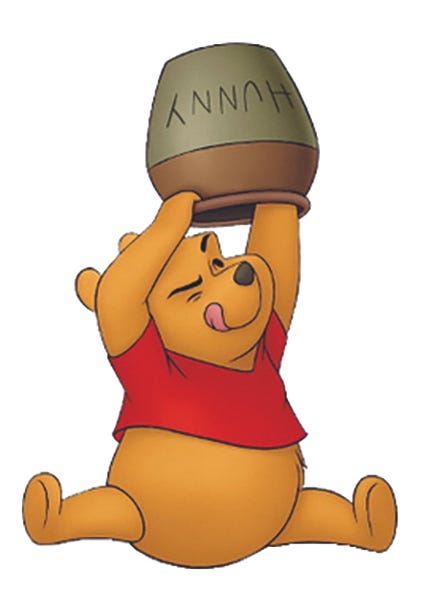
The bears also found a habitat in literature and pop culture. In 1921, English author A.A. Milne gave his year-old son a fluffy pal who went on to become Winnie-the-Pooh, still the world’s most famous bear.
Today, teddy bears exist in countless forms – from luxury collectibles and artist-designed bears to eco-friendly, washable plush toys for infants. Some are technologically enhanced, featuring sound chips, heartbeat simulators or interactive features. Others serve therapeutic purposes, used in hospitals, trauma recovery and dementia care.
Postscript
Steiff is still the most prestigious name in teddy bears, famous for its adherence to the use of high-quality materials and the iconic “Button in Ear” trademark. Early Steiff bears are among the most valuable toys ever sold at auction, and a Steiff “Titanic Mourning Bear” (1912) – a very rare black mohair bear linked to Titanic memorabilia – sold for over US$250,000 at a speciality Steiff auction in Germany in July 2023, setting a new record for an antique bear sold publicly.


REMORANDOM Chapter

References
wikipedia.org/wiki/Teddy_bear
smithsonianmag.com/history/history-teddy-bear-once-seen-dangerous-influence-young-children
brownstoner.com/history/teddy-bear-history-brooklyn-bed-stuy-theodore-roosevelt-michtom