


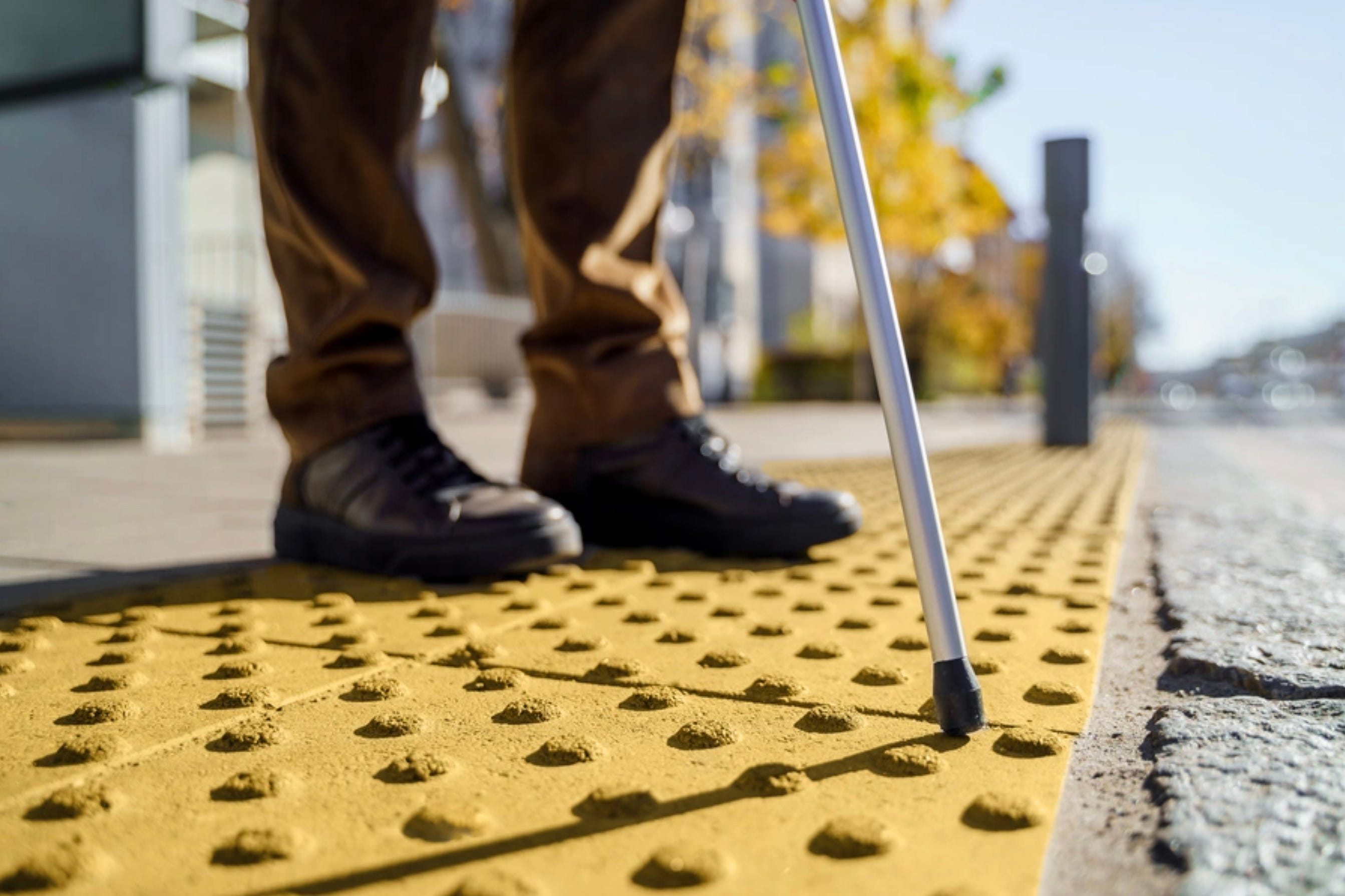
You’ve surely seen them, maybe without knowing what they were. Tenji blocks, also known internationally as “tactile paving” or “braille blocks”, are a Japanese innovation that has transformed accessibility for visually impaired individuals worldwide. These distinctive, typically yellow, tiles with raised patterns serve as tactile indicators that help visually-impaired people navigate public spaces safely.

The origins of Tenji blocks date back to 1965 in Okayama, Japan, when inventor Seiichi Miyake sought a way to assist a friend losing his sight. At that time, urban environments posed numerous hazards for blind pedestrians – busy streets, railway platforms and intersections lacked cues for safe mobility.
Miyake’s solution was simple yet ingenious: concrete tiles embedded with raised patterns that could be detected with a white cane or underfoot.
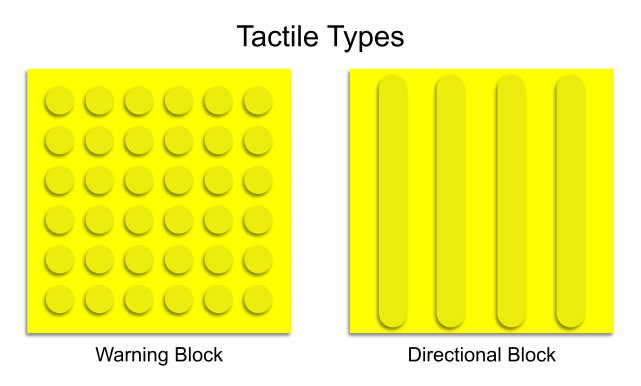
Two primary designs became standard:
Dot Pattern: small raised bumps signalling caution or a stopping point, such as at a platform edge or curb.
Bar Pattern: long, raised bars indicating a safe direction of travel along a pathway.
The word tenji means “braille” [RR5:08] in Japanese, underscoring the link between tactile information and literacy for the visually impaired. The first installation occurred near a school for the blind in Okayama in 1967, and the benefits were immediately clear. By the mid-1970s, tactile paving was incorporated into Japan’s national transportation standards.
Global adoption followed over the subsequent decades. Today, tactile paving is a common feature in cities around the world – from railway stations in London to footpaths in Sydney. Colours often include bright yellow for high visibility, particularly for those with partial sight, though variations exist for local environments.


Beyond their practical function, Tenji blocks represent a universal design philosophy: solutions that benefit specific users while enhancing safety and awareness for everyone. Over time, materials evolved from concrete to durable polymers, rubber composites, and even stainless steel in high-traffic areas.


Recent years have introduced technologies that build on Tenji’s legacy, integrating digital tools with tactile systems. Among these, NaviLens stands out as a pioneering innovation. Developed in Spain, NaviLens uses high-contrast, camera-readable tags installed on or alongside tactile paving. These tags, incorporating QR codes [RR1:58] and readable from a distance without precise alignment, deliver spoken navigation instructions through a smartphone app, guiding users with details like distance, orientation and real-time transport information.
Postscript
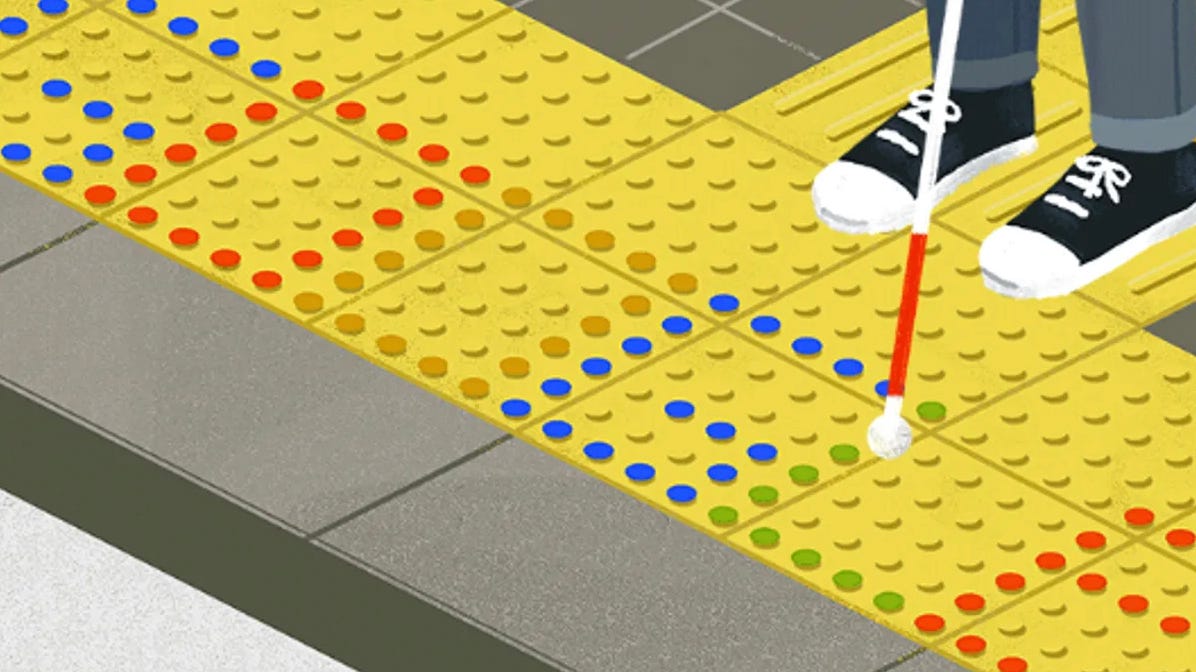
Japan celebrates Tenji Block Day on 18 March each year, honouring Seiichi Miyake’s contribution to accessibility and universal design.
REMORANDOM Chapter

References