


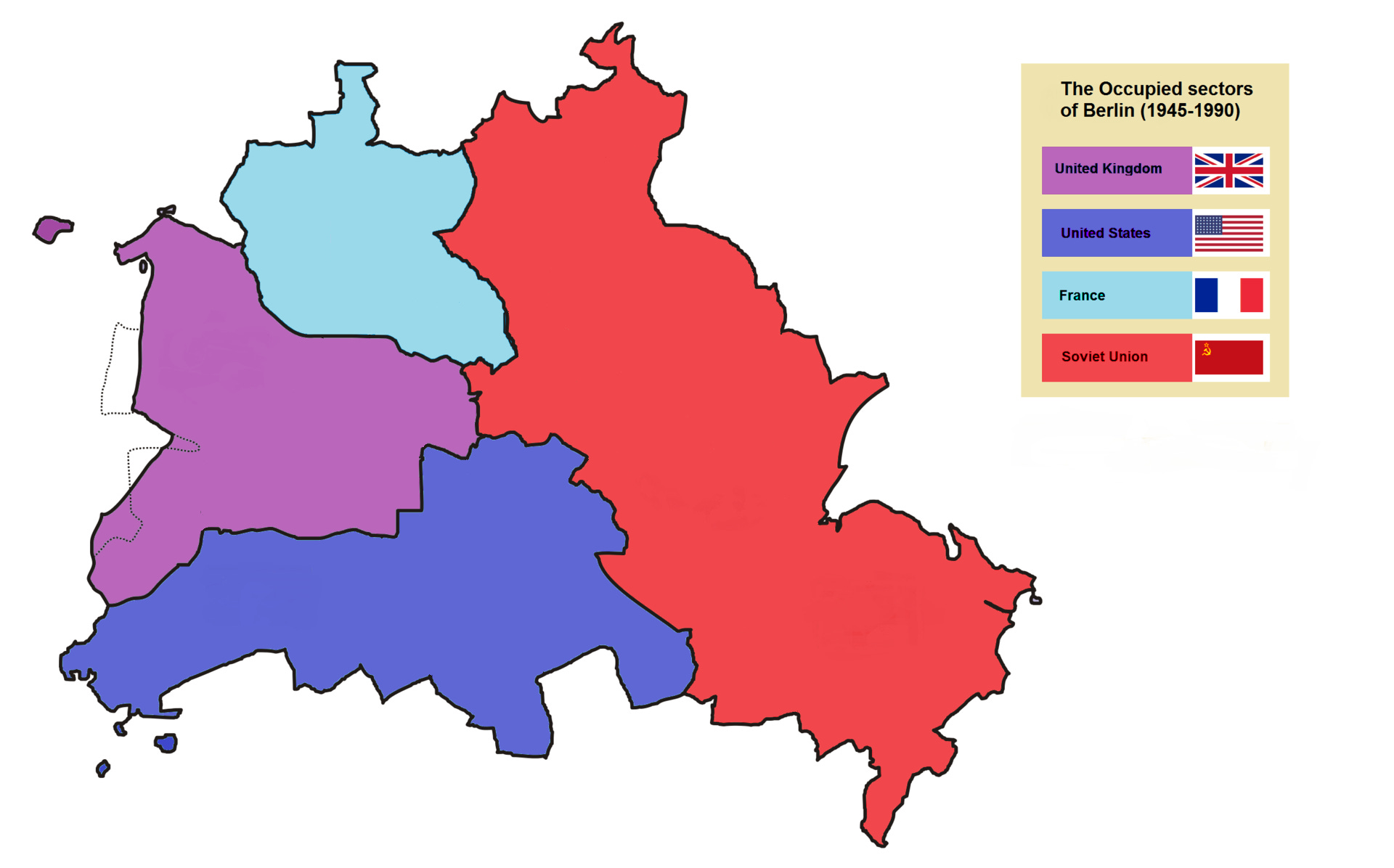
Following World War II, Germany was divided into four occupation zones controlled by the United States, the Soviet Union, the United Kingdom and France. Berlin, located deep within the Soviet zone, was similarly divided.
In 1949, tensions between the Soviets and their former allies escalated, leading to the formation of two separate German states: the Federal Republic of Germany (FRG) in the West and the German Democratic Republic (GDR) in the East. While West Germany adopted a democratic government and a capitalist economy, East Germany followed the Soviet communist system. Over time, the economic prosperity and personal freedoms in West Germany starkly contrasted with the repression and economic struggles of the East, prompting many East Germans to flee to the West through the relatively open border in Berlin.
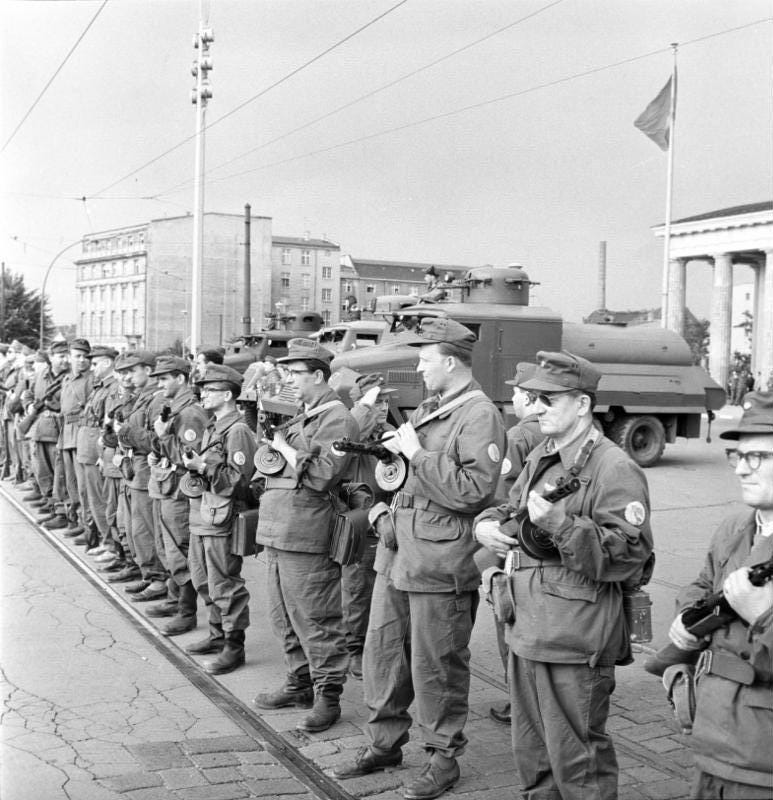
By the late 1950s, East Germany faced a significant “brain drain” as skilled workers and professionals fled to the West. To stem this exodus, the East German government, with the approval of Soviet Premier Nikita Khrushchev, decided to seal off the border. During the very early hours of 13 August 1961, East German soldiers began erecting barbed wire and fences along the border separating East and West Berlin. Over time, this makeshift barrier evolved into a heavily fortified concrete wall stretching over 155 kilometres (96 miles).
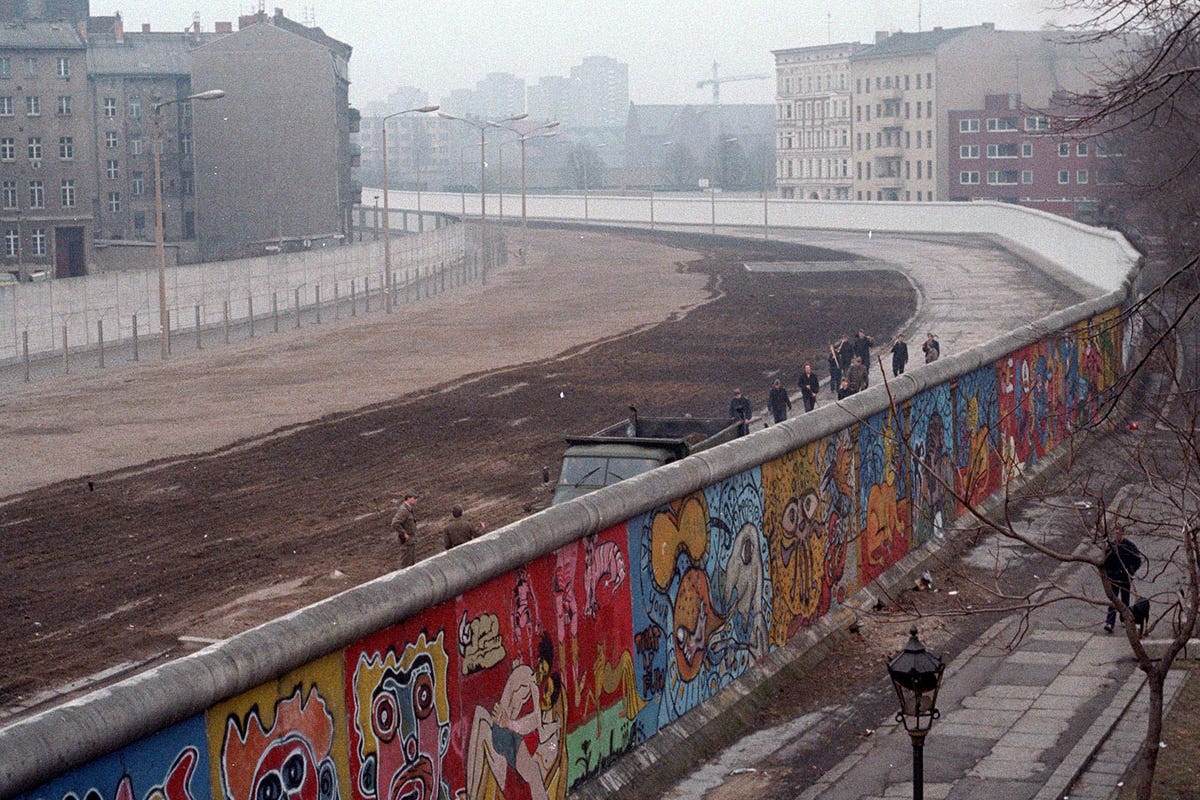
The Berlin Wall was more than just a physical barrier; it was a complex system of fortifications, including guard towers, minefields, and a “death strip”, an area covered with raked sand or gravel which made the footprints of defectors easy to notice and offered wall guards a clear line of fire. Despite these measures, many East Germans risked their lives to flee. Some (up to 5,000) succeeded by digging tunnels, flying hot-air balloons, or even driving through weak points in the Wall, while others were captured or killed by border guards. More than 100 people died this way.


Western leaders, including US President John F. Kennedy, condemned the Wall as a stark violation of human rights. In 1963, he famously declared in a speech in West Berlin, Ich bin ein Berliner (“I am a Berliner”) – expressing solidarity with the city’s residents.
By the 1980s, the Soviet Union, under leader Mikhail Gorbachev, began implementing reforms such as glasnost (openness) and perestroika (restructuring), which weakened its grip on Eastern Europe. Meanwhile, protests and demands for freedom grew in East Germany.
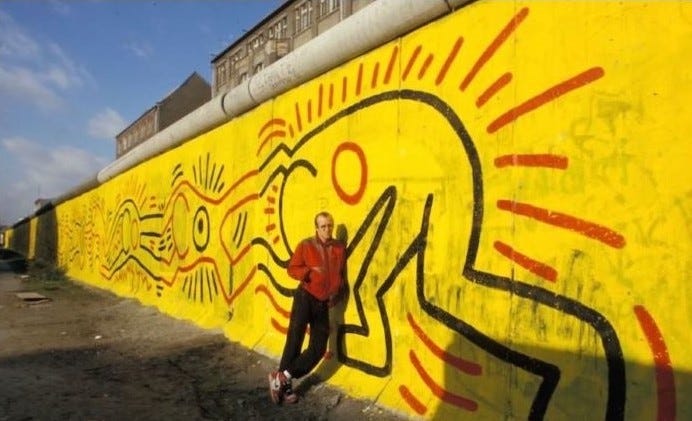
On 12 June 1987, US President Ronald Reagan delivered a speech at the Brandenburg Gate in West Berlin, directly addressing Gorbachev. In a defining moment of Cold War rhetoric, Reagan challenged the Soviet Union’s commitment to reform and freedom, saying: “Mr Gorbachev, tear down this wall!”
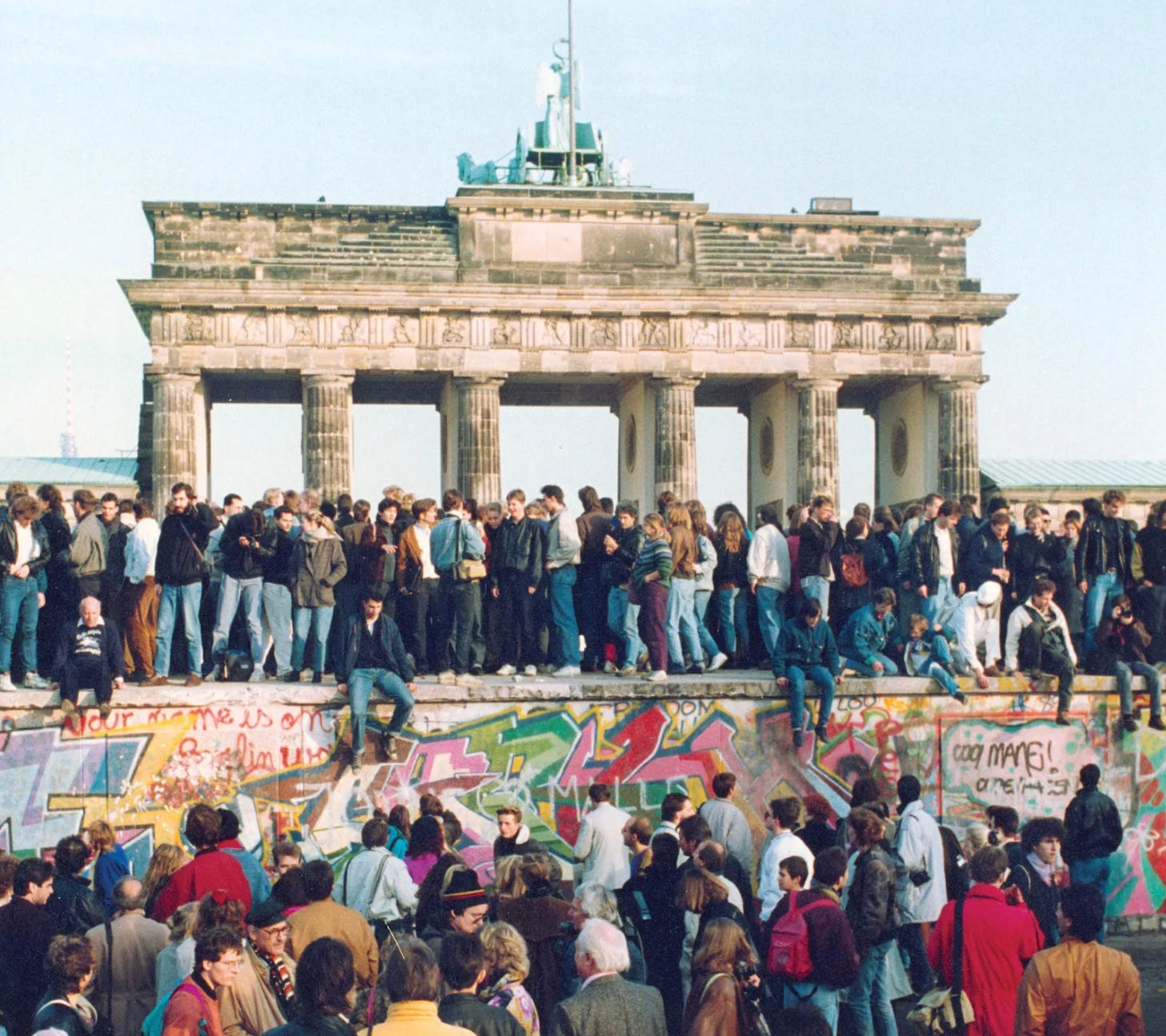
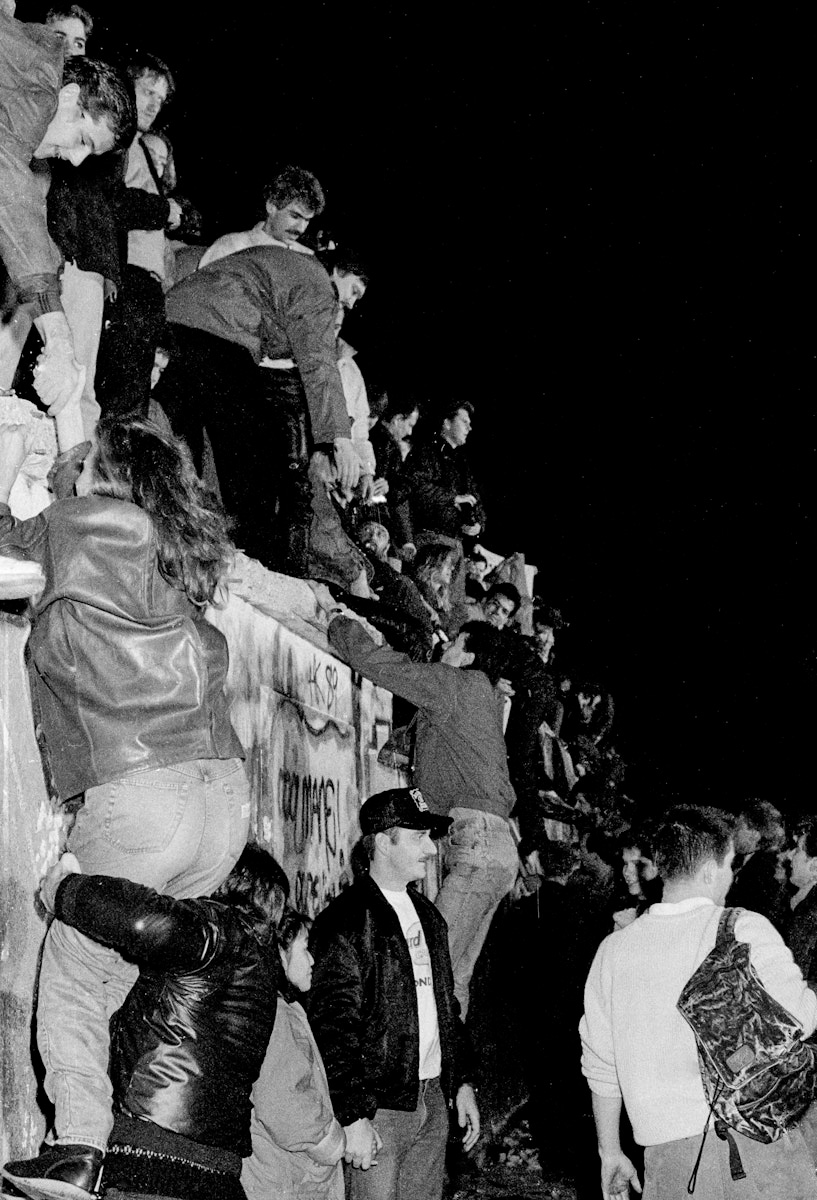
On 9 November 1989, amid mounting pressure, the East German government announced that citizens could cross the border freely. Crowds gathered at the Wall, and in a spontaneous celebration, Berliners from both sides began dismantling it with chisels and sledge hammers.
The fall of the Berlin Wall marked the beginning of the end of the Cold War and paved the way for German reunification, which was officially achieved on 3 October 1990.
Story Idea: Enzo Amato
References
telegraph.co.uk/news/worldnews/8698446/Berlin-Wall-Five-things-you-might-not-know
deodato.art/en/blog/post/berlin-wall-graffiti-keith-haring-and-the-east-side-gallery
REMORANDOM Books
Order our books on the REMO store website HERE. Subscribe to receive all future volumes and other printed goodies HERE.
