


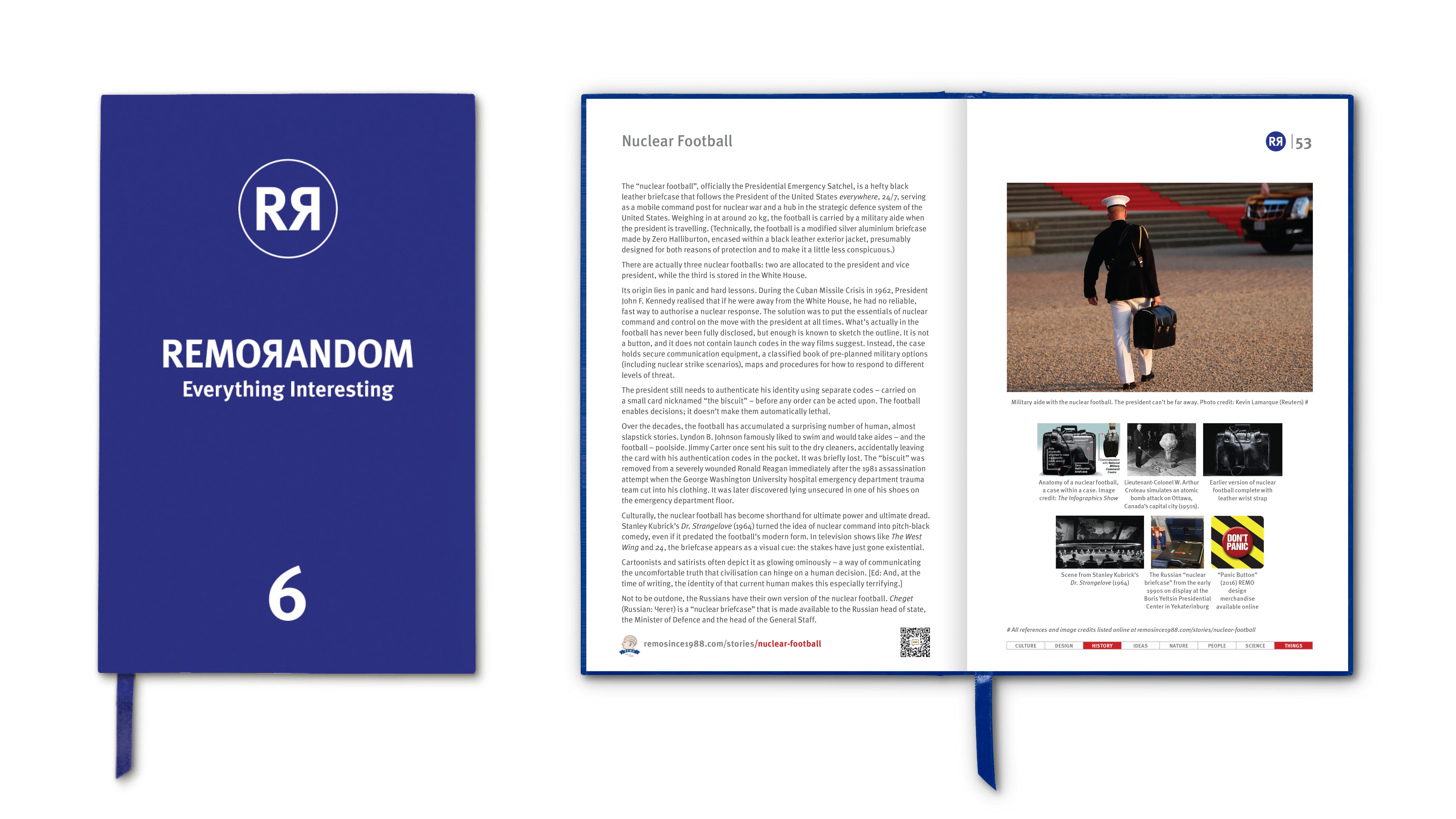
The “nuclear football”, officially the “Presidential Emergency Satchel”, is a hefty black leather briefcase that follows the President of the United States everywhere, 24/7 – serving as a mobile command post for nuclear war and a hub in the strategic defence system of the United States.
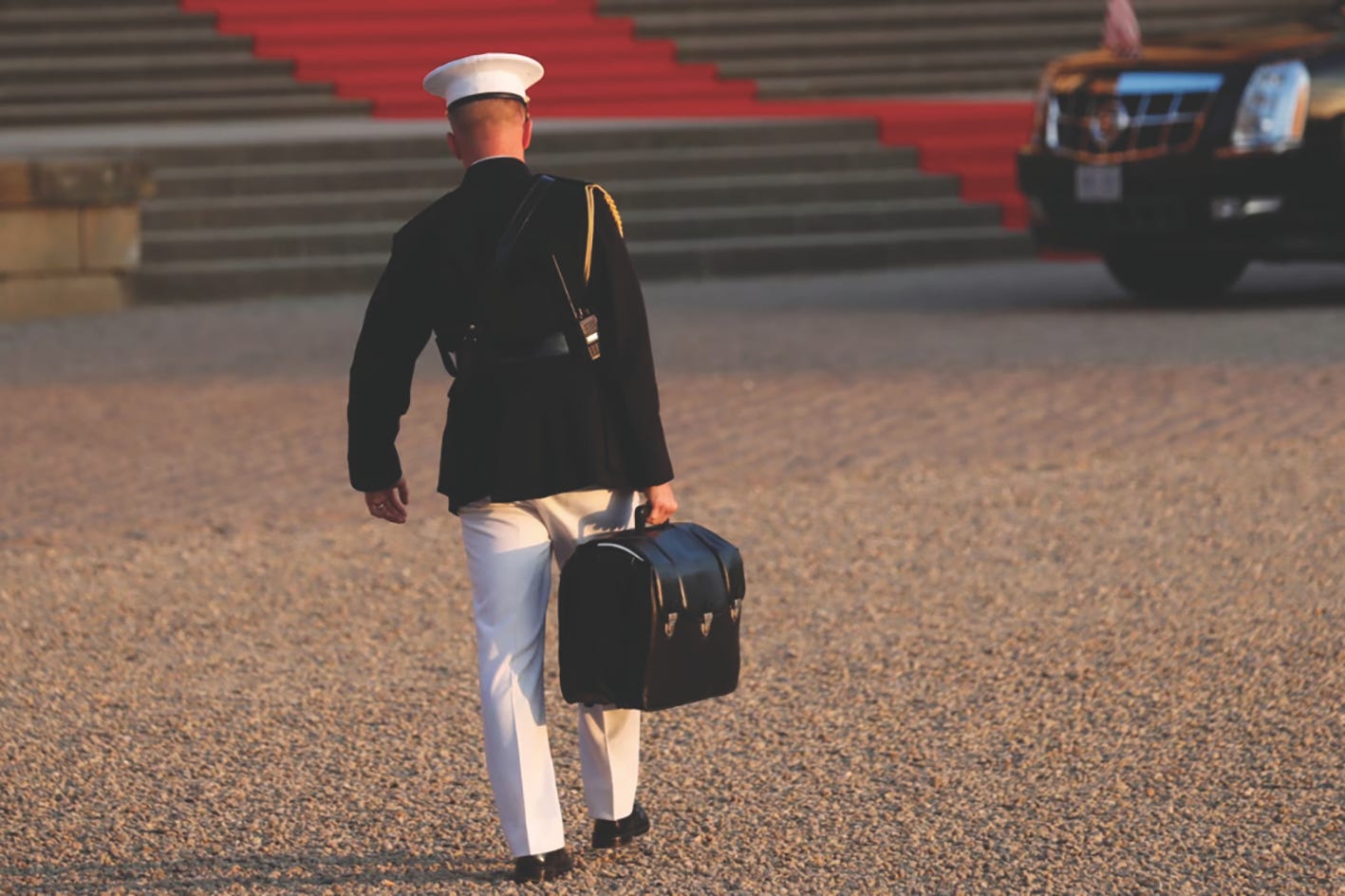
Weighing in at around 20 kg, the football is carried by a military aide when the president is travelling. (Technically, the football is a modified silver aluminium briefcase made by Zero Halliburton, encased within a black leather exterior jacket, presumably designed for both reasons of protection and to make it a little less conspicuous.)
There are actually three nuclear footballs: two are allocated to the president and vice president, while the third is stored in the White House.
Its origin lies in panic and hard lessons. During the Cuban Missile Crisis in 1962, President John F. Kennedy realised that if he were away from the White House, he had no reliable, fast way to authorise a nuclear response. The solution was to put the essentials of nuclear command and control on the move with the president at all times. What’s actually in the football has never been fully disclosed, but enough is known to sketch the outline. It is not a button, and it does not contain launch codes in the way films suggest. Instead, the case holds secure communication equipment, a classified book of pre-planned military options (including nuclear strike scenarios), maps and procedures for how to respond to different levels of threat.
The president still needs to authenticate his identity using separate codes – carried on a small card nicknamed “the biscuit” – before any order can be acted upon. The football enables decisions; it doesn’t make them automatically lethal.
Over the decades, the football has accumulated a surprising number of human, almost slapstick stories. Lyndon B. Johnson famously liked to swim and would take aides – and the football – poolside. Jimmy Carter once sent his suit to the dry cleaners, accidentally leaving the card with his authentication codes in the pocket. It was briefly lost. The “biscuit” was removed from a severely wounded Ronald Reagan immediately after the 1981 assassination attempt when the George Washington University hospital emergency department trauma team cut into his clothing. It was later discovered lying unsecured in one of his shoes on the emergency department floor.
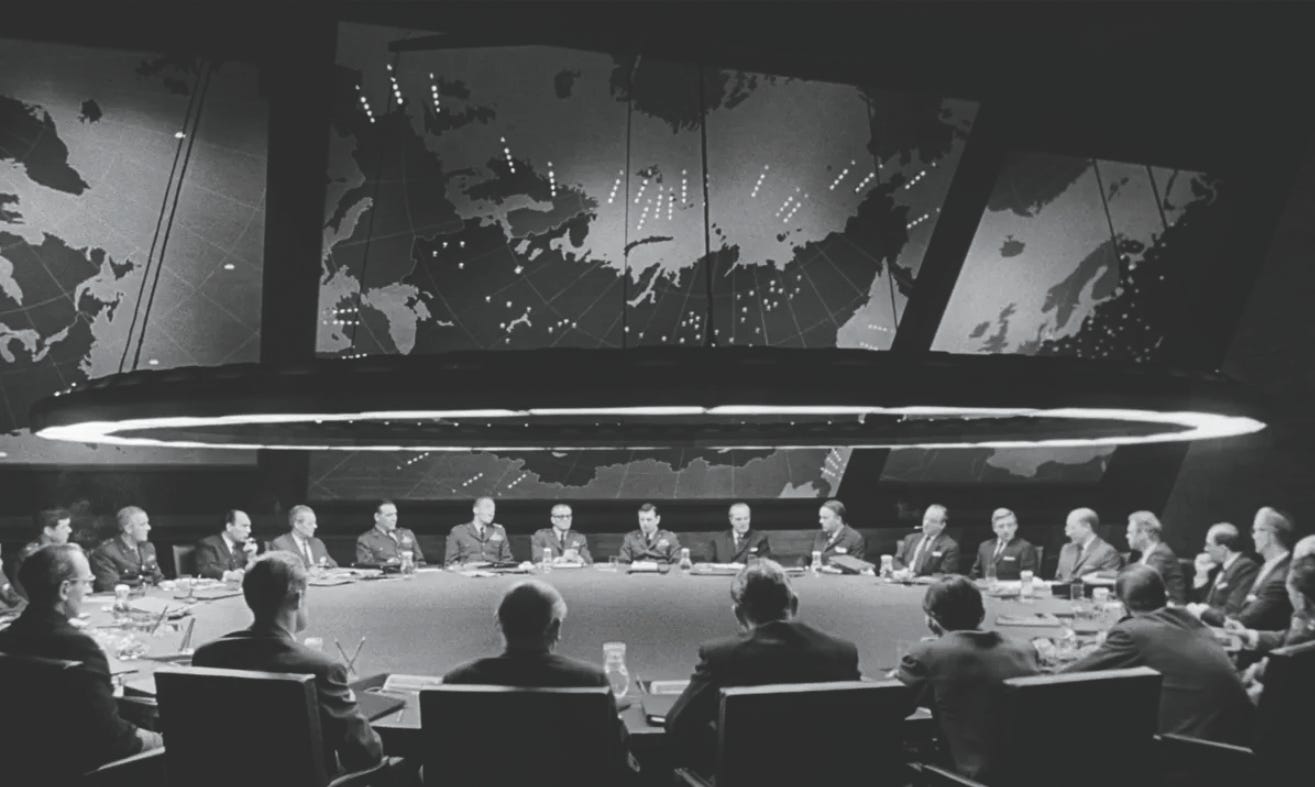
Culturally, the nuclear football has become shorthand for ultimate power and ultimate dread. Stanley Kubrick’s Dr. Strangelove (1964) turned the idea of nuclear command into pitch-black comedy, even if it predated the football’s modern form. In television shows like The West Wing and 24, the briefcase appears as a visual cue: the stakes have just gone existential.
Cartoonists and satirists often depict it as glowing ominously – a way of communicating the uncomfortable truth that civilisation can hinge on a human decision. [Ed: And, at the time of writing, the identity of that current human makes this especially terrifying.]
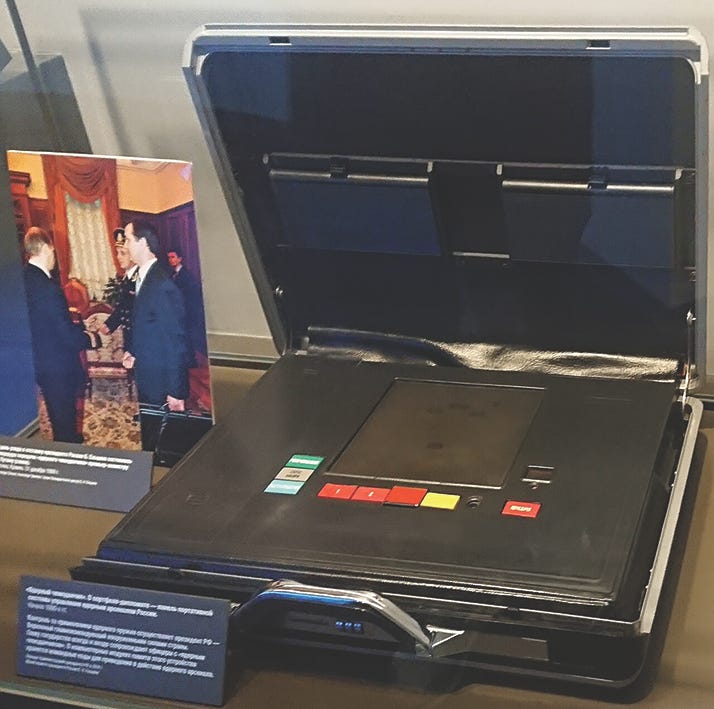
Not to be outdone, the Russians have their own version of the nuclear football. Cheget (Russian: Чегет) is a “nuclear briefcase” that is made available to the Russian head of state, the Minister of Defence and the head of the General Staff.

References
wikipedia.org/wiki/Nuclear_football
wikipedia.org/wiki/Cheget
abc.net.au/news/2023-07-23/nuclear-football-us-president-history
smithsonianmag.com/history/real-story-football-follows-president-everywhere
history.com/videos/the-presidents-nuclear-football
REMORANDOM Books
Order our books on the REMO store website HERE. Subscribe to receive all future volumes and other printed goodies HERE.
