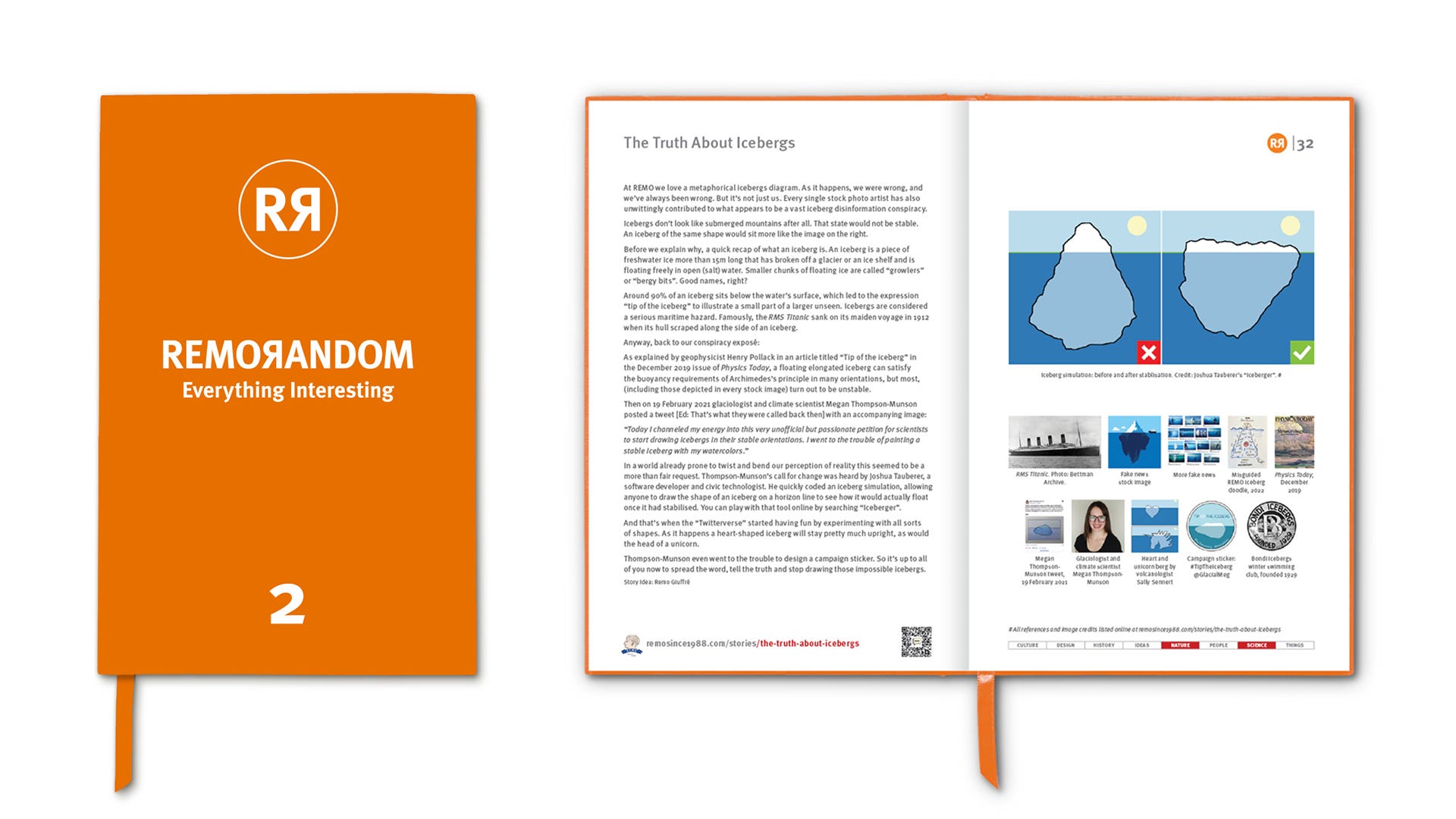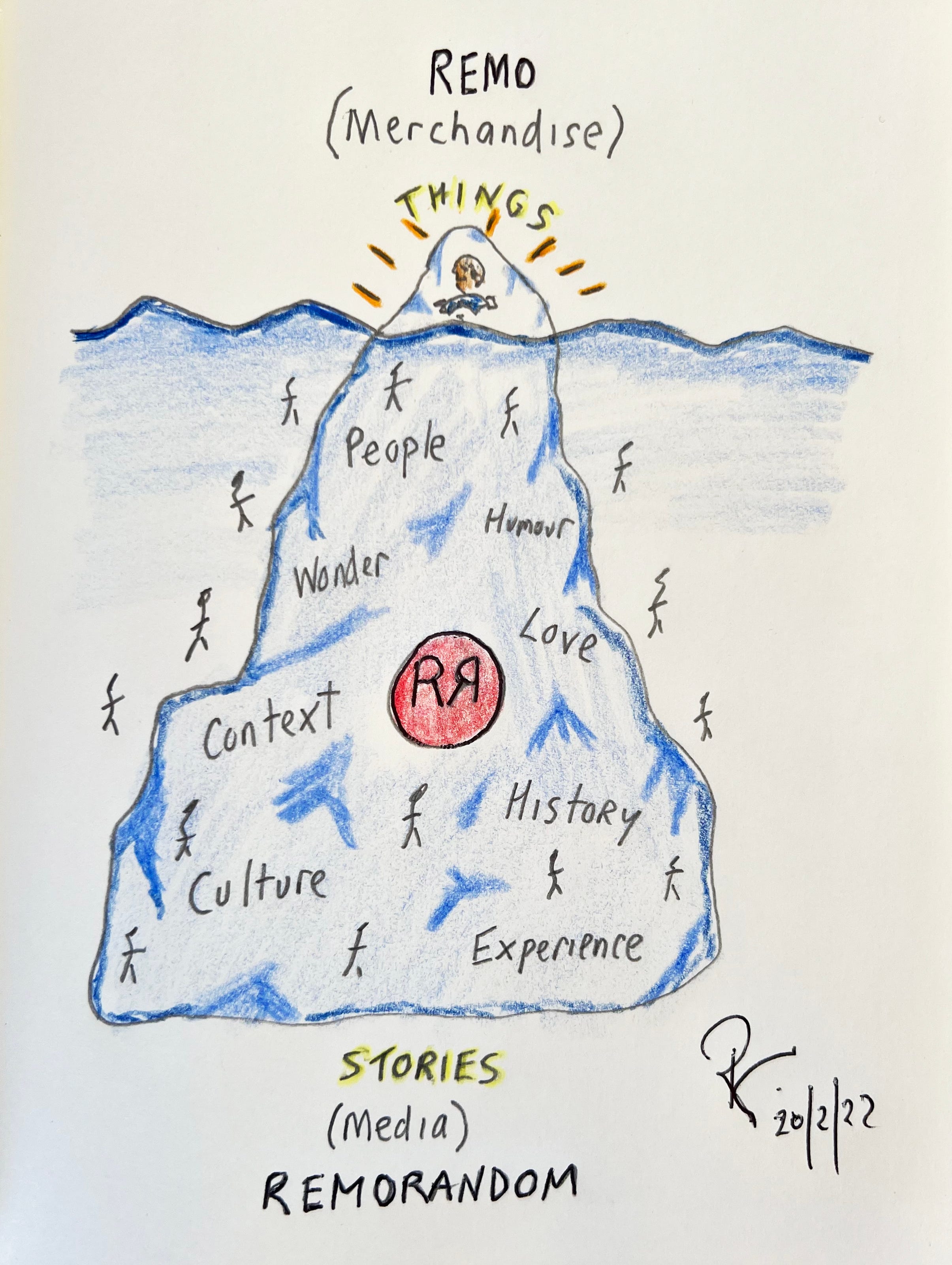
We’ve long loved a metaphorical icebergs diagram, the original version of this one dating back to 1990. As it happens, we were wrong, and we’ve always been wrong.
But it’s not just us. Every single stock photo artist has also unwittingly contributed to what appears to be a vast iceberg disinformation conspiracy.


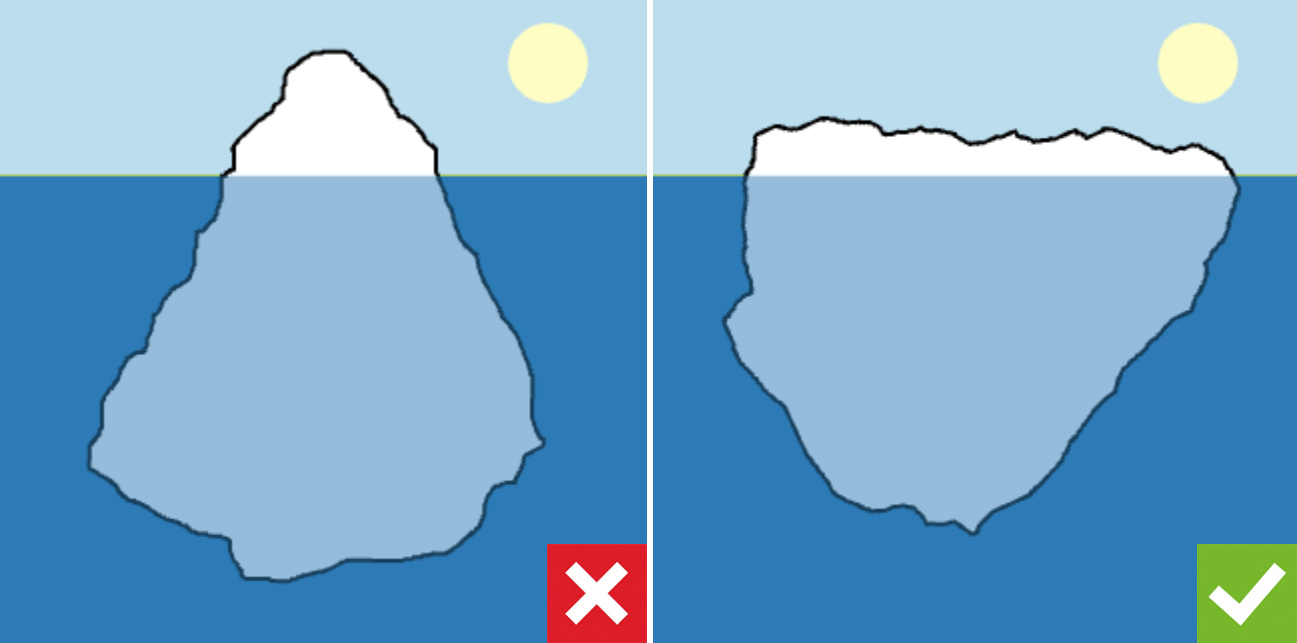
Icebergs don’t look like submerged mountains after all. That state would not be stable. An iceberg of the same shape would sit more like the image on the right.
Before we explain why, a quick recap of what an iceberg is. An iceberg is a piece of freshwater ice more than 15m long that has broken off a glacier or an ice shelf and is floating freely in open (salt) water. Smaller chunks of floating ice are called “growlers” or “bergy bits”. Good names, right?
Around 90% of an iceberg sits below the water’s surface, which led to the expression “tip of the iceberg” to illustrate a small part of a larger unseen. Icebergs are considered a serious maritime hazard. Famously, the RMS Titanic sank on its maiden voyage in 1912 when its hull scraped along the side of an iceberg.


Anyway, back to our conspiracy exposé:
As explained by geophysicist Henry Pollack in an article titled “Tip of the iceberg” in the December 2019 issue of Physics Today, a floating elongated iceberg can satisfy the buoyancy requirements of Archimedes’s principle in many orientations, but most, (including those depicted in every stock image) turn out to be unstable.
Then on 19 February 2021 glaciologist and climate scientist Megan Thompson-Munson posted a tweet [Ed: That’s what they were called back then] with an accompanying image:
“Today I channeled my energy into this very unofficial but passionate petition for scientists to start drawing icebergs in their stable orientations. I went to the trouble of painting a stable iceberg with my watercolors.”


In a world already prone to twist and bend our perception of reality this seemed to be a more than fair request. Thompson-Munson’s call for change was heard by Joshua Tauberer, a software developer and civic technologist. He quickly coded an iceberg simulation, allowing anyone to draw the shape of an iceberg on a horizon line to see how it would actually float once it had stabilised. You can play with that tool online by searching “Iceberger” or by clicking HERE.
And that’s when the “Twitterverse” started having fun by experimenting with all sorts of shapes. As it happens a heart-shaped iceberg will stay pretty much upright, as would the head of a unicorn.


Thompson-Munson even went to the trouble to design a campaign sticker.
So it’s up to all of you now to spread the word, tell the truth and stop drawing those impossible icebergs.
REMORANDOM Book Chapter