


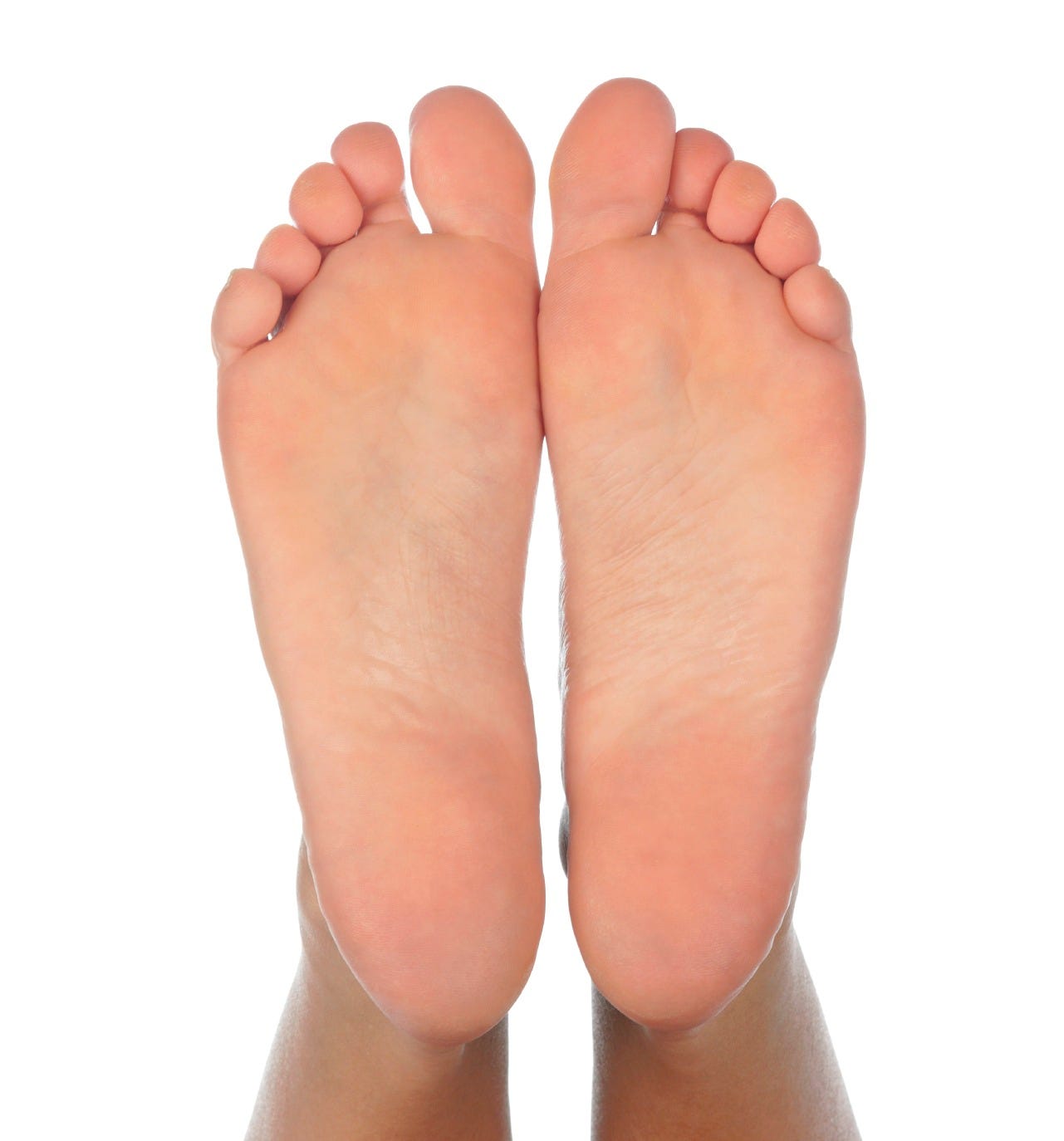
Many consider the soles of their feet to be the most ticklish parts of their body, due to the many nerve endings located there, and this would explain why tickling someone’s feet against their will is the most common form of “tickle torture”.
While laughter is usually thought of as a pleasure response, in tickle torture the person being tickled may laugh whether or not they find the experience to be pleasant.
In a consensual form, tickling may be part of a mutually fulfilling, physically intimate (and sometimes even sexual) act between partners. Non-consensual tickling, however, can cause real physical and mental distress in a victim, which is why it has been used as an interrogation method or to simply show dominance over another person.
History is rich with colourful examples of tickle torture.

A 2001 article in the British Medical Journal about European tortures listed a method of tickle torture, described in the 1502 Tractatus de indiciis et tortura by the Italian jurist and monk Franciscus Brunus de San Severino, in which a goat was compelled to lick the victim’s feet because they were being repeatedly dipped in salt water. [Ed: If this doesn’t qualify as “interesting”, we don’t know what does.]
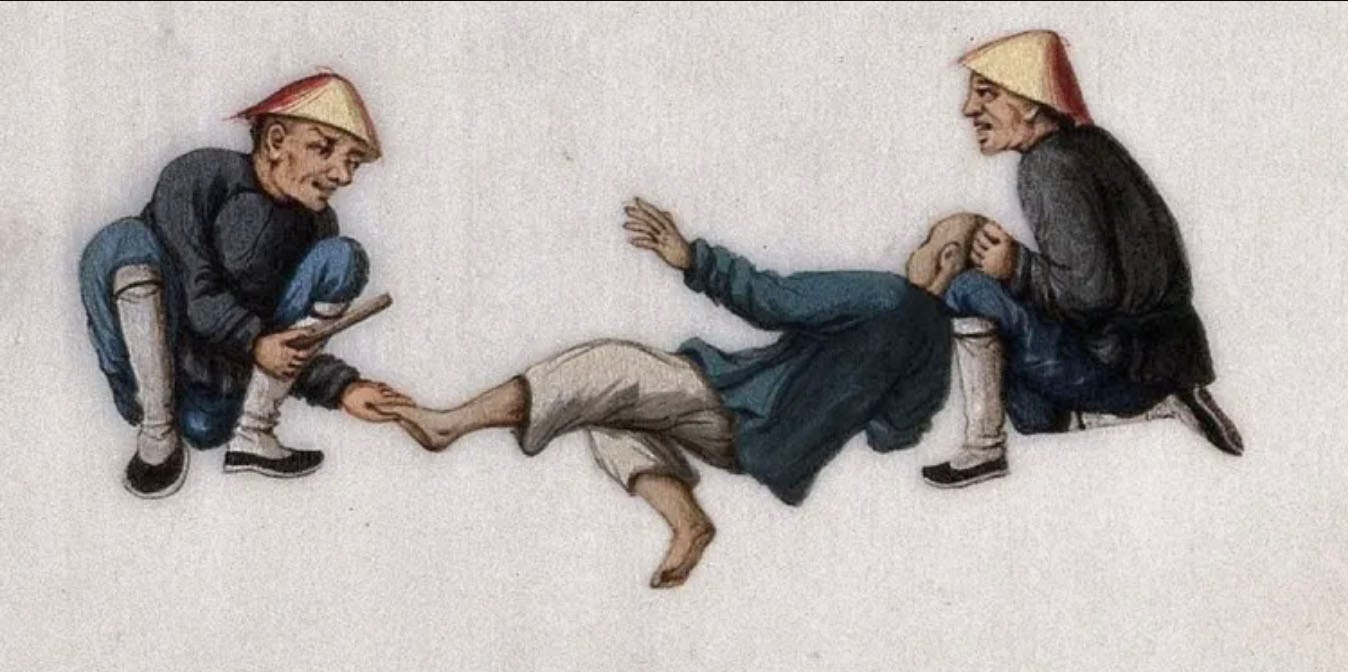
In ancient Japan, those in positions of authority could administer punishments to those convicted of crimes that were beyond the criminal code. This was called shikei, which translates as “private punishment”. One such torture was kusuguri-zeme: “merciless tickling”.
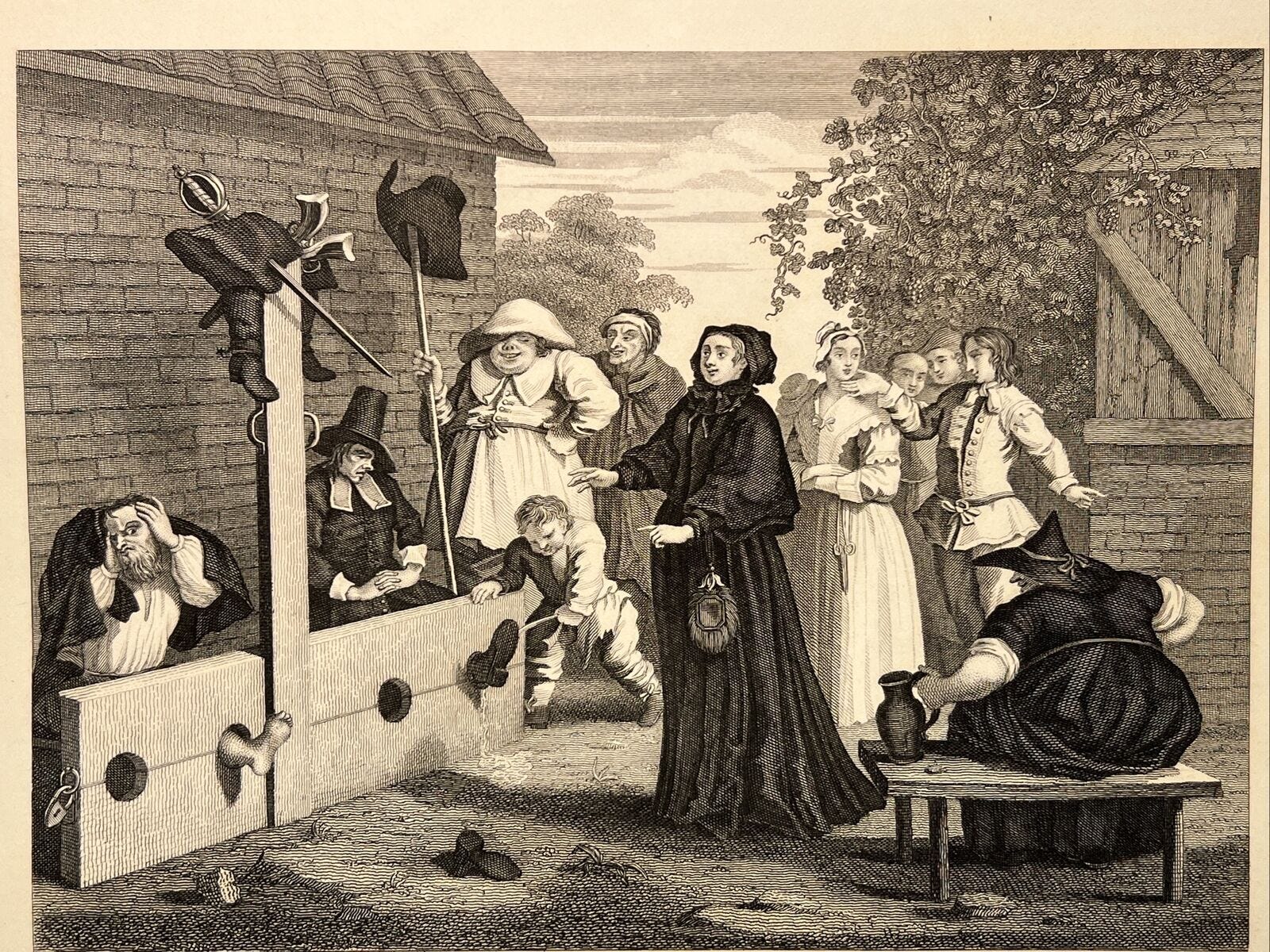
And an 1887 article reference in The New York Times entitled “England in Old Times” states:
“Gone, too, are the parish stocks, in which male offenders against public morality formerly sat imprisoned, with their legs held fast beneath a heavy wooden yoke, while sundry small but fiendish boys improved the occasion by deliberately pulling off shoes and tickling the soles of the men’s defenseless [sic] feet.”
And finally, Heinz Heger, a man imprisoned in the Flossenbürg concentration camp during World War II, witnessed Nazi prison guards perform tickle torture on a fellow inmate “with goose feathers, on the soles of his feet, between his legs, in the armpits, and on other parts of his naked body”. He describes this incident in his book The Men With the Pink Triangle: The True, Life-and-Death Story of Homosexuals in the Nazi Death Camps.

Closer to home, a common form of tickle torture is the one used by siblings as an alternative to using outright violence in an attempt to dominate each other or to settle disputes, and there are extreme instances of this behaviour.

Similarly, there is a difference between a child being gently tickled by a loving and aware parent without ever feeling out of control, and suffering the kind of abuse we’re talking about here. In fact, some researchers believe that light tickling can be a safe physical bonding experience for parent and child. But the child needs to be able to say when to stop, to be fully in charge of what happens to his or her body.
REMORANDOM Chapter

References