


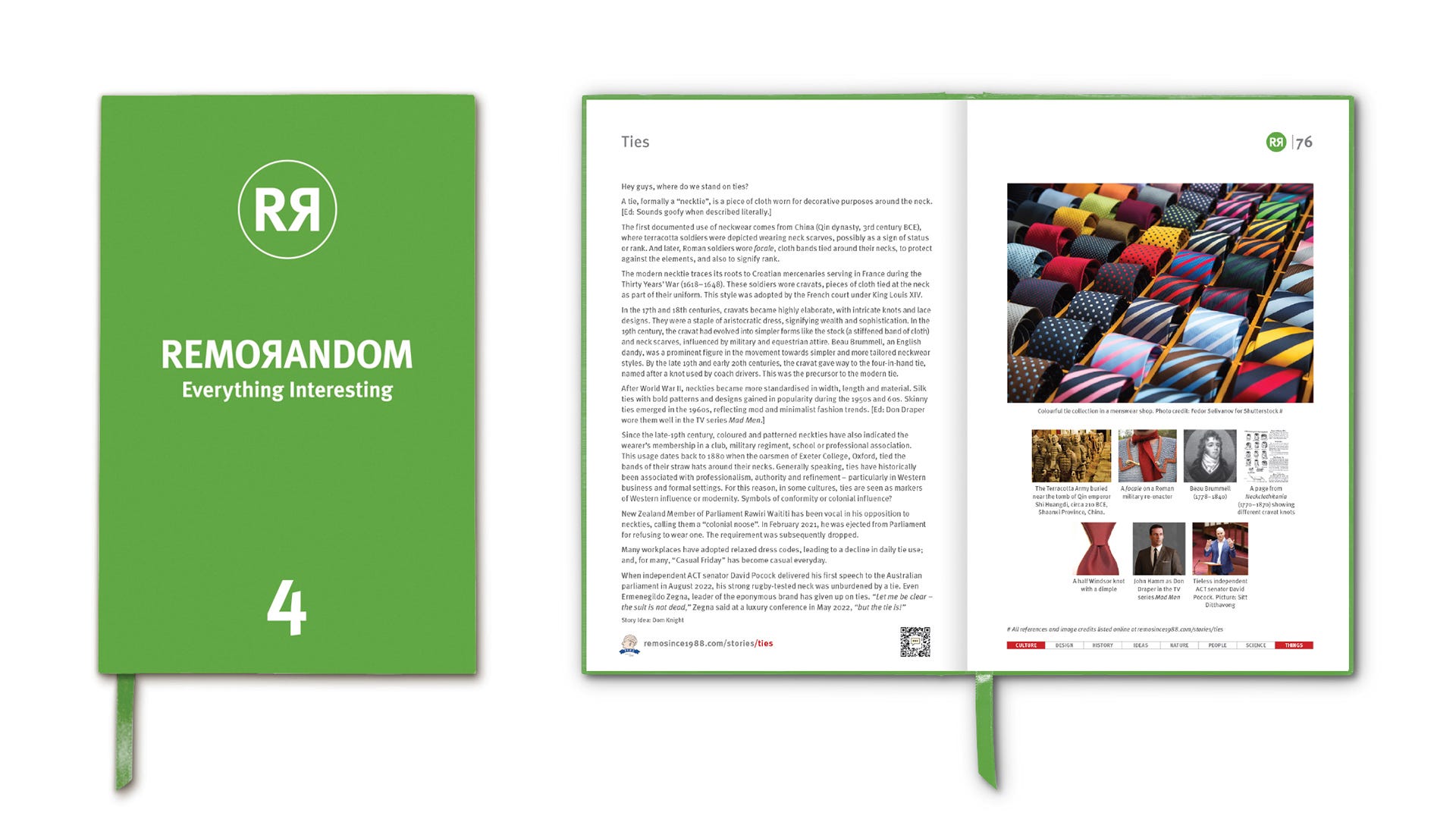
A tie, formally a “necktie”, is a piece of cloth worn for decorative purposes around the neck. [Ed: Sounds goofy when described literally. Am I right?]
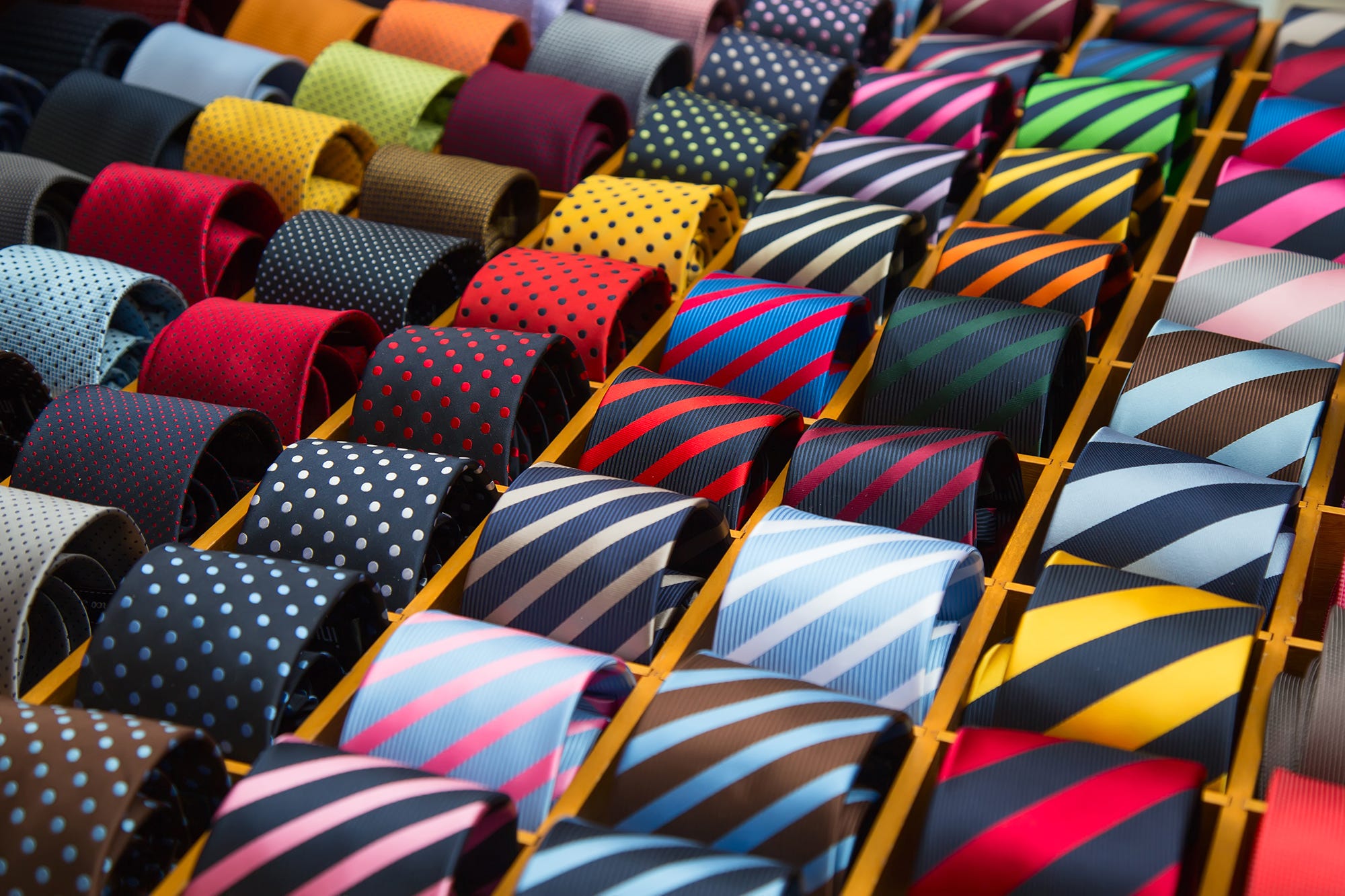
The first documented use of neckwear comes from China (Qin dynasty, 3rd century BCE), where terracotta soldiers were depicted wearing neck scarves, possibly as a sign of status or rank.
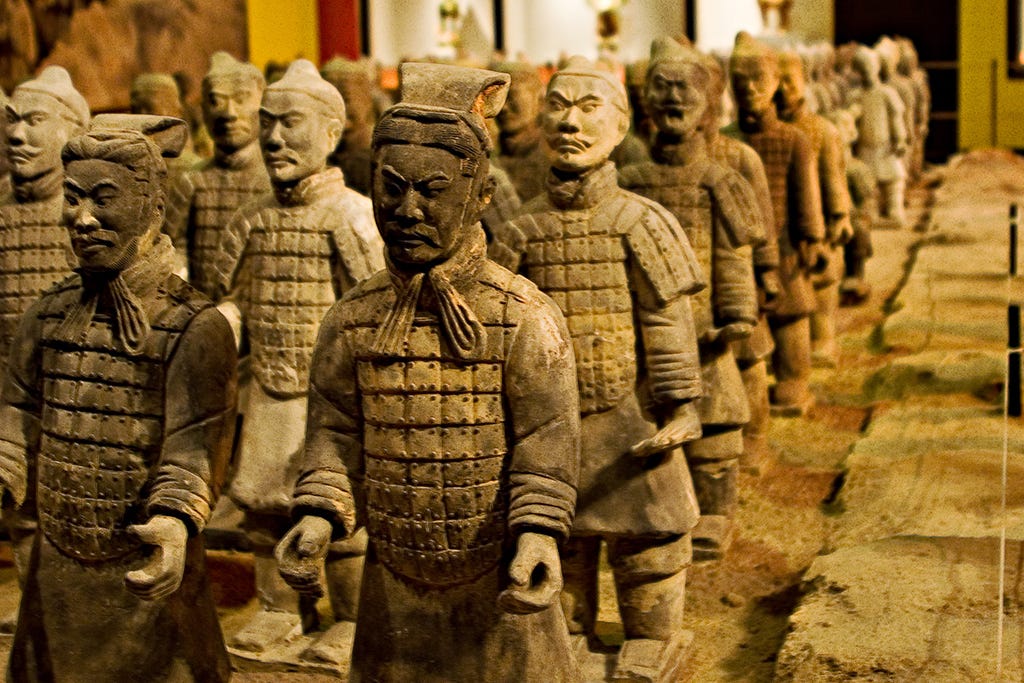
And later, Roman soldiers wore focale, cloth bands tied around their necks, to protect against the elements, and also to signify rank.
The modern necktie traces its roots to Croatian mercenaries serving in France during the Thirty Years’ War (1618–1648). These soldiers wore cravats, pieces of cloth tied at the neck as part of their uniform. This style was adopted by the French court under King Louis XIV.
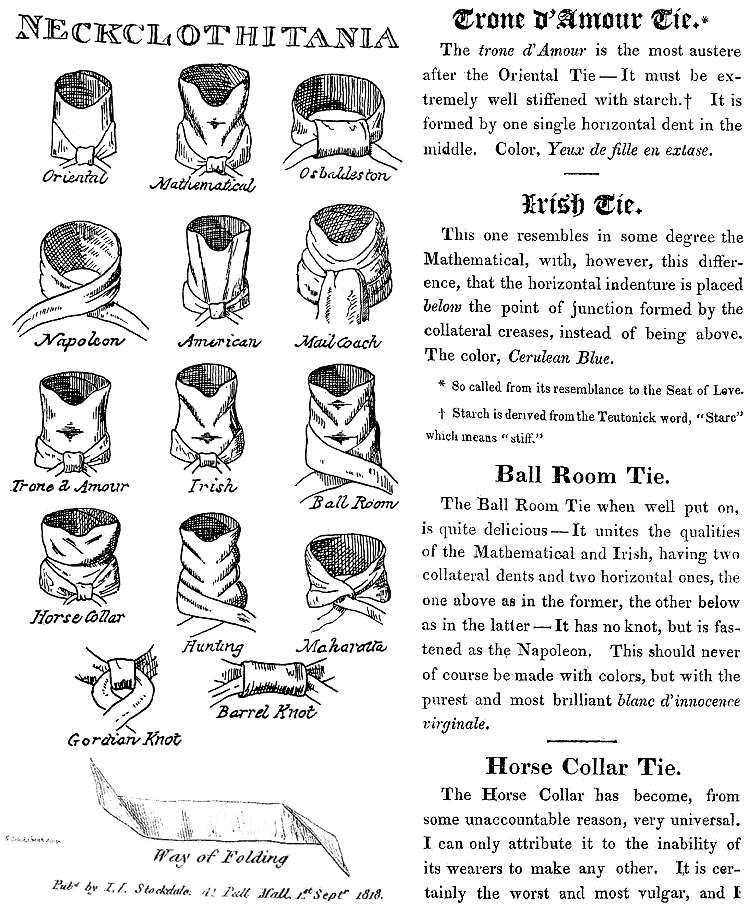
In the 17th and 18th centuries, cravats became highly elaborate, with intricate knots and lace designs. They were a staple of aristocratic dress, signifying wealth and sophistication. In the 19th century, the cravat had evolved into simpler forms like the stock (a stiffened band of cloth) and neck scarves, influenced by military and equestrian attire.
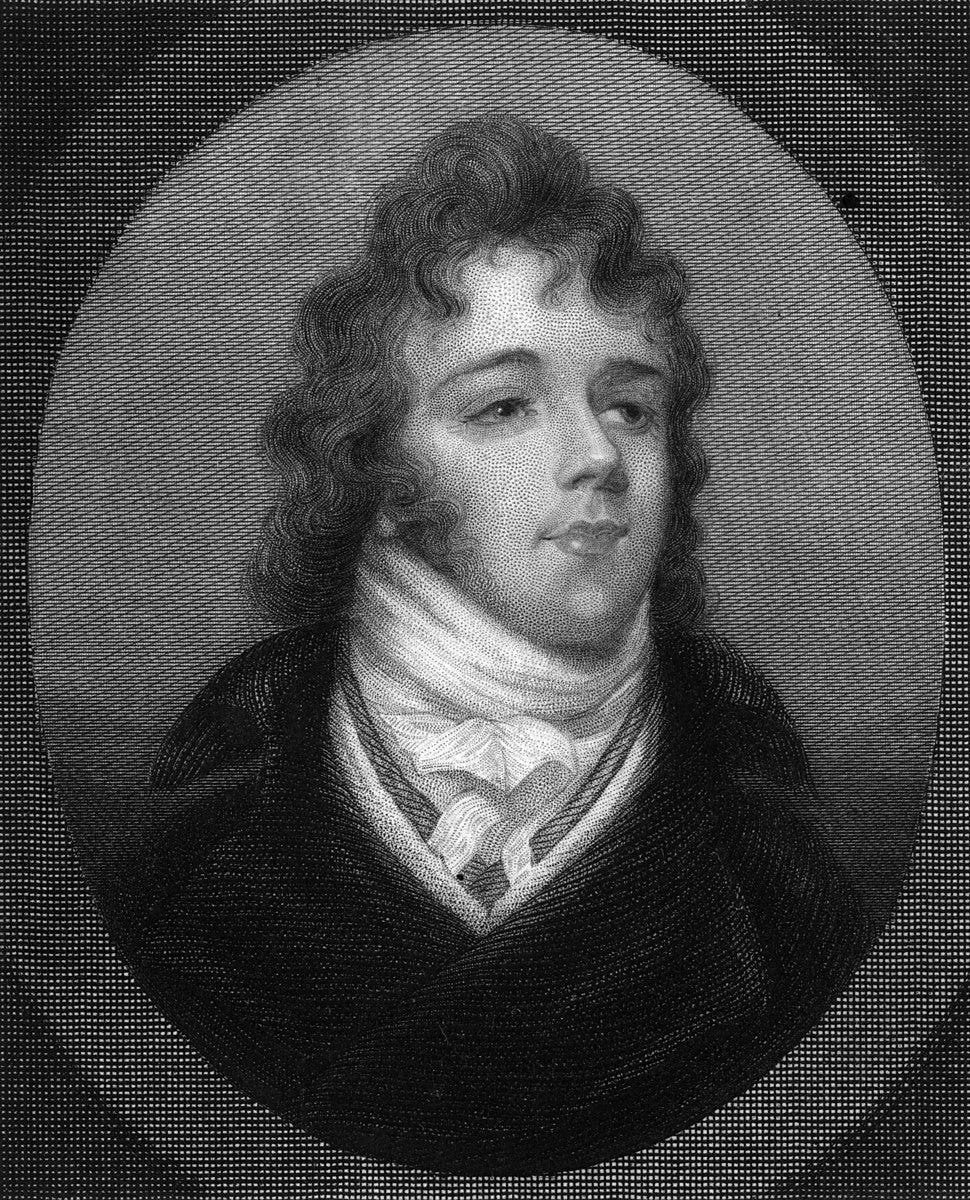
Beau Brummell, an English dandy, was a prominent figure in the movement towards simpler and more tailored neckwear styles. By the late 19th and early 20th centuries, the cravat gave way to the four-in-hand tie, named after a knot used by coach drivers. This was the precursor to the modern tie.
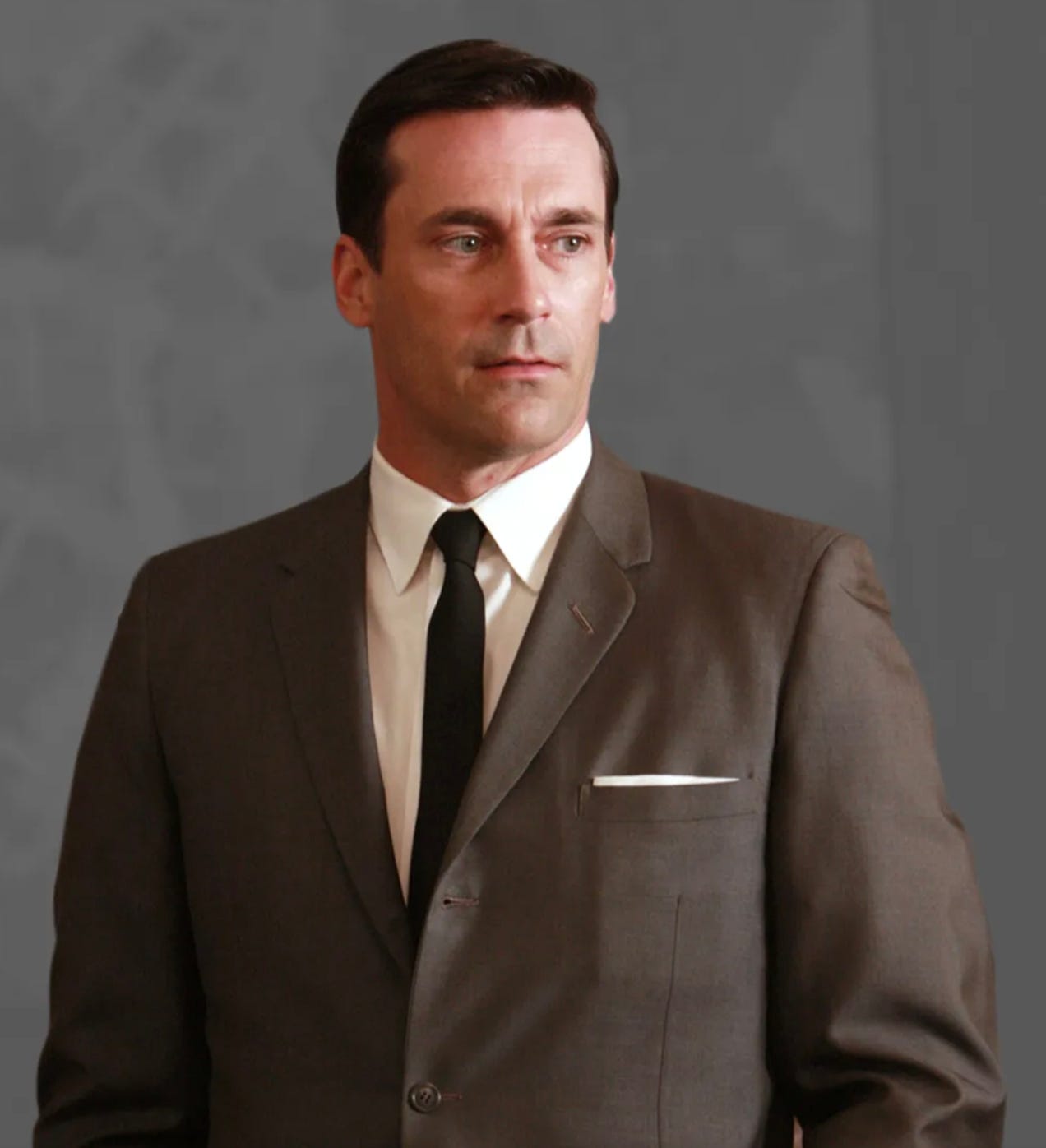
After World War II, neckties became more standardised in width, length and material. Silk ties with bold patterns and designs gained in popularity during the 1950s and 60s. Skinny ties emerged in the 1960s, reflecting mod and minimalist fashion trends. [Ed: Don Draper wore them well in the TV series Mad Men.]
Since the late-19th century, coloured and patterned neckties have also indicated the wearer’s membership in a club, military regiment, school or professional association. This usage dates back to 1880 when the oarsmen of Exeter College, Oxford, tied the bands of their straw hats around their necks.
Generally speaking, ties have historically been associated with professionalism, authority and refinement – particularly in Western business and formal settings. For this reason, in some cultures, ties are seen as markers of Western influence or modernity. Symbols of conformity or colonial influence?
New Zealand Member of Parliament Rawiri Waititi has been vocal in his opposition to neckties, calling them a “colonial noose”. In February 2021, he was ejected from Parliament for refusing to wear one. The requirement was subsequently dropped.
Many workplaces have adopted relaxed dress codes, leading to a decline in daily tie use; and, for many, “Casual Friday” has become casual everyday.
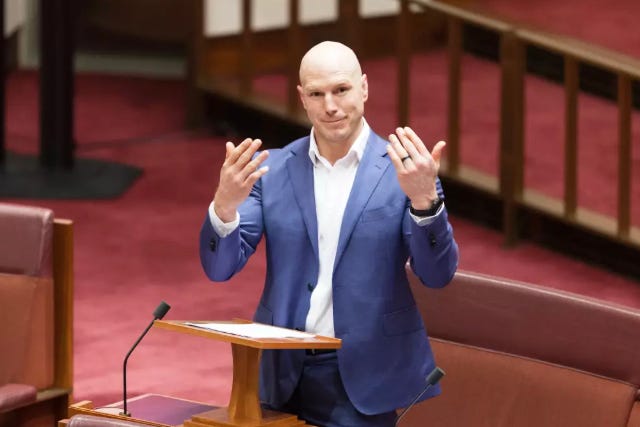
When independent ACT senator David Pocock delivered his first speech to the Australian parliament in August 2022, his strong rugby-tested neck was unburdened by a tie. Even Ermenegildo Zegna, leader of the eponymous brand has given up on ties. “Let me be clear – the suit is not dead,” Zegna said at a luxury conference in May 2022, “but the tie is!”
Story Idea: Dom Knight
Video
References
REMORANDOM Books
Order our books on the REMO store website HERE. Subscribe to receive all future volumes and other printed goodies HERE.
