


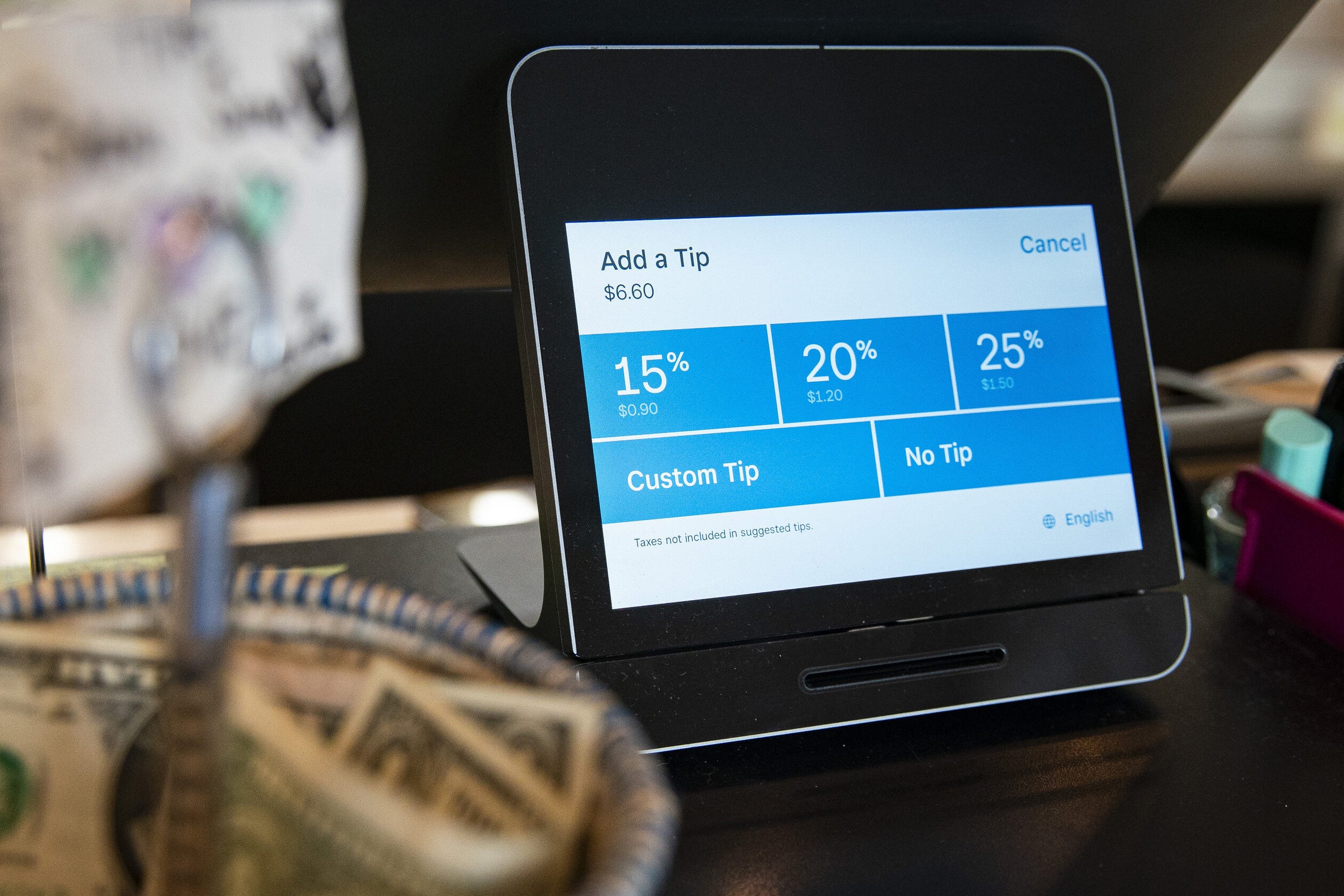
The vibe around tipping has changed somewhat with the arrival of what, for many of us, is an increasingly cashless society. In the old days you could leave some coins and crumpled notes on the table of a restaurant, safe in the knowledge that it wouldn’t be counted until after you’d gone. But these days, with the proliferation of tip screens in point of sale systems, you’re more likely to have a device brought to the table by your server with suggested options for the tip – 10%, 15%, 20% or even 30% – the final option being “No Tip”. It’s hard to press “No Tip” in front of the person who has been serving you all day/night, even if you don’t feel it’s deserved. It turns your exit into a walk of shame.


During the COVID-19 pandemic, new layers of complexity impacted the tipping debate. Many service industry workers faced job insecurity during lockdowns, and many people sympathised by increasing their tips. It’s hard to put that genie back into the bottle.
The custom of tipping has a history that winds through social hierarchies, economic practices and evolving norms of hospitality. While its precise origins are debated, historians generally agree that tipping finds its roots in medieval Europe, where it emerged as a gesture among nobility. In the feudal system, landowners would provide small monetary gifts, called “vails”, to their servants as a token of appreciation for their hard work. Over time, these “vails” became institutionalised, and guests visiting noble households were expected to leave similar tokens for the staff who attended to them. This practice gradually moved from private homes into public establishments such as inns and taverns.


The term “tip” itself may have arisen in 17th-century England. Some suggest it originated as an acronym for “To Insure Promptitude”, although this claim is likely apocryphal. A more plausible explanation traces the word to the thieves’ demand “tip”, meaning to “hand over”.
In some languages, the term translates to “drink money” or similar: for example, pourboire in French, Trinkgeld in German, drikkepenge in Danish, drinksilver in Middle Scots and napiwek in Polish. This comes from a custom of inviting a servant to drink a glass, paid for by the master, in honour of his or her guest.
By the 18th and 19th centuries, tipping had spread across Europe and begun to take hold in the United States, where the end of slavery saw employers, especially in hospitality and rail service, leveraging tipping to justify low or unpaid labour. Newly freed Black Americans often worked as servers, porters and hotel staff, jobs that depended heavily on gratuities. This legacy fostered ongoing debates about the morality and fairness of tipping as both a social expectation and a substitute for fair wages.
Meanwhile, tipping expanded globally with the growth of international travel and commerce. Customs vary by country, with some cultures embracing the practice and others, such as Japan, largely rejecting it in favour of inclusive pricing.
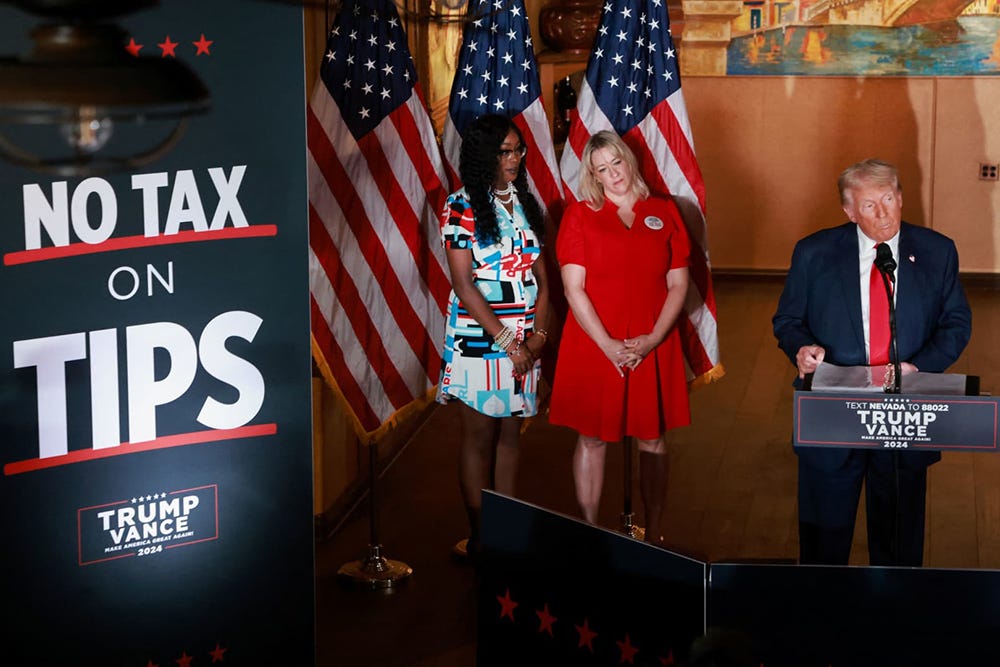
Today, tipping remains a socially polarising topic. Proponents argue it rewards good service and incentivises excellence. Critics, however, point to its inconsistencies and potential for exploitation.
REMORANDOM Chapter

Seeing the photo of the tip jar above reminded me that I was in a cafe (in Lorne, I think) years ago and their tip jar read 'If you fear change, leave it here". Made me smile (and tip!).
I won’t get into the ethics or etiquette of tipping but it has always struck me as ridiculous that tips are expressed as a percentage of the bill. If you took me to lunch at a flash Sydney restaurant and we spent $300 and were in and out quickly, why should the server there get $30 - $90 dollars? Compare that with a quick pasta lunch at a trattoria costing $50 resulting in a tip of $5 to $15 when the effort by the server has been identical.