


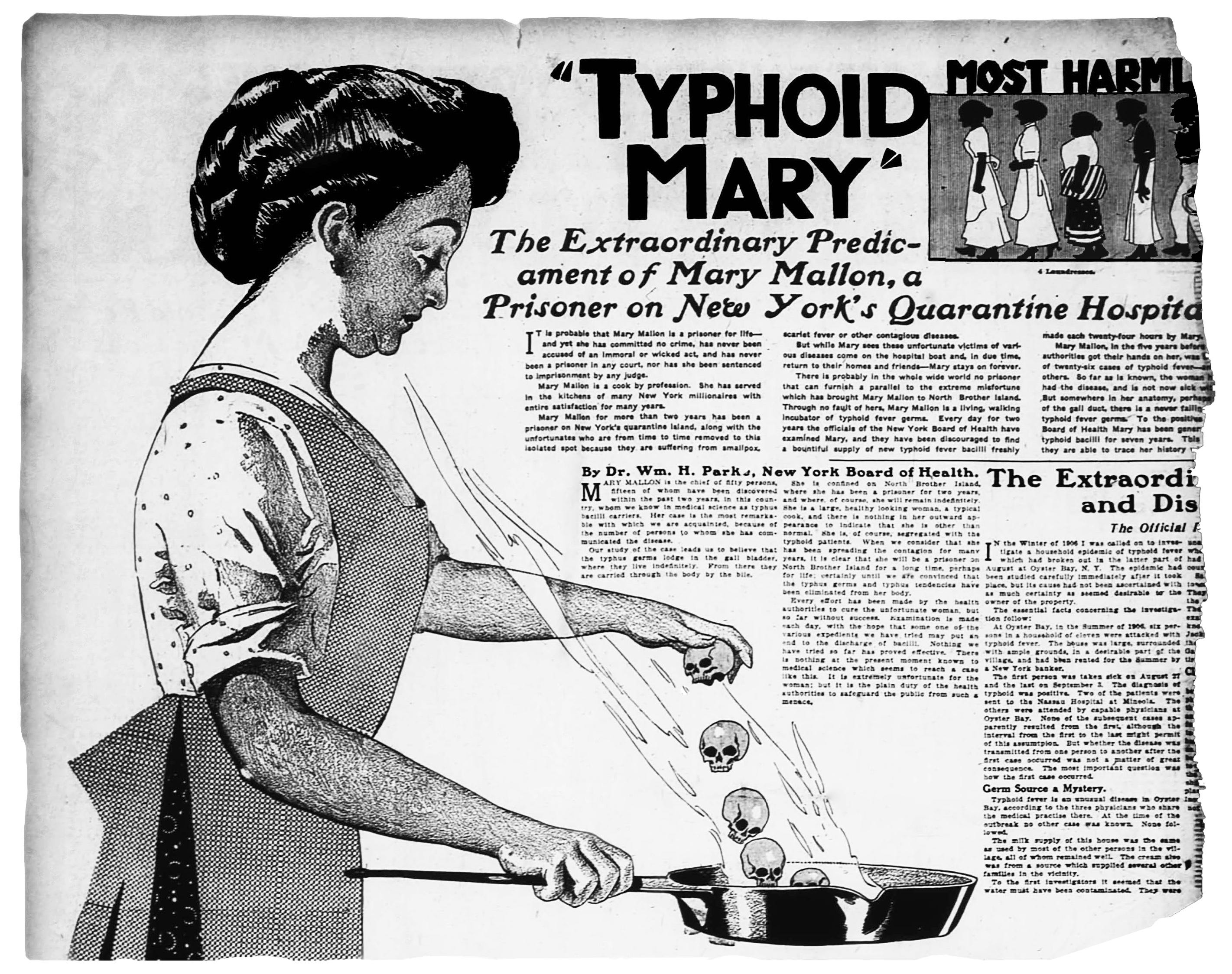
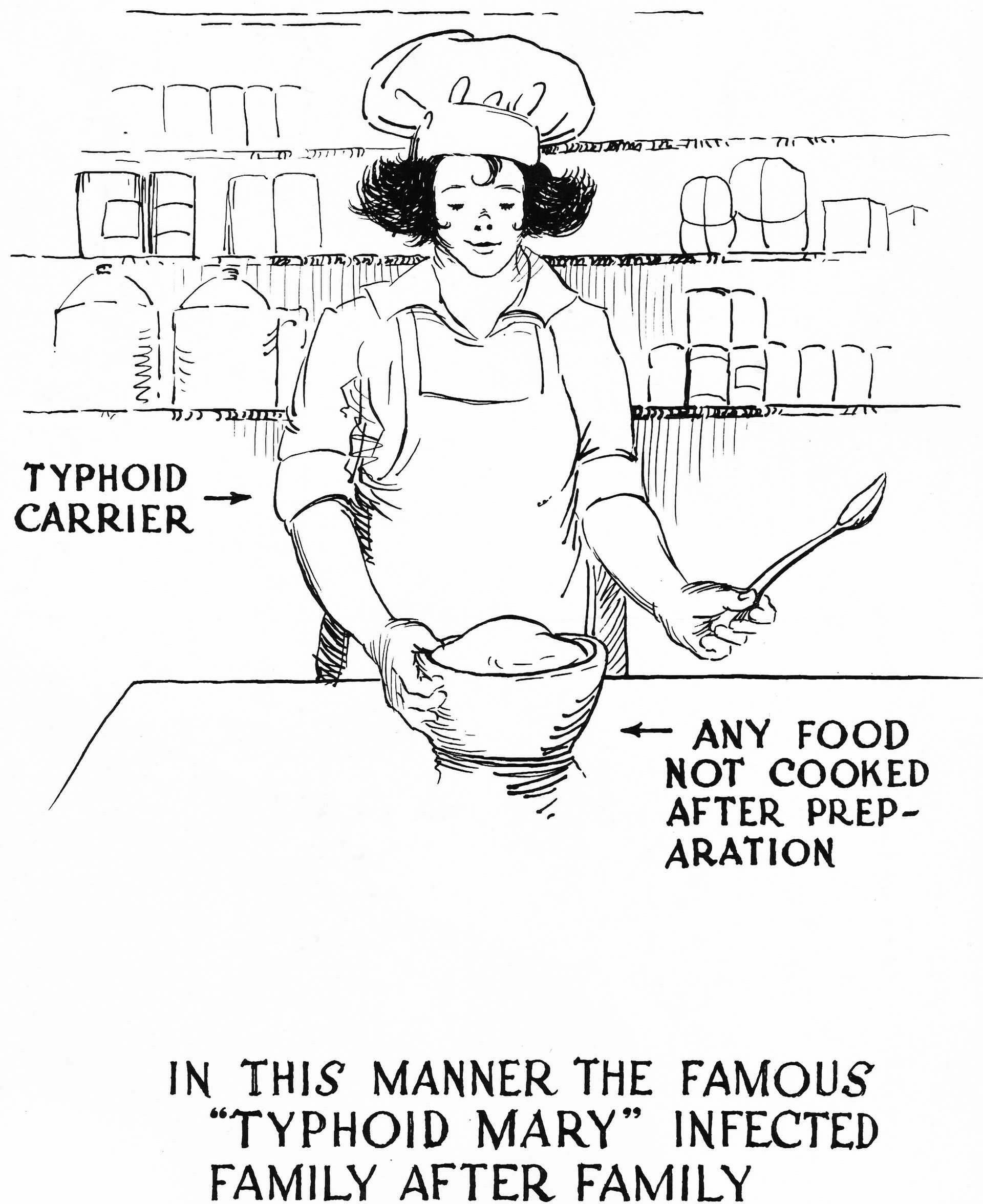
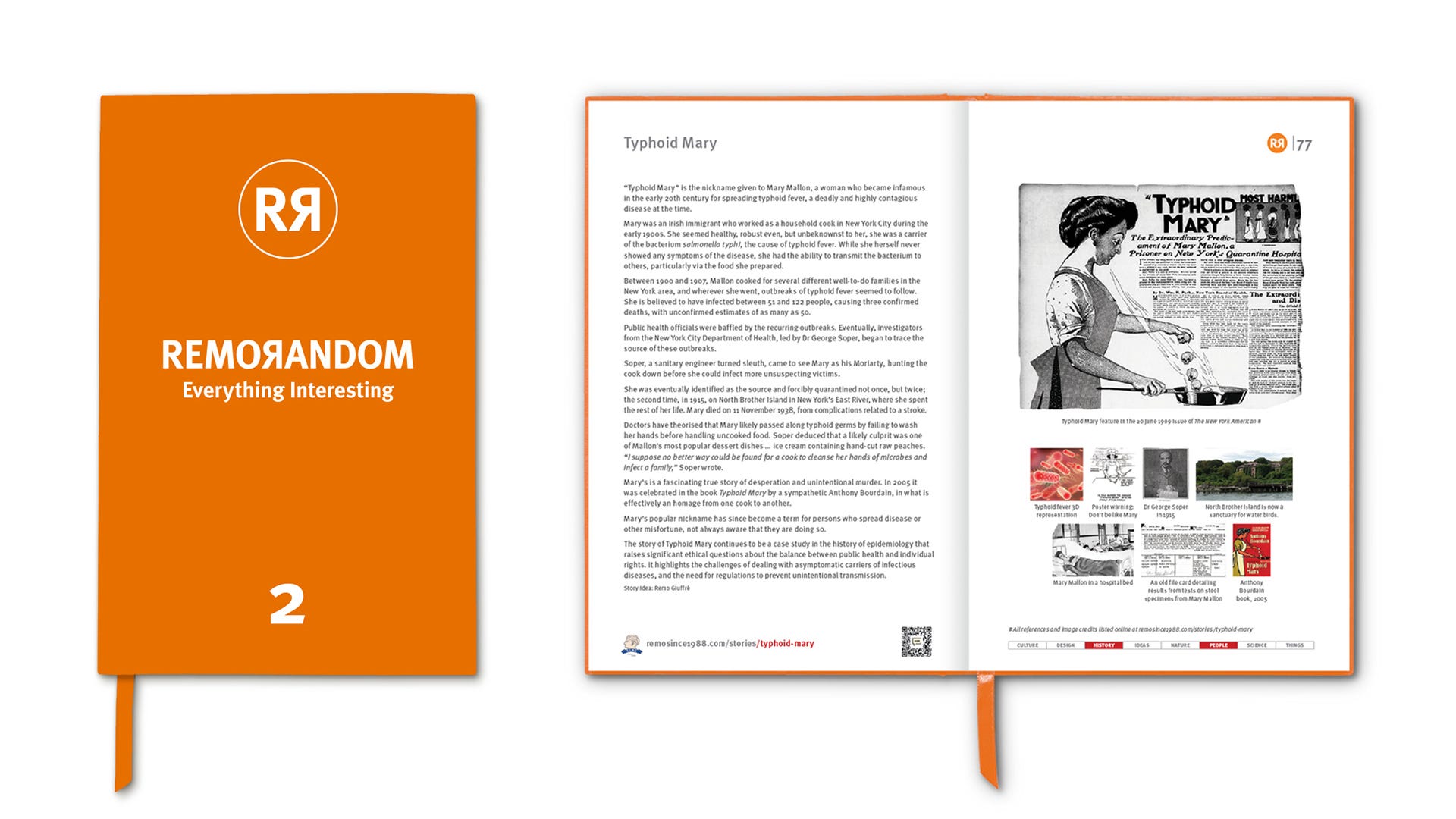
Mary was an Irish immigrant who worked as a household cook in New York City during the early 1900s. She seemed healthy, robust even, but unbeknownst to her, she was a carrier of the bacterium salmonella typhi, the cause of typhoid fever. While she herself never showed any symptoms of the disease, she had the uncanny ability to transmit the bacterium to others, particularly via the food she prepared.

Between 1900 and 1907, Mallon cooked for several different well-to-do families in the New York area, and wherever she went, outbreaks of typhoid fever seemed to follow. She is believed to have infected between 51 and 122 people, causing three confirmed deaths, with unconfirmed estimates of as many as 50.
Public health officials were baffled by the recurring outbreaks. Eventually, investigators from the New York City Department of Health, led by Dr George Soper, began to trace the source of these outbreaks.
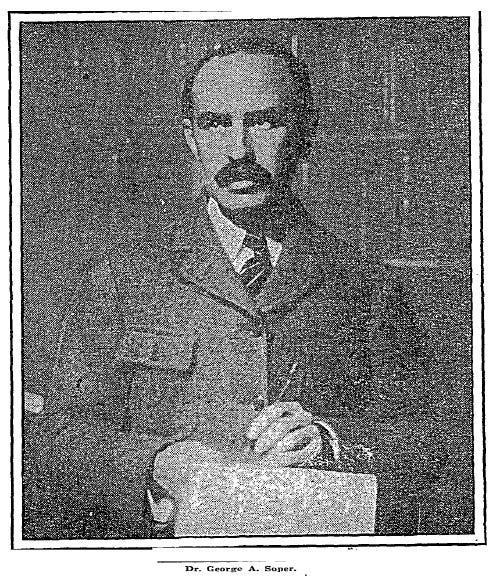
Soper, a sanitary engineer turned sleuth, came to see Mary as his Moriarty, hunting the cook down before she could infect more unsuspecting victims.
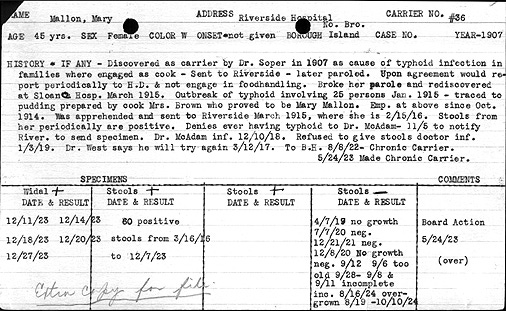
She was eventually identified as the source and forcibly quarantined not once, but twice; the second time, in 1915, on North Brother Island in New York’s East River, where she spent the rest of her life. Mary died on 11 November 1938, from complications related to a stroke.

Doctors have theorised that Mary likely passed along typhoid germs by failing to wash her hands before handling uncooked food. Soper deduced that a likely culprit was one of Mallon’s most popular dessert dishes – ice cream containing hand-cut raw peaches. “I suppose no better way could be found for a cook to cleanse her hands of microbes and infect a family,” Soper wrote.
Mary’s is a fascinating true story of desperation and unintentional murder. In 2005 it was celebrated in the book Typhoid Mary by a sympathetic Anthony Bourdain, in what is effectively an homage from one cook to another.

Mary’s popular nickname has since become a term for persons who spread disease or other misfortune, not always aware that they are doing so.
The story of Typhoid Mary continues to be a case study in the history of epidemiology that raises significant ethical questions about the balance between public health and individual rights. It highlights the challenges of dealing with asymptomatic carriers of infectious diseases, and the need for regulations to prevent unintentional transmission.
REMORANDOM Chapter
Video Podcast
Claudia and I got chatting about Typhoid Mary in this May 2025 episode of the REMORANDOM video podcast.
References