


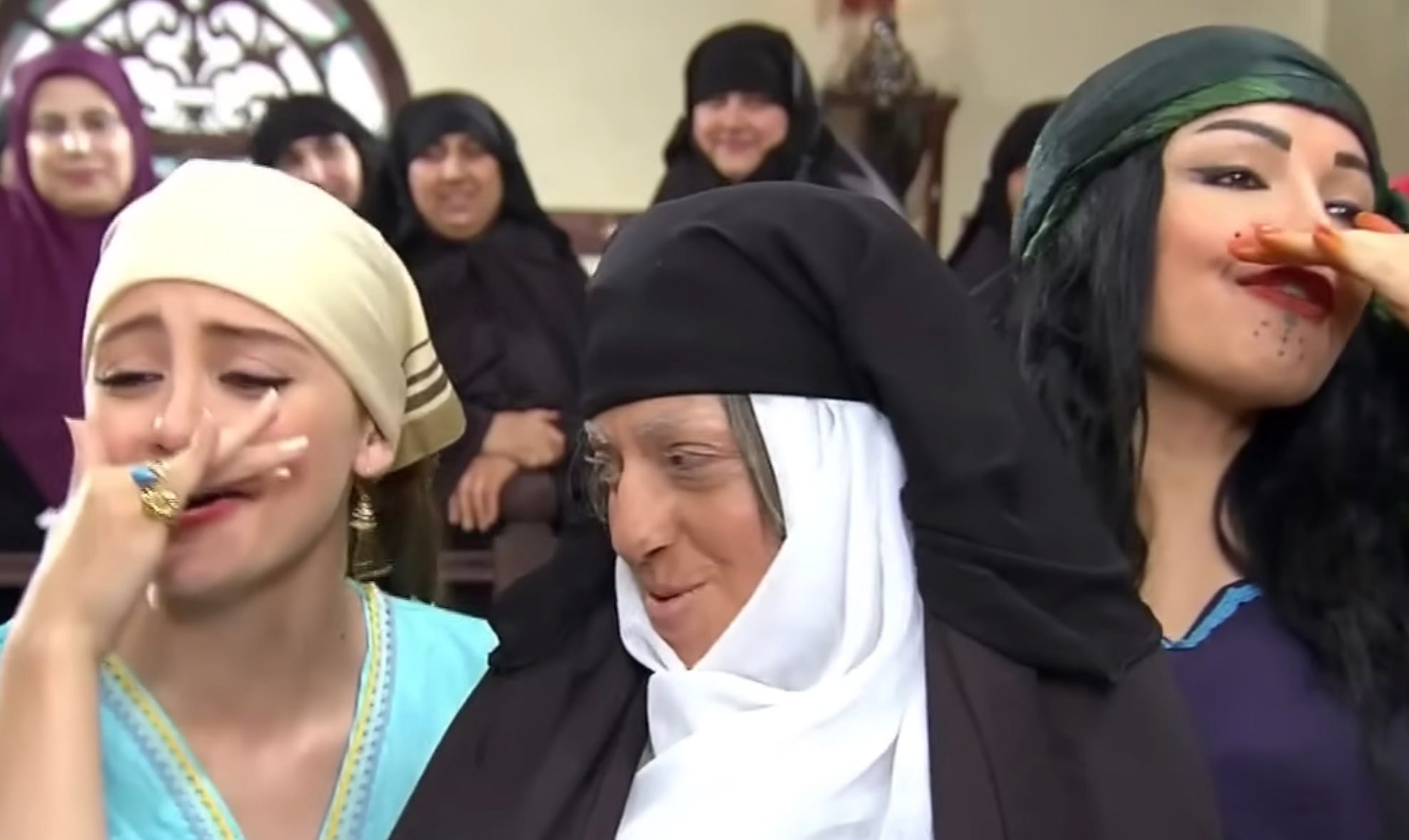
Ululation is a high-pitched, wavering vocal sound produced by rapidly moving the tongue and uvula [Ed: Similar word, but no relation] while vocalising. It is a powerful form of emotional expression used in various cultural contexts, often during celebrations, mourning or acts of devotion.
Check out an An Egyptian woman ululating after having cast her vote in the 2014 Egyptian presidential elections on a Wikipedia page HERE, and listen to an audio recording of an African woman ululating offstage at a concert in the UK HERE.


The practice of ululation has ancient roots and appears in cultures all over the world. In the Middle East and North Africa, it is a common feature of joyous occasions such as weddings and religious festivals, where women perform it to express honour and celebration.


In the Arab world, zaghārīt (Arabic: تيراغز ) is a ululation made to honour someone. They are widely performed and documented in Egyptian movies featuring traditional weddings, where women are known for their very long and very loud ululations.
In Sub-Saharan Africa, ululation is a versatile tradition used to mark major life events like marriages and funerals, as well as in spiritual rituals to evoke communal emotion or call upon spirits. Similarly, in Eastern Europe and the Balkans, ululation appears in traditional mourning practices to convey grief and respect for the deceased.
Although less widespread, South Asian ceremonies and religious festivals also feature ululation-like sounds, particularly during rituals. Indigenous cultures, including some Native American and Pacific Islander communities, incorporate similar vocal expressions in their spiritual and cultural events.
In modern times, ululation has occasionally appeared in popular culture, especially in depictions of ceremonial gatherings in film and music.
The significance of ululation varies depending on the context. It often symbolises extreme emotions, ranging from joy to sorrow, and serves as a communal or spiritual connector.


Indeed, ululation may have given us one of the most profoundly musical words associated with Judea-Christian devotions. Ziony Zevit, a scholar of biblical literature at the American Jewish University, in an essay in the 2007 book Milk and Honey, notes that the Hebrew word Hallelujah, translated as a call to “praise the Lord”, contains the root H-L-L, with meanings related to “praise”, and may have originally been an onomatopoeic imitation of ululation performed in Israelite rituals. Seems plausible.
Story Idea: Melanie Giuffré
Videos
REMORANDOM Chapter
