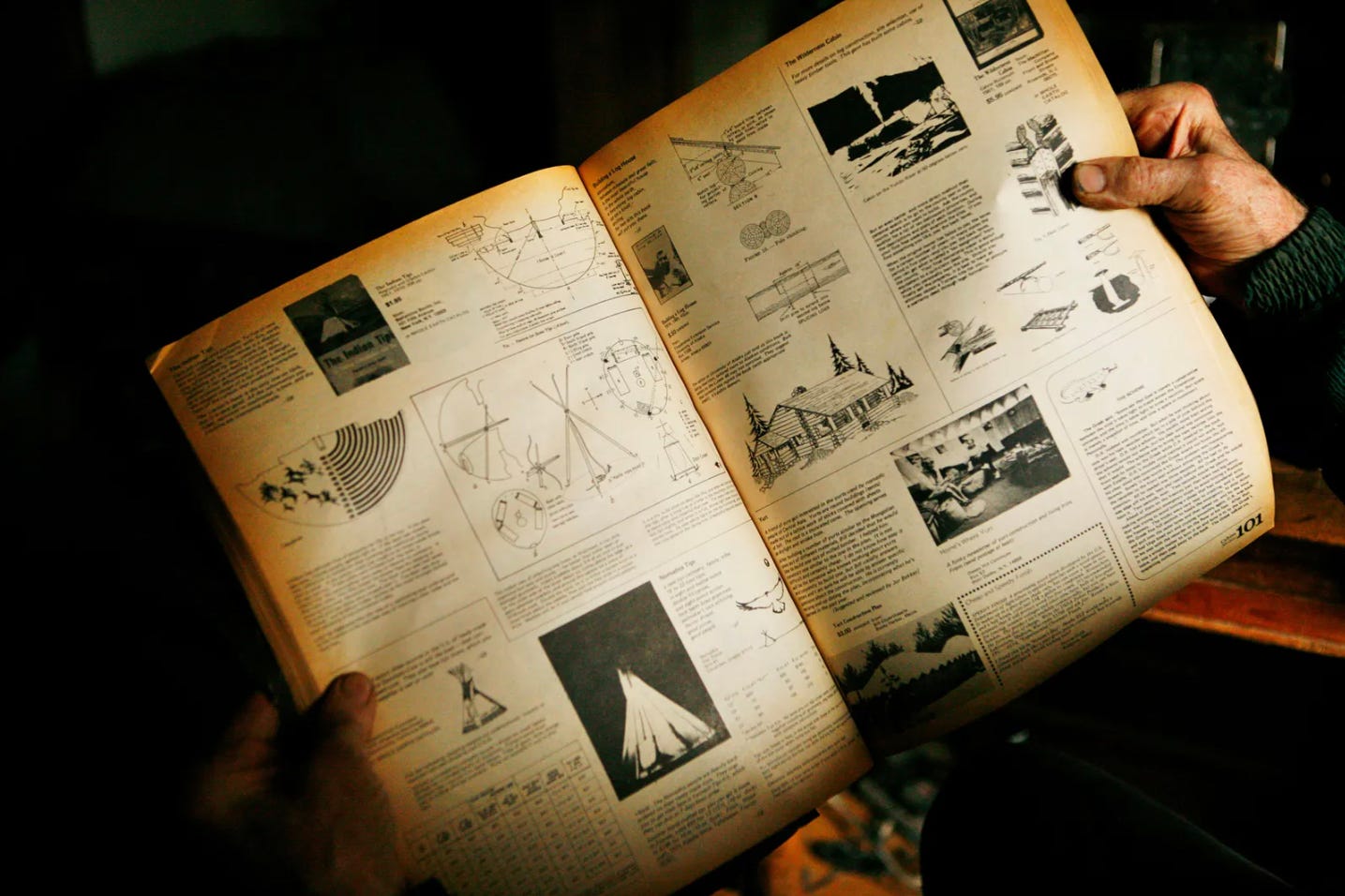
The Whole Earth Catalog (WEC) was a revolutionary publication founded in 1968 by Stewart Brand, a writer, designer and countercultural leader. Subtitled “access to tools”, the catalog wasn’t merely a product guide – it was a manifesto for a growing section of the community hungry for knowledge, self-sufficiency and environmental stewardship. Born amidst the societal upheaval of the 1960s, WEC fast garnered a cult status with those seeking an alternative to mainstream consumerism and a more intentional, interconnected way of life.


The idea for the Whole Earth Catalog came to Brand during his travels among communes and intentional communities across the United States, many of which lacked access to information about tools, techniques and resources for self-reliance. Inspired by the photographs of Earth from space that symbolised humanity’s shared home (see also Pale Blue Dot), Brand envisioned a publication that could bring diverse tools and resources to anyone, anywhere.
Initially conceived as a mimeographed pamphlet, the WEC grew into a book-sized compendium of tools, books, ideas and insights designed to empower individuals and communities. Its purpose, as stated on the inside cover, was to foster a “sustainable, planet-friendly lifestyle”. Brand and his team used a decentralised approach, sourcing recommendations and reviews from contributors, creating something more akin to an interactive resource than a traditional catalogue. The proto-blog.


The guiding principles of the Whole Earth Catalog echoed the broader values of the counterculture movement. Core tenets included self-sufficiency, encouraging people to take control of their lives and livelihoods by learning practical skills; decentralisation, shifting power away from large institutions and central authorities to individuals and small communities; and environmental consciousness, promoting practices that were sustainable and harmonious with nature. The catalogue also championed open-ended learning, fostering intellectual curiosity by providing tools to explore diverse fields like engineering, gardening, design and philosophy. Its ethos resonated with the rise of systems thinking, which examined the interconnectedness of human life and ecological systems. It wasn’t just about the tools but the empowerment and mindset needed to create a better world.


In 1972, The Last Whole Earth Catalog earned the first National Book Award ever given to a catalogue, cementing its cultural impact. Although WEC ceased publication in the late 1990s, its influence lived on, inspiring technologists, environmental activists, and DIY enthusiasts.
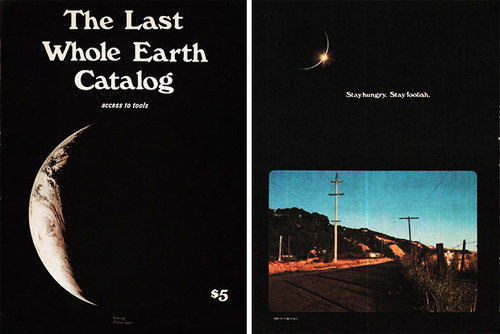
Apple co-founder Steve Jobs lauded the catalogue during his now-very-famous 2005 Stanford University commencement address (watch it HERE or below).
At the end of his speech Jobs quotes the farewell message on the back cover of the 1974 edition of the WEC and adopts it as his own final recommendation to the graduating students: “Stay hungry. Stay foolish.”

Today, the Whole Earth Catalog repository (browsable HERE on the Internet Archive) is seen as both a time capsule of 1960s counterculture and a timeless resource that championed human creativity, resilience and our collective responsibility to steward the planet.
Video
REMORANDOM Chapters


And see also: The 10,000 Year Clock, another project involving Stewart Brand