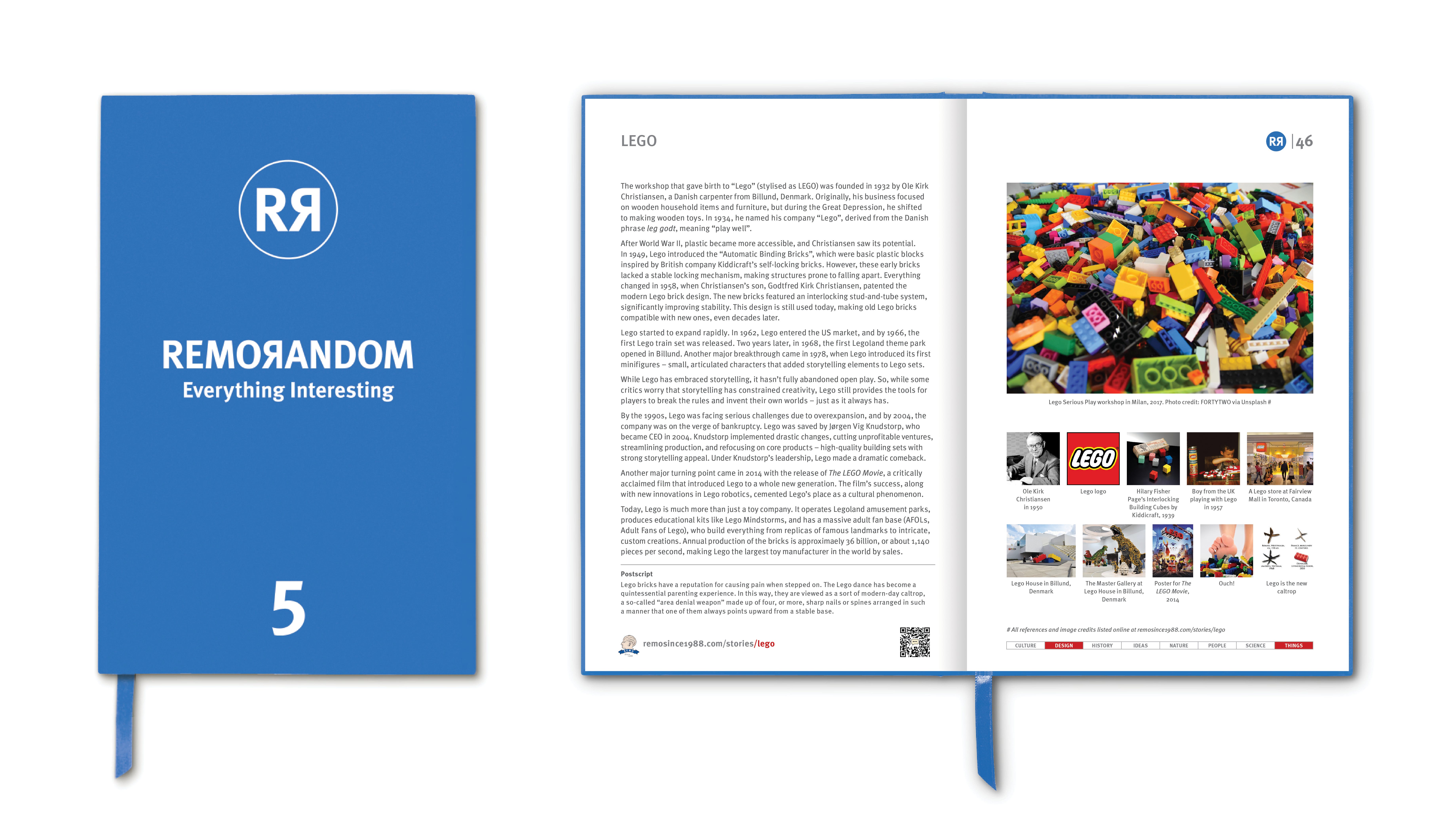
The workshop that gave birth to “Lego” (stylised as LEGO) was founded in 1932 by Ole Kirk Christiansen, a Danish carpenter from Billund, Denmark. Originally, his business focused on wooden household items and furniture, but during the Great Depression, he shifted to making wooden toys. In 1934, he named his company “Lego”, derived from the Danish phrase leg godt, meaning “play well”.


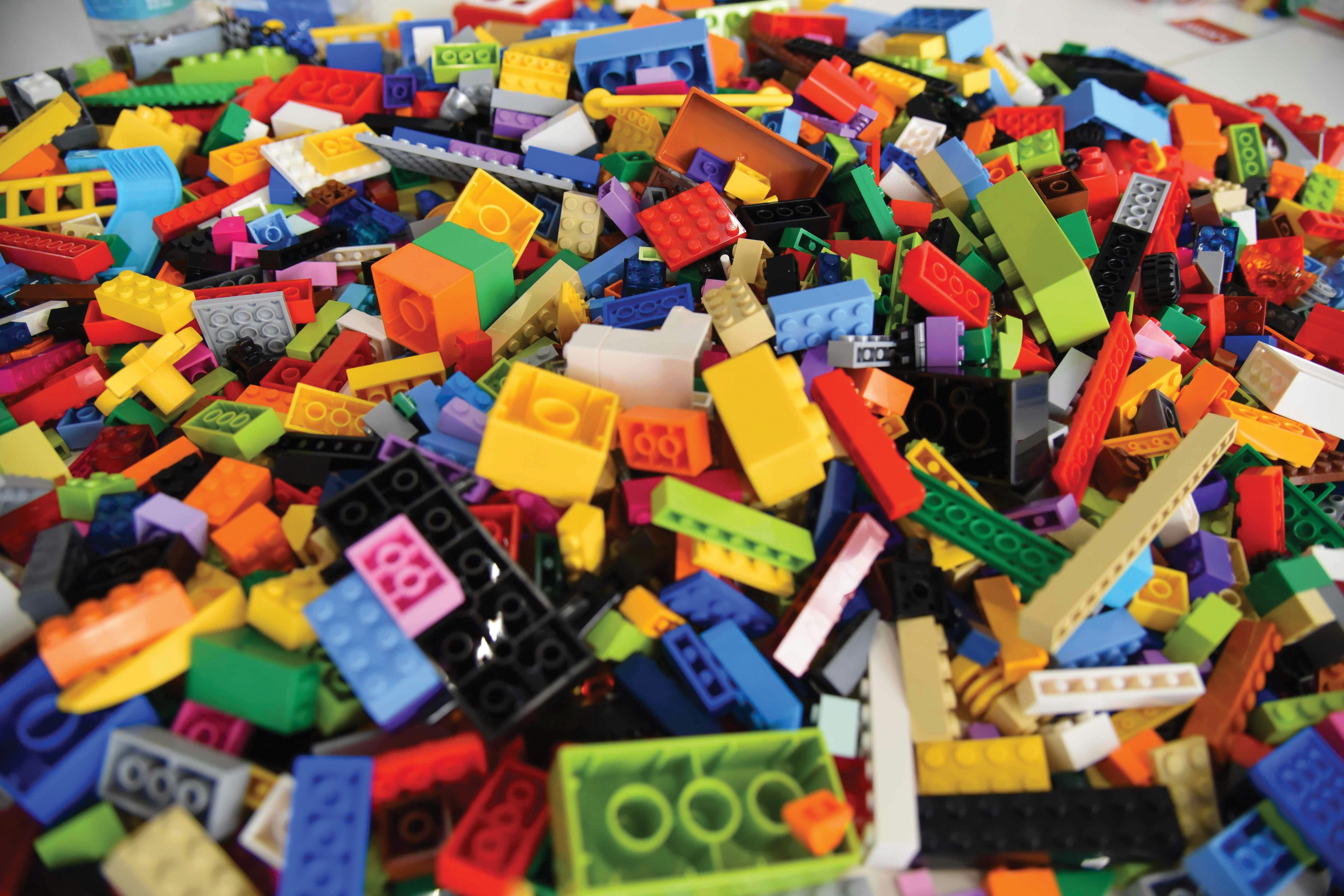
After World War II, plastic became more accessible, and Christiansen saw its potential. In 1949, Lego introduced the “Automatic Binding Bricks”, which were basic plastic blocks inspired by British company Kiddicraft’s self-locking bricks. However, these early bricks lacked a stable locking mechanism, making structures prone to falling apart. Everything changed in 1958, when Christiansen’s son, Godtfred Kirk Christiansen, patented the modern Lego brick design. The new bricks featured an interlocking stud-and-tube system, significantly improving stability. This design is still used today, making old Lego bricks compatible with new ones, even decades later.


The company started to expand rapidly. In 1962, Lego entered the US market, and by 1966, the first Lego train set was released. Two years later, in 1968, the first Legoland theme park opened in Billund. Another major breakthrough came in 1978, when Lego introduced its first minifigures – small, articulated characters that added storytelling elements to Lego sets.
While Lego has embraced storytelling, it hasn’t fully abandoned open play (for a nice comparison see previous post on Froebel’s Gifts). So, while some critics worry that storytelling has constrained creativity, Lego still provides the tools for players to break the rules and invent their own worlds – just as it always has.


By the 1990s, Lego was facing serious challenges due to overexpansion, and by 2004, the company was on the verge of bankruptcy. Lego was saved by Jørgen Vig Knudstorp, who became CEO in 2004. Knudstorp implemented drastic changes, cutting unprofitable ventures, streamlining production, and refocusing on core products – high-quality building sets with strong storytelling appeal. Under Knudstorp’s leadership, Lego made a dramatic comeback.
Another major turning point came in 2014 with the release of The LEGO Movie, a critically acclaimed film that introduced Lego to a whole new generation. The film’s success, along with new innovations in Lego robotics, cemented Lego’s place as a cultural phenomenon.


Today, Lego is much more than just a toy company. It operates Legoland amusement parks, produces educational kits like Lego Mindstorms, and has a massive adult fan base (AFOLs, Adult Fans of Lego), who build everything from replicas of famous landmarks to intricate, custom creations. Annual production of the bricks is approximately 36 billion, or about 1,140 pieces per second, making Lego the largest toy manufacturer in the world by sales.
Postscript
Lego bricks have a well-earned reputation for causing pain when stepped on. The Lego dance has become a quintessential parenting experience. In this way, they are viewed as a sort of modern-day caltrop, a so-called “area denial weapon” made up of four, or more, sharp nails or spines arranged in such a manner that one of them always points upward from a stable base.


Videos
REMORANDOM Chapter