


Ship camouflage was occasionally used in ancient times. Vegetius wrote in the 4th century that “Venetian blue” (bluish-green, like the sea) was used for camouflage in the years 56–54 BCE during the Gallic Wars, when Julius Caesar sent his scout ships to gather intelligence along the coast of Britain. The bluish-green scout ships carried sailors and marines dressed in the same colour.
But, for much of military history, concealment was not considered desirable. 18th- and 19th-century soldiers often wore brightly coloured uniforms designed to inspire comrades, intimidate enemies and allow commanders to identify troops amid battlefield chaos. Britain’s famous red coats are perhaps the best-known example.
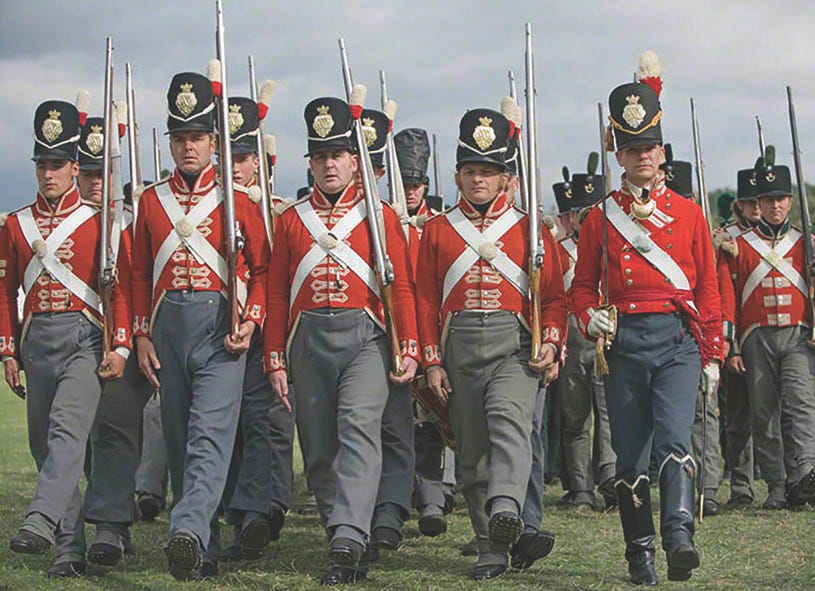
Advances in firearms transformed this approach. As rifles became more accurate and deadly in the 19th century, conspicuous uniforms became liabilities. Armies gradually adopted drab colours such as khaki – a Hindi word meaning “dust-coloured” – first widely used by British forces in colonial India.
The industrialised slaughter of World War I accelerated the development of camouflage. Artillery observation from aircraft created an urgent need to hide troops, equipment and fortifications from above.
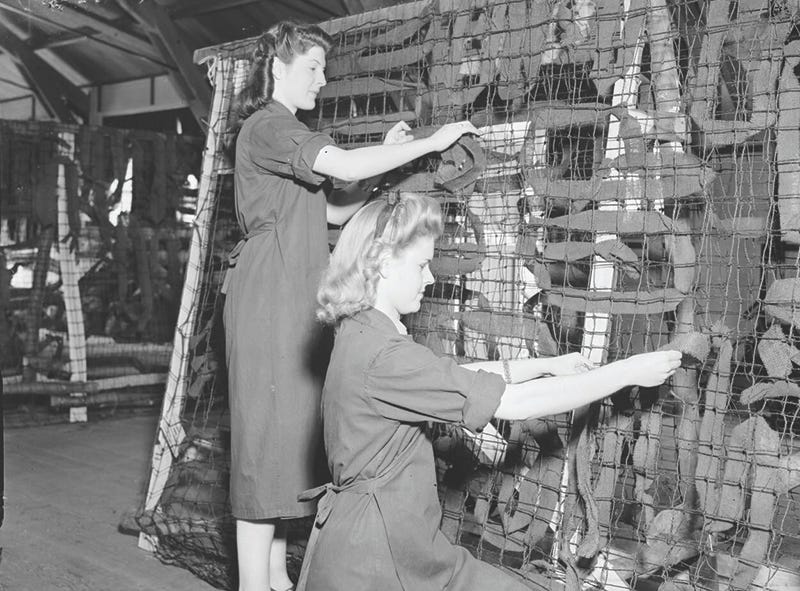
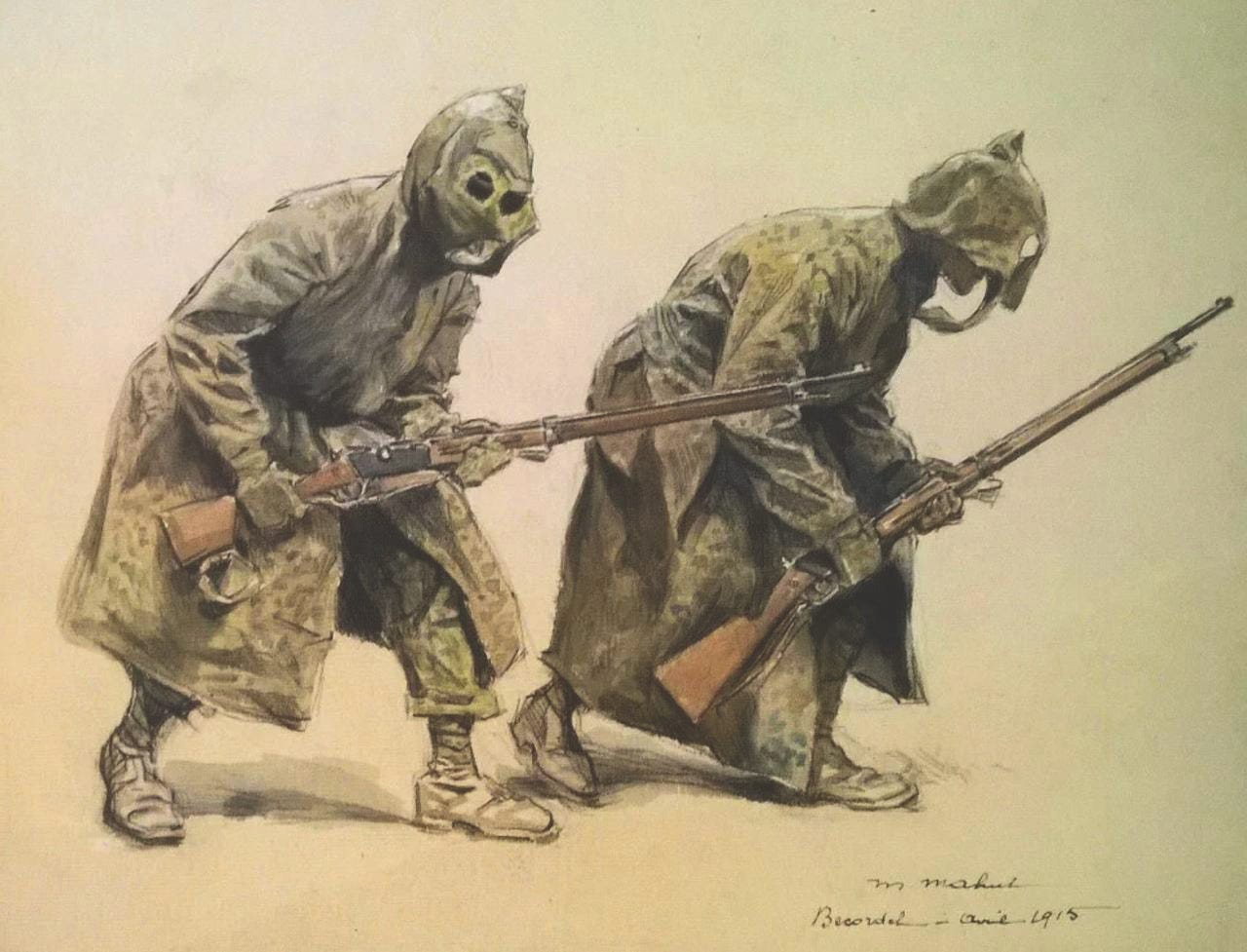
France established one of the first dedicated camouflage units, recruiting artists, sculptors and theatre designers known as camoufleurs. [Ed: Cool job title]
These specialists painted artillery pieces, constructed fake trees as observation posts and created elaborate decoys intended to mislead enemy forces. Among those involved in wartime camouflage work were notable artists including Lucien-Victor Guirand de Scévola.
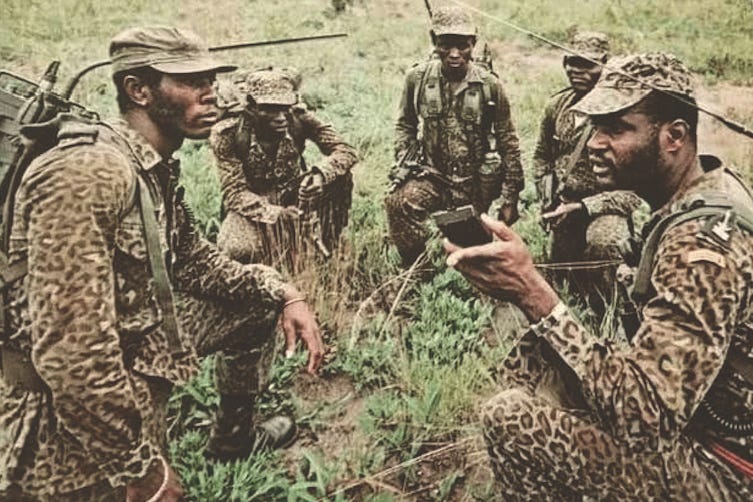
During the 20th century, camouflage patterns evolved dramatically. Rather than simply matching a background colour, many designs sought to disrupt outlines and confuse perception. The familiar blotches and irregular shapes work by breaking up the human silhouette, making identification more difficult. Different environments demand different solutions. Woodland, desert, snow and urban landscapes each require specialised patterns. In recent decades, digital camouflage – composed of tiny pixel-like shapes – has become widespread, based on research into visual perception.
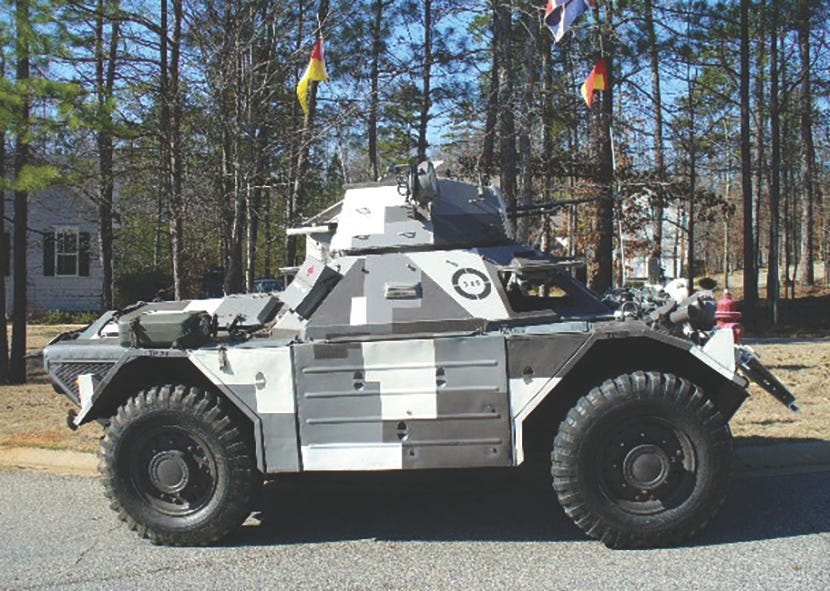
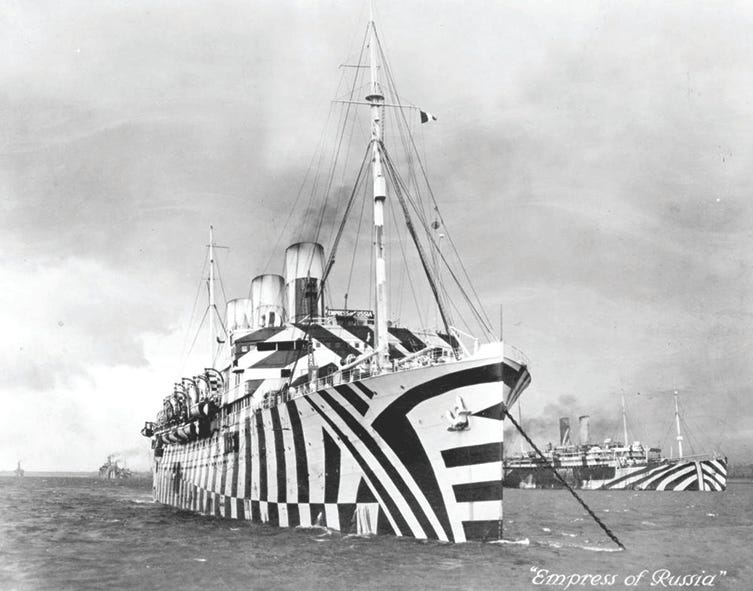
Camouflage has expanded far beyond clothing. Tanks, ships, aircraft and military installations all employ concealment techniques. During both world wars, some naval vessels were painted with striking geometric designs known as “dazzle camouflage” [RR2:19]. Rather than hiding ships, these bold patterns sought to confuse enemy submarines about a vessel’s speed and direction.

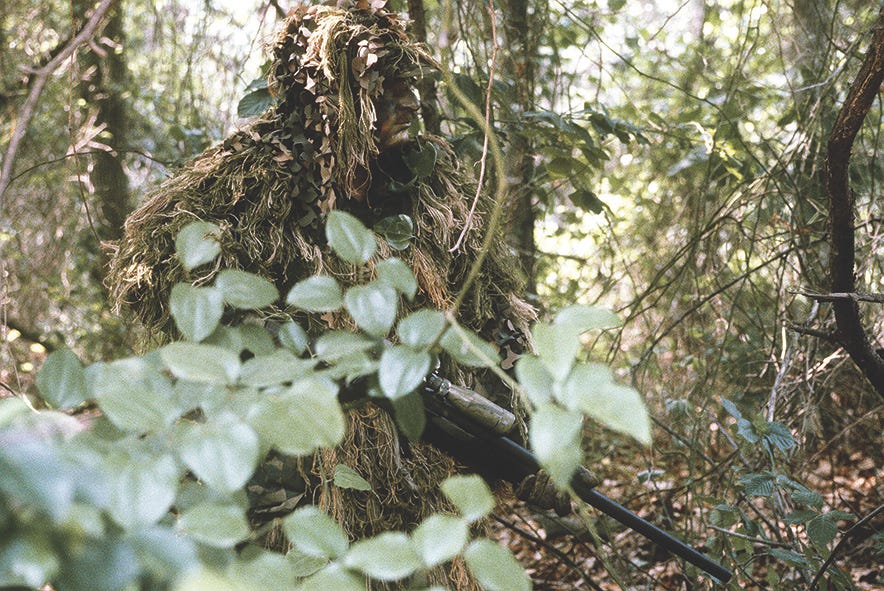
Nature has long inspired military designers. Countless animals, from stick insects to octopuses, employ camouflage for hunting or survival, and scientists continue studying biological systems in search of new concealment technologies.
Finally, modern militaries increasingly explore adaptive camouflage, including materials capable of changing colour or thermal signature in response to their surroundings. Invisibility cloaks can’t be that far away.


References
wikipedia.org/wiki/List_of_military_clothing_camouflage_patterns
reddit.com/r/camouflage/comments/1bjj0jd/what_is_the_rarest_and_most_difficult_piece_of
REMORANDOM Books
Order our books on the REMO store website HERE.
Enjoy 20% off for our Black Friday SALE. Enter code: REMO20
Subscribe to receive all future volumes and other printed goodies HERE.
