


Rosie the Riveter is an iconic cultural symbol that has come to represent the millions of women who entered the workforce during World War II to support the allied war effort by taking on jobs traditionally held by men. Since its rediscovery in the early 1980s, it has also become a more general symbol of women’s empowerment, to the point where today it has become a favourite Halloween costume for young feminists.
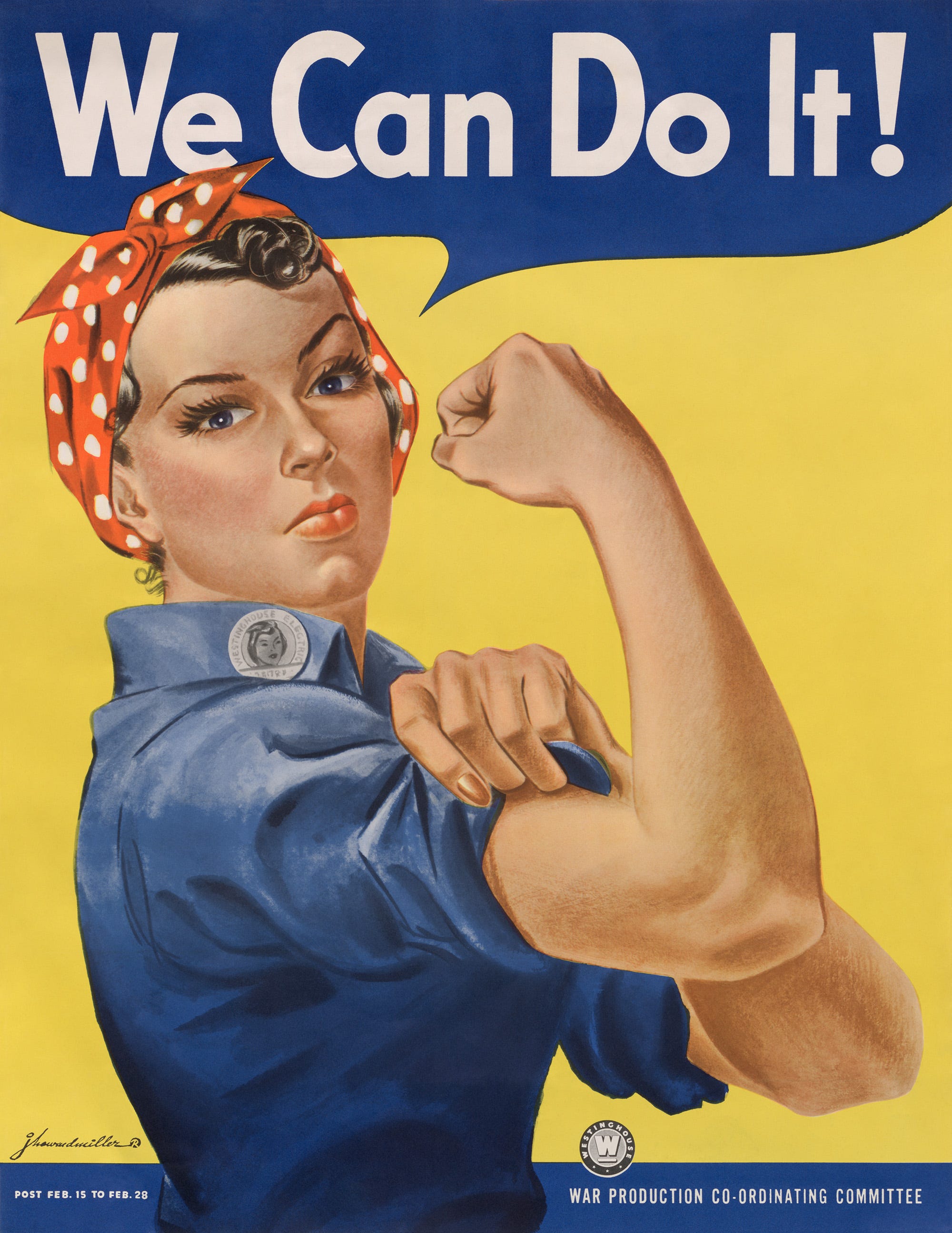
The image of Rosie the Riveter became widely recognised thanks to a poster created by artist J. Howard Miller in 1942. The poster features a strong and determined-looking woman wearing a blue jumpsuit and a red polka-dot bandana, flexing her bicep and proclaiming: “We Can Do It!”
Miller worked for Westinghouse as a war production coordinating committee artist. He actually created a series of posters that would help in the war effort by inspiring and boosting morale among workers during the war. They were to be displayed in the break rooms of the Westinghouse factories, each for two weeks at a time. “We Can Do It” was one of these posters and after its “term” was up (“FEB. 15 to FEB. 28”, as decreed at the bottom of the poster) it was taken down, its purpose having been served. So, contrary to popular belief, the “we” was actually a reference to the entire Westinghouse workforce, not just the women.
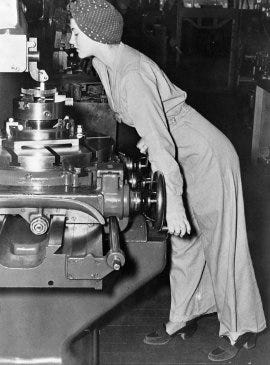
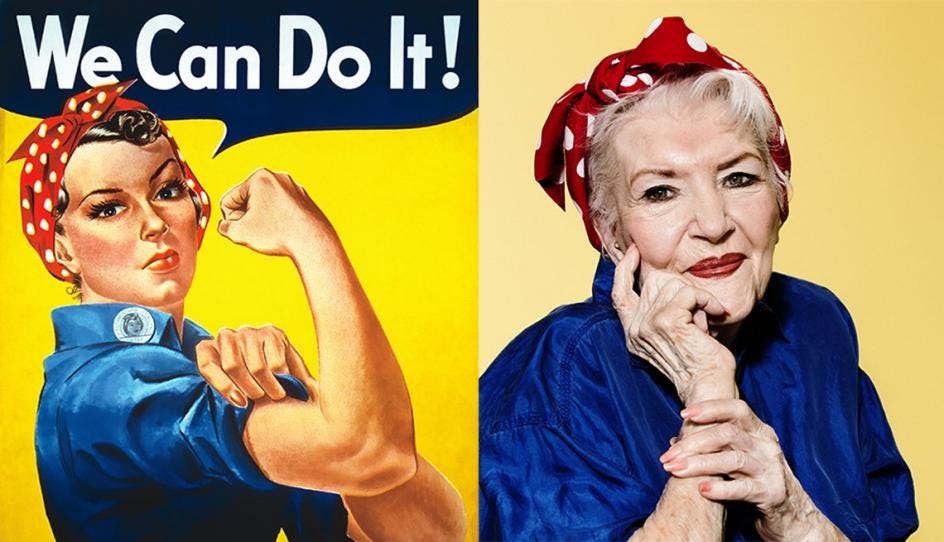
It turns out the woman in Miller’s poster was inspired by a photo of Naomi Parker Fraley, taken in 1942, while she was working at Alameda Air Force Base in California. The photo was in black and white, but she is indeed wearing a polka-dot bandana, which the artist made red and white in the poster. Fraley didn’t discover that she was the inspiration for Rosie until she visited the “Rosie the Riveter World War II Home Front National Historical Park” in 2011 as an 88 year old.
And Rosie herself was not named by the artist. The term “Rosie the Riveter” was popularised by a song of the same name written in 1942 by Redd Evans and John Jacob Loeb. That song celebrated the women who worked in defence industries during the war, which may partly explain why the original poster’s raison d’être has been feminised.
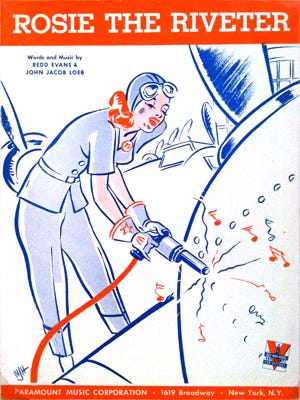
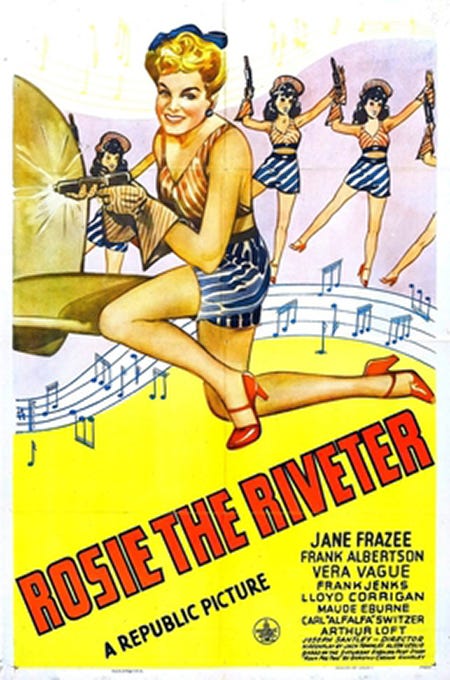
Despite its actual history, Rosie the Riveter has become an iconic symbol promoting gender equality, and the legacy of Rosie the Riveter continues to inspire discussions about women’s roles in society, workplace equality and the recognition of women’s contributions in historically male-dominated fields.
Variations of “Rosie” have also appeared as a kind of visual shorthand on lots of magazine covers, e.g. TIME, The Economist, Business Week and The New Yorker.


Rosie was well represented at the Women’s March in Washington DC in 2017. Artist Abigail Gray Swartz, who marched in her state capital of Augusta, Maine, was inspired by the spirit of the day to paint “Rosie the Riveter” wearing a knitted pink pussyhat [RR2:57] for the cover of the subsequent New Yorker. Clash of the icons!
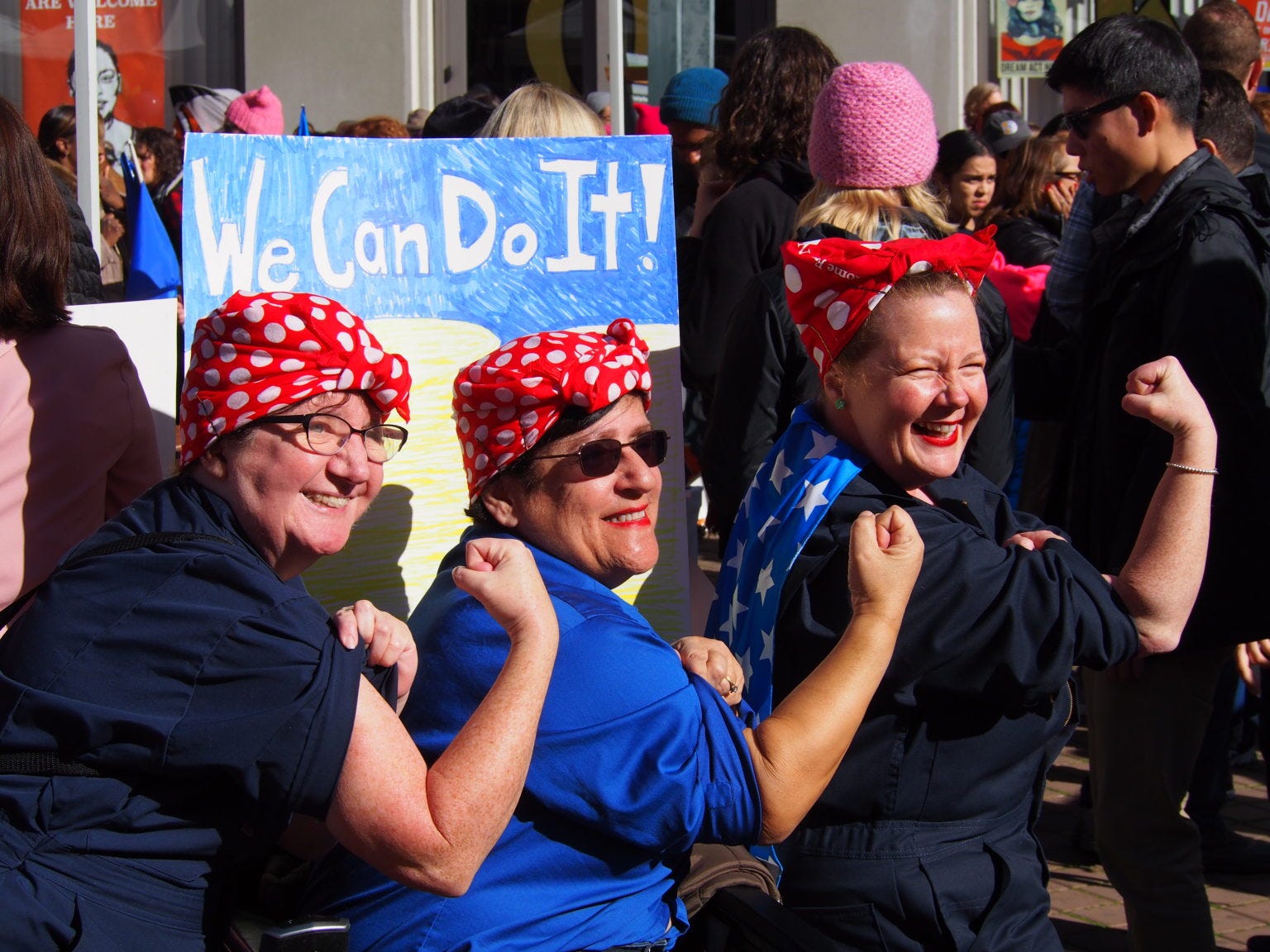
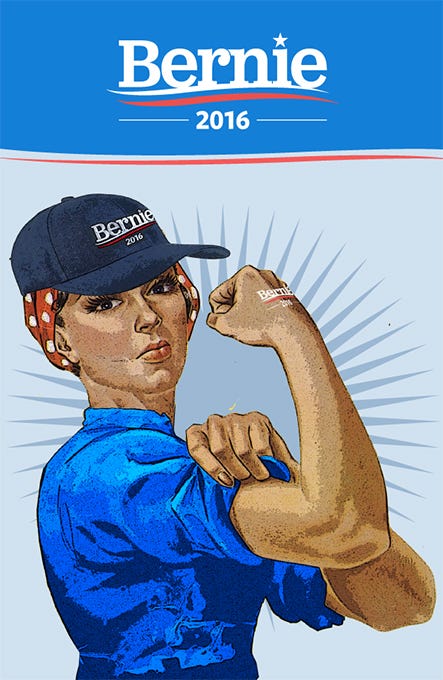
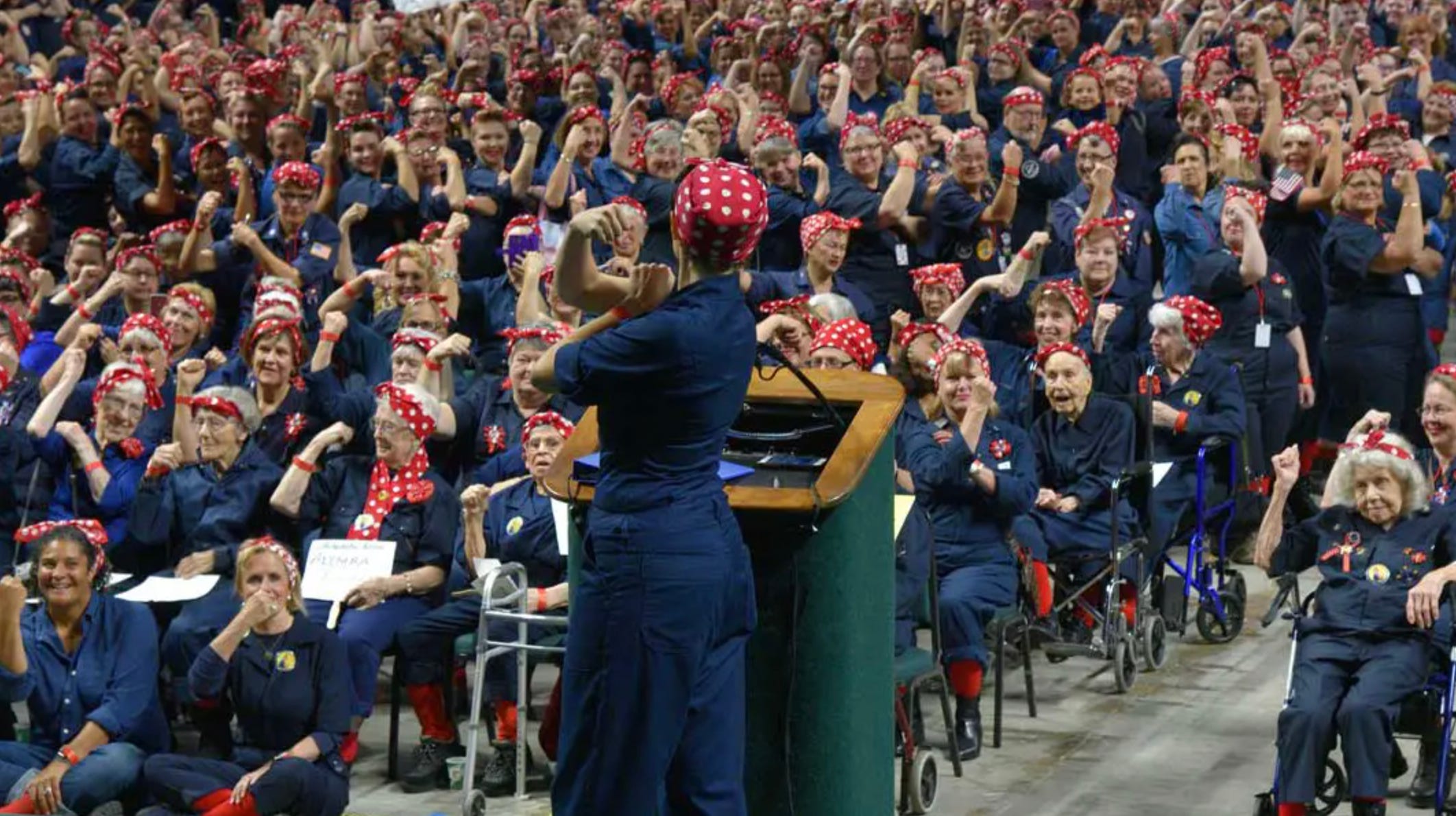
In 2017, the United States Congress passed a resolution to mark 21 March as National Rosie the Riveter Day.
Story Idea: Bonnie Siegler
References
stansburyforum.com/2022/03/05/when-rosie-the-riveter-went-viral
nypost.com/2017/03/21/rosie-the-riveter-finally-gets-her-own-holiday/
REMORANDOM Books
Order our books on the REMO store website HERE. Subscribe to receive all future volumes and other printed goodies HERE.
