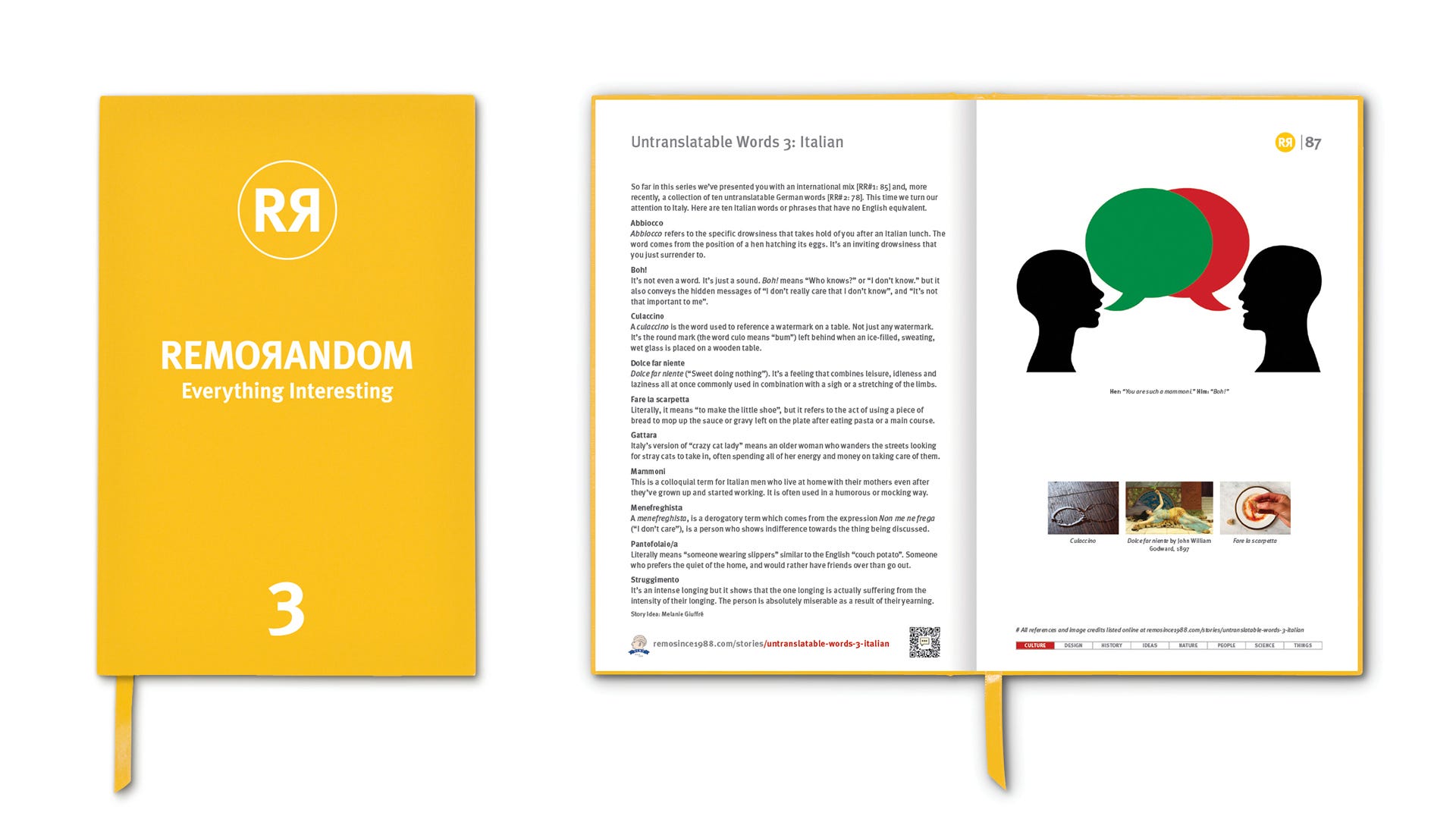
So far in this series we have presented our readers with an international mix of untranslatable words from various languages, e.g. this post with some German words. For REMORANDOM 3 we turned our attention to Italy. To that end, here are ten Italian words or phrases that have no English equivalent:
Abbiocco
Abbiocco refers to the specific drowsiness that takes hold of you after an Italian lunch. The word comes from the position of a hen hatching its eggs. It’s an inviting drowsiness that you just surrender to.
Boh!
It’s not even a word. It’s just a sound. Boh! means “Who knows?” or “I don’t know.” but it also conveys the hidden messages of “I don’t really care that I don’t know”, and “It’s not that important to me”.
Culaccino
A culaccino is the word used to reference a watermark on a table. Not just any watermark. It’s the round mark (the word culo means “bum”) left behind when an ice-filled, sweating, wet glass is placed on a wooden table.
Dolce far niente
Dolce far niente (“Sweet doing nothing”). It’s a feeling that combines leisure, idleness and laziness all at once commonly used in combination with a sigh or a stretching of the limbs.
Fare la scarpetta
Literally, it means “to make the little shoe”, but it refers to the act of using a piece of bread to mop up the sauce or gravy left on the plate after eating pasta or a main course.


Gattara
Italy’s version of “crazy cat lady” means an older woman who wanders the streets looking for stray cats to take in, often spending all of her energy and money on taking care of them.
Mammoni
This is a colloquial term for Italian men who live at home with their mothers even after they’ve grown up and started working. It is often used in a humorous or mocking way.
Menefreghista
A menefreghista, is a derogatory term which comes from the expression Non me ne frega (“I don’t care”), is a person who shows indifference towards the thing being discussed.
Pantofolaio/a
Literally means “someone wearing slippers” similar to the English “couch potato”. Someone who prefers the quiet of the home, and would rather have friends over than go out.
Struggimento
It’s an intense longing but it shows that the one longing is actually suffering from the intensity of their longing. The person is absolutely miserable as a result of their yearning.
Story Idea: Melanie Giuffré
REMORANDOM Book Chapter