


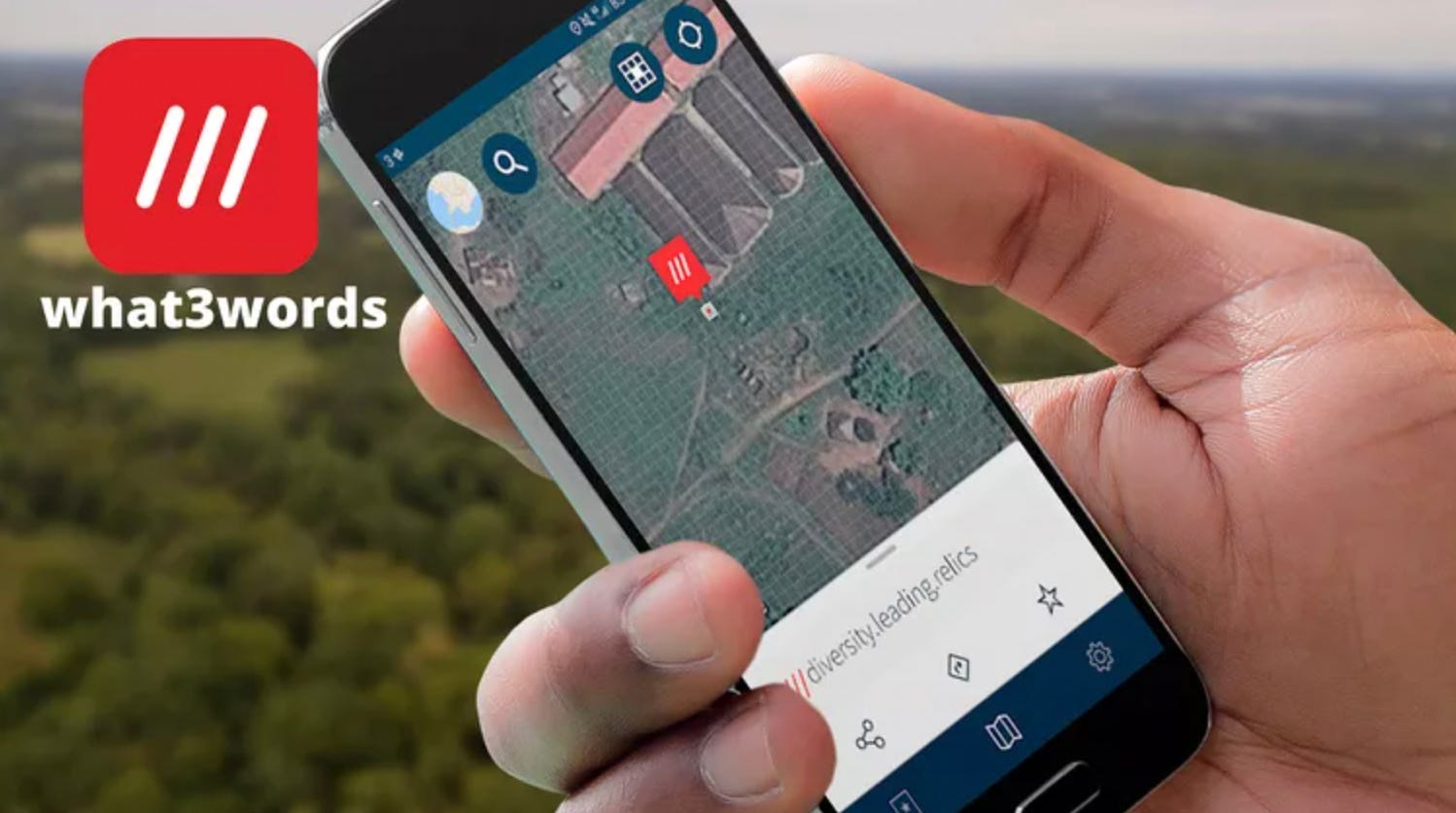
what3words is a geocoding system that divides the surface of the entire world into a grid of 3m x 3m squares and assigns each square a unique combination of three words. For example, this REMO story was written on Thursday 5 October 2023 at a table near the back of a Bondi Beach cafe called Chapter One located at: ///leaps.posed.frost
Founded by Chris Sheldrick, Jack Waley-Cohen, Mohan Ganesalingam and Michael Dent, what3words was launched in July 2013. Sheldrick and Ganesalingam conceived the idea when Sheldrick, working as an event organiser, struggled to get bands and equipment to music venues using inadequate address information. He tried using GPS coordinates to locate the venues, but decided that words were better than a string of numbers after a one-digit error led him to the wrong location. He credits a mathematician friend for the idea of dividing the world into 57 trillion squares, and the linguist Jack Waley-Cohen with using memorable words to identify each of those squares. It has resulted in what Sheldrick refers to as “a common language of location”. Check out Sheldrick’s TED talk from 2017, embedded at base.


It’s a pretty compelling pitch, which Sheldrick likens to the addition of wheels to luggage, an observation we published in RR1 in “Luggage + Wheels”.
what3words is indeed a better mousetrap way of being able to unambiguously pinpoint a very specific geographic location.
Since 2019, what3words has seen some fairly widespread adoption by emergency services around the world. Indeed, by September 2021, more than 85% of British emergency services teams used what3words, including the Metropolitan Police and London Fire Brigade. Support has also been added to the Australian Government’s 000 “Emergency Plus” app.
And the system is multilingual. Every square metre of the planet is addressed in English and Korean, and every square metre of land is addressed in a further 48 languages. That means five billion people can already use what3words in their native tongue, and the system is well on its way to becoming a global standard.
These days what3words is being used to deliver mail to nomadic herders in Mongolia, direct taxis in the labyrinth streets of Japan and mark the locations of walkers around Sydney harbour.


Here’s a cool use case cited by Eryk Bagshaw in a Sydney Morning Herald piece from 2023:
“Back in Mongolia, in the Taiga snow forest, 26 hours north of Ulaanbaatar, reindeer herders Zorigt and Otgonbayar follow the movements of their herd every few weeks. Their life is defined by finding the best shelter to get through the brutal winters. Now the couple have a side hustle to supplement their incomes during summer, and their get (also known as a yurt) has become the most remote Airbnb experience in the world, and one with an constantly-updated what3words address, but no fixed address.”
what3words long-term success will hinge on whether it can achieve one goal: to change the way people think. “We have to get into the minds of the population,” says Sheldrick in the SMH piece. “We just have to change behaviour from what they did yesterday to using three words.”
Story Idea: Adam Dennis
Videos
Book Chapter
I too was enthusiastic about What Three Words until I saw this: https://youtu.be/SqK0ciE0rto. Sure, some of the criticisms are found in other systems but, with the stated aim of facilitating universal addressing, a number of issues are potentially fatal.
Still all credit to WTW for opening up a new way of thinking about geolocation.