


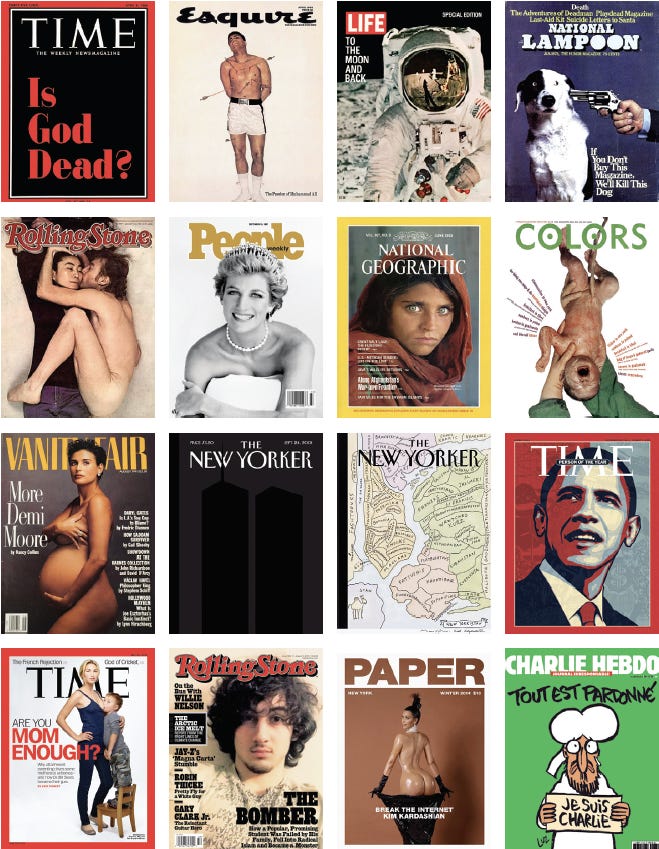
There was a time, before the internet became the cultural source of choice, when printed magazines were much more of a thing than they are now – and the most memorable thing about a magazine is generally its cover. Here’s a selection of covers that have cut through the noise over the years:
Is God Dead? (Time, 1966)
Bold red text on a stark black cover shocked readers by posing a provocative theological question at the height of social upheaval.
The Passion of Muhammad Ali (Esquire, 1968)
Ali, pierced with arrows in a St Sebastian pose, made a powerful visual statement on his persecution for refusing the Vietnam draft. See also Rumble in the Jungle [RR5:62].
To the Moon and Back (Life, 1969)
Celebrating the Apollo 11 landing, the cover featured triumphant astronauts and the Moon – a defining image of human achievement.
We’ll Kill This Dog (National Lampoon, 1973)
A darkly comic image threatening a dog’s life if readers didn’t buy the issue captured the magazine’s outrageous satirical edge. Sadly, the dog ultimately died – by being shot!
John and Yoko (Rolling Stone, 1981)
Annie Leibovitz’s intimate portrait, taken just hours before Lennon’s death, became an instant cultural artifact. See also: John and Yoko’s Bed-In [RR6:40].
Princess Diana (People, 1982)
A young Diana, newly married to Prince Charles, graced the cover in an image that cemented her as a global style and cultural icon. [Ed: Overusing the word “icon”, but necessarily so.]
Afghan Girl (National Geographic, 1985)
Steve McCurry’s portrait of Sharbat Gula, with her piercing green eyes, became the magazine’s most recognisable image. It humanised the refugee crisis in Afghanistan for a global audience. See National Geographic and Afghan Girl [RR2:50].

It’s a baby! (Colors, 1991)
The cover’s striking photo of a newborn held by gloved hands set the tone for both the magazine’s global, humanistic vision and its bold and provocative style. See Colors Magazine [RR6:10].
More Demi Moore (Vanity Fair, 1991)
Moore posing nude while seven months pregnant challenged norms about female beauty and motherhood, and sparked a cultural conversation on pregnancy in the media.
Twin Towers 9/11 (The New Yorker, 2001)
A black-on-black silhouette of the towers, created by Art Spiegelman, was a stark and subtle memorial to the attacks. It remains a masterclass in visual restraint and power.
New Yorkistan (The New Yorker, 2001)
This cover, by Maira Kalman and Rick Meyerowitz, gives each New York neighbourhood a smart and funny name. New Yorkers went mad for it. See also New Yorkistan [RR1:49]. [Ed: Maira Kalman’s work will be featured in REMORANDOM 7.]

Barack Obama (Time, 2008)
Obama’s stylised portrait by Shephard Fairey [RR1:53] accompanied by “Person of the Year” reflected hope and change at the dawn of his presidency.
Are You Mom Enough? (Time, 2012)
A mother breastfeeding her three-year-old challenged perceptions of parenting and provoked global discussion.
The Bomber (Rolling Stone, 2013 )
Featuring Boston Marathon bomber Dzhokhar Tsarnaev styled like a rock star, the cover was criticised for glamorising a criminal.
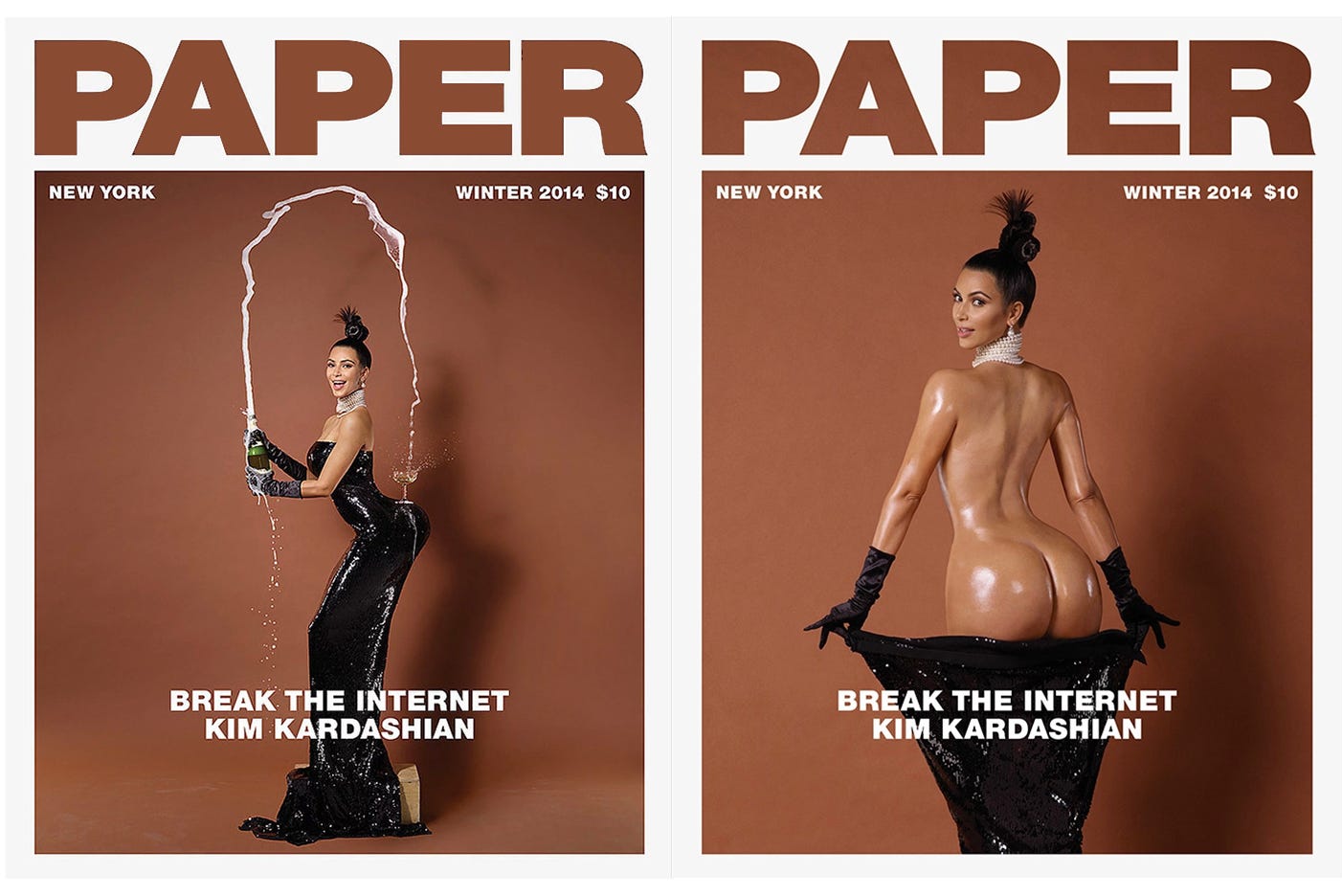
Break the Internet (Paper, 2014)
Kim Kardashian’s oiled bum and champagne-balancing pose (a second cover) redefined viral marketing and celebrity culture. See [RR3:13] and related podcast interviews.
Je Suis Charlie (Charlie Hebdo, 2015)
Published after the terrorist attack on its offices, the defiant cartoon cover reaffirmed the magazine’s satirical spirit.
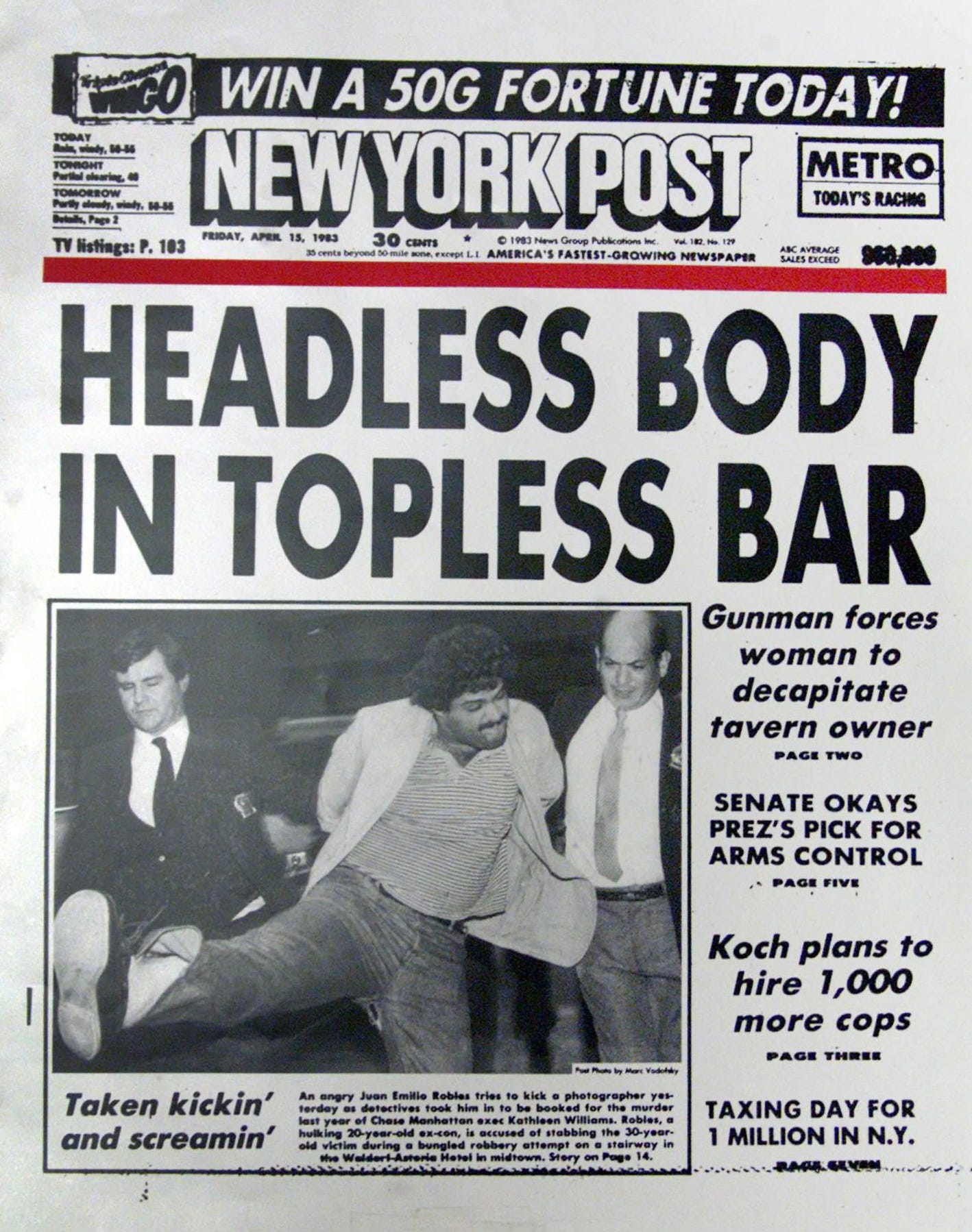
PS: This New York Post front page headline from 15 April 1983 was not a magazine cover per se – but who could resist including it here. It’s a classic.
REMORANDOM Chapters


Great selection. I would add the following cover from the New Yorker because it can be refocused to make any city in the USA the epicentre of the image. Insularity is an unspoken tenet of American life.
https://archive.org/download/dr_the-new-yorker-steinberg-copyright-1976-the-new-yorker-magazine--inc-8145000/8145000.jpg